

Australian, New Zealand dollars weighed down by disappointing Chinese data
 Add BT as a preferred source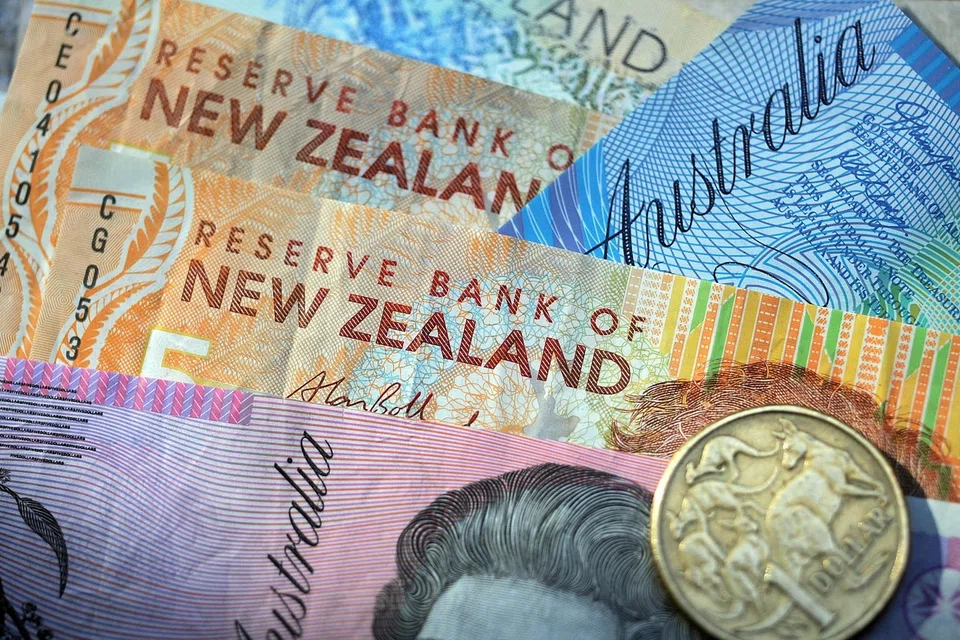
[SYDNEY] The Australian and New Zealand dollars struggled on Wednesday after key Chinese data for August disappointed, reinforcing worries about slowing global growth.
The risk-sensitive Aussie was little changed at US$0.7326 at 4.31 GMT, after dipping earlier as a raft of Chinese data showed factory and retail sales growth cooled more sharply than expected last month.
The Kiwi was slightly lower at US$0.7097 after touching a two-week low of US$0.7074. The next test level for the antipodean currency is around US$0.7050 and resistance sits around US$0.7151.
Stock markets, to which both currencies are sensitive, were lower in Asia following the Chinese data and as investors fretted over the still-dominant pandemic and tapering of central banks' stimulus.
"The hit to service activity from last month's virus outbreak was even larger than we, and other forecasters, had anticipated," said Capital Economics senior China economist Julian Evans-Pritchard.
"A jump in cases in Fujian province this week suggests the recovery might be held back. There is also a risk of fresh disruptions to supply chains given that the province is a major trade hub."
Bond yields continued their downward trend after data on Tuesday showed inflation was cooling in the Unites States, raising fresh questions on when the US central bank will begin tapering its asset purchases.
Australian 10-year yields fell almost five basis points to 1.213 narrowing the gap against equivalent US yields to seven basis points.
Unlike the US Federal Reserve and the Bank of England, the Reserve Bank of Australia is not expected to hike interest rates next year.
Across the Tasman, where the Reserve Bank of New Zealand is expected to hike rates next month amid an increasingly tight labour market and overheated housing market, bond yields fell 5-to-6 basis points at the short end of the curve, and about 7-to-10 basis points at the longer end.
On Tuesday, the New Zealand Treasury was inundated with orders for an inaugural 30-year bond issue, particularly from offshore investors who were seeking to capture the approximate 1 per cent yield pick-up over the US Treasury benchmark, Refinitiv IFR reported.
The bonds, which were issued at a yield of 2.857 per cent, on Wednesday were bid at a yield of 2.713 per cent.
REUTERS
Decoding Asia newsletter: your guide to navigating Asia in a new global order. Sign up here to get Decoding Asia newsletter. Delivered to your inbox. Free.
Share with us your feedback on BT's products and services
TRENDING NOW

Simba ordered to pay S$700,000 in damages to indoor skydiving operator Altitude Xperience for trespass

Malaysian tycoon Vincent Tan’s sell-downs point to pruning rather than an exit plan

The bright side to the CSE Global clash

StarHub deputy CEO Matthew Williams to succeed Nikhil Eapen as chief executive

