Australia’s central bank breaks ranks with peers on fallout fear
 Add BT as a preferred source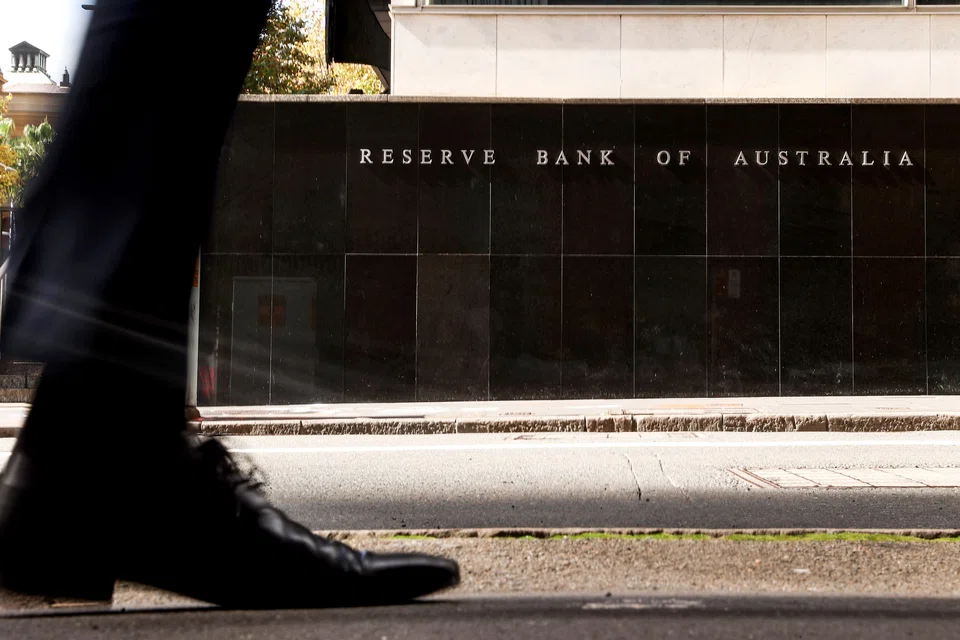
DeeperDive is a beta AI feature. Refer to full articles for the facts.
THE Australian central bank’s decision to down-shift its pace of policy tightening reflects better-behaved wages and heavily indebted households that set its economy apart from global counterparts.
While inflation is still a problem in Australia, the Reserve Bank of Australia (RBA) on Tuesday (Oct 18) highlighted its fears of fallout from ultra-aggressive interest-rate increases, having hiked by 2.5 percentage points in six months. That compares with a Federal Reserve that has raised by 3 points in eight months.
Officials from Ottawa to Oslo have continually reinforced the need to crush inflation at all costs via sharp policy tightening. The RBA surprised markets two weeks ago when it delivered a quarter-point hike, ending a string of half-point moves and becoming the first major central bank to break ranks.
The following charts set out how and why RBA governor Philip Lowe has turned less hawkish than his overseas colleagues.
Wages have contributed less to price pressures in Australia than elsewhere. Annual growth was a benign 2.6 per cent in the second quarter and Lowe says labour costs remain “consistent” with inflation returning to the RBA’s 2-3 per cent target.
In the US, where inflationary pressures are more powerful, wages are rising at more than 5 per cent. Former Treasury Secretary Larry Summers said last week the economy will need to go into reverse to drive up unemployment sufficiently to cool pay and price pressures.
Navigate Asia in
a new global order
Get the insights delivered to your inbox.
The Reserve Bank of New Zealand - among the most hawkish central banks globally - pointed this month to “heightened” wage pressures as it delivered a half-point hike. The RBA, by contrast, has said that “some further rise” in salaries would “not necessarily be cause for concern”.
Another factor seen easing pay pressure is a rapid recovery in overseas arrivals, including students who tend to work in the hospitality and tourism sectors where demand is the steepest.
That helps explain why economists expect the RBA will end its tightening cycle around 3.3 per cent compared with 4.7 per cent for the US.

Fiscal policy in Australia is seen tightening too, relieving pressure on the RBA from doing all the heavy lifting on prices. Treasurer Jim Chalmers has signalled a bias to restrain spending and insists he doesn’t want to make the central bank’s job any harder than it already is.
Chalmers will unveil his first budget on Tuesday when he will likely map a route to narrower fiscal deficits. Some lawmakers have suggested an easy option would be to reconsider tax cuts for high-income earners legislated to begin in mid-2024, following the chaos in the UK from its plan to scrap the top rate.
“No responsible government can ignore high and rising inflation,” Chalmers told reporters in Canberra this month.
Worries about second-order effects from a slump in the country’s A$10 trillion (S$9 trillion) property market are also playing on policymakers’ minds. Prices in bellwether Sydney fell for an eighth straight month in September as rising rates hit buyers’ borrowing capacity.
Economists are forecasting a 15-20 per cent peak-to-trough drop in national home values. They fear a deeper downturn could prompt Australia’s heavily indebted households to slash spending and trigger loan defaults, raising financial stability risks.
The RBA is also mindful of the lag between its policy actions and their transmission across the economy. With more than two-thirds of mortgages on variable rates, the policy is particularly potent. In the US, by contrast, around 90 per cent of home loans are fixed over 30 years.
The difference in the structure of the mortgage market suggests the RBA can cool demand significantly by lifting rates close to neutral, instead of taking policy deep into restrictive territory.
An under-appreciated difference is that Australia’s central bank has multiple objectives. Unlike counterparts that focus solely on inflation, the RBA is also charged with achieving full employment and “the economic prosperity and welfare” of the Australian people.
Outside of the early part of the pandemic, Australia hasn’t recorded two consecutive quarters of economic contraction - the technical definition of recession - for 31 years.
The bank “has to be cautious because it has to balance out concerns about controlling inflation while not damaging the economy and causing unemployment to rise”, points out former Governor Bernie Fraser, who oversaw the introduction of the inflation-targeting regime. “These are the objectives they have to work with.”
That explains why Lowe has repeatedly highlighted the need to get control of inflation while keeping the economy on an “even keel”. That’s a sharp contrast with the Fed that has signalled a willingness to risk even recession to contain prices. BLOOMBERG
Decoding Asia newsletter: your guide to navigating Asia in a new global order. Sign up here to get Decoding Asia newsletter. Delivered to your inbox. Free.
Share with us your feedback on BT's products and services