

Bank CEOs’ AI obsession collides with warning from watchdogs
The question of how to regulate AI is evolving across jurisdictions
AS BANKS executives increasingly tout the promise of artificial intelligence to slim down workforces, regulators are warning them not to get carried away.
The European Banking Authority, the rulemaker for financial firms operating in the region, has been meeting with national authorities to ensure human bankers are providing adequate oversight of processes increasingly handled by AI, according to Ruta Merkeviciute, head of digital finance at the EBA.
The watchdog’s concerns extend to the kinds of repetitive tasks traditionally handled by bankers in middle and back office functions, she said.
For example, “if AI is being used for credit assessments, these kinds of metrics, these results should be checked with humans,” Merkeviciute said in an interview. Such oversight shouldn’t just happen at the end of a long chain of AI processes, but at numerous points along the way, she said.
The frantic pace of new AI rollouts has fanned speculation it can perform tasks long thought to be beyond the ability of machines. Standard Chartered said on Tuesday it plans to eliminate corporate function roles by more than 15 per cent by 2030 as it adopts AI.
Bill Winters, the bank’s chief executive, said the move will help replace what he called instances of “lower-value human capital.” His choice of words prompted instant backlash, and Winters has since sought to reassure staff.
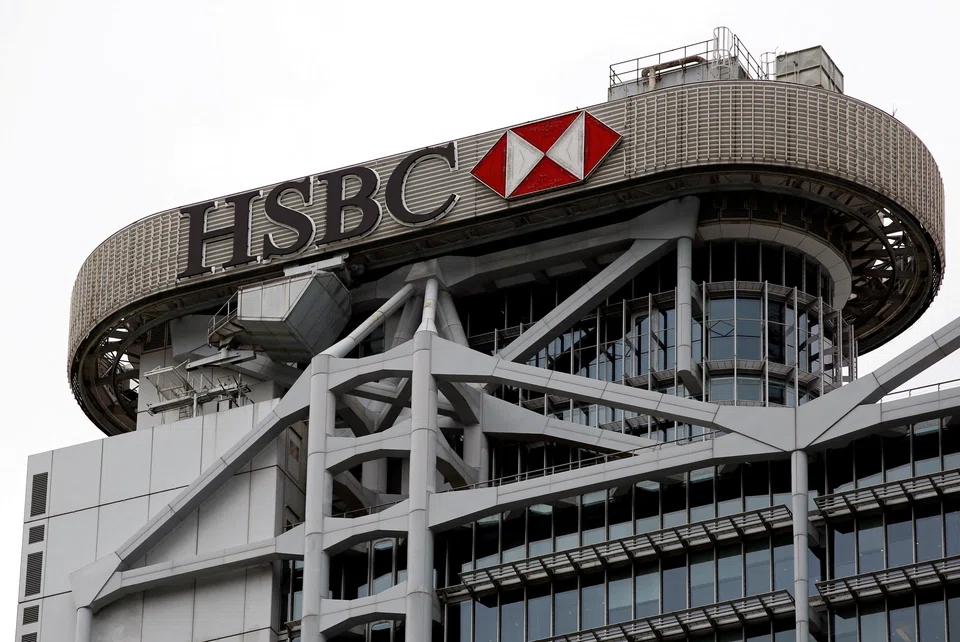
But Winters is far from alone. HSBC Holdings, the UK’s largest lender, is looking into cutting around 20,000 jobs based on an assumption that AI will help it downsize its middle and back offices.
On Wednesday, CEO Georges Elhedery said it’s clear generative AI will “destroy” certain jobs, but also create new roles.
Goldman Sachs Group chief operating officer John Waldron earlier this month described his firm’s operations as a “human assembly line” ripe for automation. And JPMorgan Chase & Co. CEO Jamie Dimon has said AI will “affect virtually every function” at the biggest US bank.


The question of how to regulate AI is evolving across jurisdictions. The Trump administration’s eagerness to have the US dominate in the field of AI innovation has led to a light-touch approach. The arrival of Anthropic PBC’s Mythos, however, is now prompting it to take a more cautious stance.
In Europe, the AI Act — passed in 2024 — has already created some significant guardrails. Yet the technology keeps moving faster than the rules needed to keep it safe.
The EBA, which also sets rules for US and Asian banks operating in Europe, wants to ensure that national supervisors across the bloc have playbooks “to mitigate risks” that AI poses to the finance sector, Merkeviciute said.
The more complex the AI model, the greater the need for human controls to ensure outcomes can be explained when the regulator comes knocking, she said. Reliance on third-party AI vendors will also be monitored, she said.
Alain Otaegui, policy expert in digital finance at the Paris-based EBA, says the technology already exists to fully automate compliance tasks such as know-your-customer.
“This is what we see for instance on KYC checks, on fraud detection, on different use cases where banks are allowed to implement AI with a pretty high degree of automation,” he said.
But he also cautions against leaving such processes entirely to AI. “They need to retain at least some minimum level of human on the loop,” he said. Merkeviciute says part of the worry is that with areas such as fraud detection, AI can come up with “false positives.”
Bhavi Mehta, Bain & Co. partner and global lead for advanced analytics in financial services, said he’s talking to finance-sector clients about the potential liability they face if they rely too heavily on AI.
“If you don’t have control and verifiability, if it gives the wrong outputs, you can be liable for significant exposure from a regulatory and compliance perspective,” he said. “It is still in an experimental stage at most financial services firms,” and “they have rolled it out in very narrow areas.”
If AI “deviates,” for example, it’s important that a bank has a setup in which “a human can intervene,” said Mehta. And while banks aren’t failing, the evidence suggests they’re still struggling with how to build AI into everyday operations so it can work at scale, he said.
There’s no question that AI is already transforming the finance sector. But banks need to be able to show “how decisions are made and who is overseeing these risks, particularly in high-impact settings,” said Herbert Swaniker, technology partner at law firm Clifford Chance. He also says the focus on “transparency, audit rights and performance assurance” becomes “even greater” when banks hand over processes to AI.
The EBA’s Merkeviciute says a key focus is the notion of “explainability,” so that human bankers are always in a position to spell out to customers and regulators how AI is being used, and how outcomes are reached.
Banks replacing humans with AI also face pushback from unions. Nordea Bank Abp, which has said it plans to cut as many as 1,500 jobs as it shifts more tasks to AI, is under growing pressure to prove such a step is viable.
“We cannot see that there is a correlation” between Nordea’s announcement and what AI can actually do, said Dorrit Brandt, chair of Finansforbundet, which represents finance sector workers in Denmark.
A spokesperson for Nordea said the bank’s workforce will continue to evolve, subject to “relevant union negotiation and consultation processes.” And as it implements AI, Nordea “maintains a strong focus on safety, security, compliance and appropriate human oversight in critical processes.”
Europe’s banks and unions agreed in 2024 to collaborate on the rollout of AI, which included a pledge to keep humans “at the center of work organisation.”
However, it now seems that “we will have a big, big wave of dismissals of workers in the next years,” said Angelo Di Cristo, head of finance at UNI Global Union, an umbrella group for trade unions, in an interview last month.
Assumptions that AI will free banks to cut thousands of jobs may be out of step with the economic, demographic and political reality on the ground, according to Sebastien de Brouwer, deputy CEO at the European Banking Federation.
In Europe, a combination of labor shortages, an aging population and strong union representation means banks may need to retrain rather than cut staff.
“Some predictions went as far as to say that half of the workforce would disappear or would become redundant, and that’s not at all what is happening in practice,” de Brouwer said.
Merkeviciute notes that bank executives interviewed by the EBA have said they “need new talent to use AI tools.”
J.P. Gownder, vice-president and principal analyst at Forrester Research, says there’s still not enough granular data on how AI is altering the work bankers do.
“Productivity statistics aren’t really showing us the kind of boom that would be required for companies to be replacing people with AI,” he said. “By that I mean, in order for AI to replace lots and lots of people, you need fewer workers creating more value, and that automatically is going to translate it to a higher aggregate productivity rate.”
For now, he says, “we haven’t seen that.” BLOOMBERG
Decoding Asia newsletter: your guide to navigating Asia in a new global order. Sign up here to get Decoding Asia newsletter. Delivered to your inbox. Free.
Share with us your feedback on BT's products and services
TRENDING NOW

Inside Singapore’s government team that kills its own products

Once staunchly pro-China, Malaysian Chinese businesses are now distancing themselves from Beijing

Cliff Tan has 7 million followers and a 4-month waitlist. Why won’t he expand his business?

Grab CEO’s wife Chloe Tong on life with Anthony Tan and finding her purpose

