

Bank of England holds rates after narrow 5-4 vote, signals reduction ahead
It has been moving cautiously as Britain has the highest inflation rate among the world’s big, rich economies
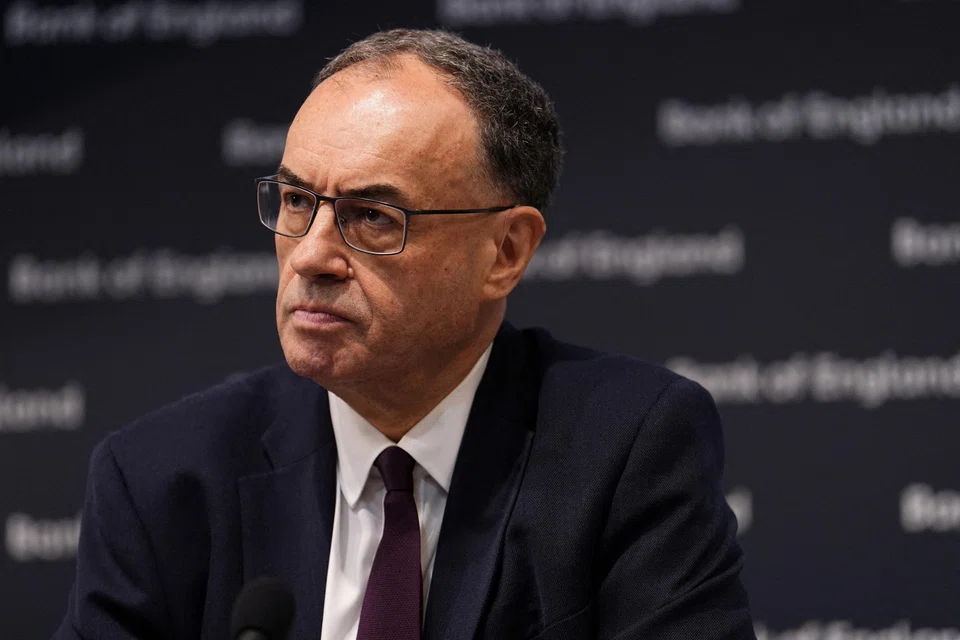
[LONDON] The Bank of England (BOE) kept interest rates on hold on Thursday (Feb 5), but only after an unexpectedly narrow 5-4 vote, and it said it expected a future cut if a sharp fall in inflation due in the coming months proved not to be a blip.
Despite a big reduction to its forecast for Britain’s economic growth this year and a rise in unemployment, the BOE left its benchmark Bank Rate at 3.75 per cent.
The decision was in line with almost all forecasts in a Reuters poll of economists ahead of the February meeting of Monetary Policy Committee (MPC).
However, the poll had pointed to a more emphatic 7-2 vote in favour of no change in rates.
Bailey sees scope for further reduction in rates
Governor Andrew Bailey was one of the five MPC members who backed the ‘hold’ decision. He said his position was likely to change if a forecast fall in inflation to the BOE’s 2 per cent target from April looked sustainable.
“We need to make sure that inflation stays there, so we’ve held rates unchanged at 3.75 per cent today,” Bailey said in a statement. “All going well, there should be scope for some further reduction in Bank Rate this year.”
He stressed he did not have any specific date in mind for the next rate cut, but the narrower-than-expected vote may prompt investors to bring forward their bets on the BOE’s next move.
Before Thursday’s announcement, rate futures markets were pricing little chance of a cut in March and only a roughly 60 per cent chance of one in April.
The BOE has been moving cautiously as Britain has the highest inflation rate among the world’s big, rich economies.
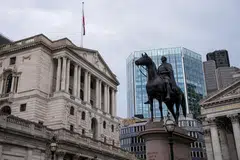

It cut rates four times in 2025 including a quarter-point reduction in December which was backed by a 5-4 vote.
But policymakers have stressed they need to move carefully as they approach the level of borrowing costs that is neither inflationary nor a drag on an economy still struggling to overcome the after-effects of Brexit, the Covid pandemic and the 2022 surge in energy prices.
The BOE said it now expected inflation to slide to around its 2 per cent target in April – helped in large part by measures included in finance minister Rachel Reeves’ budget in late November – much sooner than in its early November forecast.
But the central bank stressed it wanted to make sure the fall was not a one-off.
Its staff forecasts show inflation dropping below its target to 1.7 per cent before hovering around its 2 per cent target from the second quarter of next year through to the end of its three-year forecast period.
Three of the five MPC members who backed no cut this week – chief economist Huw Pill, deputy governor Clare Lombardelli and external member Megan Greene – acknowledged inflation pressures were weakening but favoured “a more prolonged period of policy restriction” to ensure inflation does not get stuck too high.
Bailey and Mann said evidence to support a further cut was increasing, but not yet sufficient.
The four who backed a cut – deputy governors Dave Ramsden and Sarah Breeden plus Swati Dhingra and Alan Taylor – were more worried about inflation falling too low as the economy weakens.
The BOE cut its forecast for economic growth for 2026 to 0.9 per cent from a previous estimate of 1.2 per cent before a pickup in 2027 and 2028. It also raised its forecast for the peak in unemployment to 5.3 per cent, up from 5.1 per cent previously.
Despite the slowdown in the economy, private-sector regular wage growth is likely to decelerate only slowly this year, dropping to an annual rate of 3.3 per cent by the end of 2026 from 3.4 per cent in late 2025.
The BOE said a roughly 3.25 per cent rate of pay growth was consistent with on-target inflation.
A BOE survey published alongside Thursday’s decision showed companies expected pay settlements of 3.4 per cent this year, down from 4 per cent in 2025.
MPC continues to see closer calls ahead on rates
The MPC left its guidance about the outlook for interest rates largely similar to its message after its previous meeting in December.
“On the basis of the current evidence, Bank Rate is likely to be reduced further,” it said in a statement on Thursday.
“Judgements around further policy easing will become a closer call. The extent and timing of further easing in monetary policy will depend on the evolution of the outlook for inflation.”
Concerns among investors have mounted over whether Prime Minister Keir Starmer could survive the fallout from his decision to appoint Peter Mandelson as US ambassador despite knowing about his ties to Jeffrey Epstein. REUTERS
Decoding Asia newsletter: your guide to navigating Asia in a new global order. Sign up here to get Decoding Asia newsletter. Delivered to your inbox. Free.
Share with us your feedback on BT's products and services
TRENDING NOW

8 public officers referred to police over property buys near unannounced MRT stations: Chan Chun Sing

DBS tops trades in smaller board lots on debut of revised SGX framework

Grab CEO’s wife Chloe Tong on life with Anthony Tan and finding her purpose

Retrenched PMETs who return on lower pay see median 25% wage cut

