

Bank of England raising UK lenders' capital requirements by £11.4b
Central bank also says British regulators would publish tighter rules on consumer lending next month
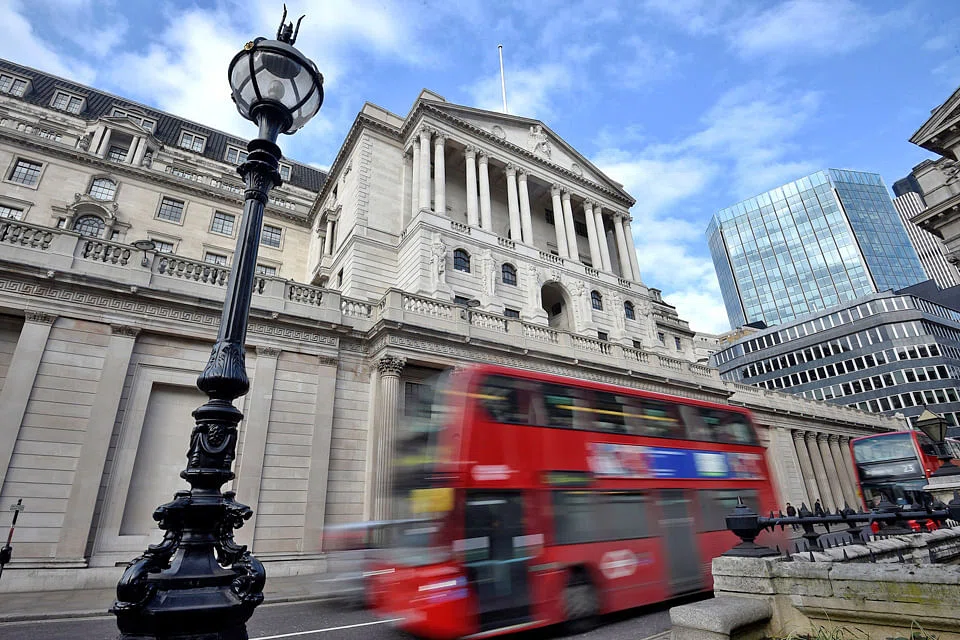
London
BRITISH banks face an £11.4 billion (S$20.2 billion) increase in capital requirements after the Bank of England (BOE) said it was raising a key buffer designed to tackle growing risks of lax lending.
The central bank had earlier reversed a previous rise in its counter-cyclical capital buffer (CCyB) after it feared credit conditions would tighten after last year's vote to leave the European Union.
But Britain's economy has performed more strongly than expected since the vote, despite some more recent signs of a slowdown, and some of the central banks' interest rate setters think it is already time to raise its main interest rate.
On Tuesday, the BOE's separate Financial Policy Committee (FPC) declared that overall risks to financial stability were at a "standard" level and that it was concerned lenders were placing undue weight on recent low losses which could only be achieved in the current benign conditions. "As is often the case in a standard environment, there are pockets of risks that warrant vigilance," the BOE said.
The BOE said that it was continuing to oversee banks' preparations for "Brexit", including for if Britain exits in 2019 without securing any trade deal, cutting off banks from their European customers, which could undermine financial stability. "Such scenarios are where contingency planning and preparation will be most valuable," the BOE said.
The central bank said that it was raising the CCyB to 0.5 per cent from its current level of zero - with a one-year implementation phase - and that it expected to raise it further to one per cent in November.
Each 0.5 per cent increase adds £5.7 billion to British banks' capital requirements, though many banks already hold capital in excess of the minimum so may not need to raise fresh funds.
The BOE also said that British regulators would publish tighter rules on consumer lending next month, and that it would bring forward planned checks on whether banks could cope with consumer loans losses to September from November. Existing restrictions on high loan-to-income mortgage lending were likely to stay for the long term, the BOE said, and it also tweaked the rate against which lenders must test borrowers' ability to repay their mortgages.
The BOE said that some global risks it had previously identified had not crystallised. But it warned of dangers from China, where private-sector borrowing is now more than two-and-a-half times annual economic output. "High debt makes China vulnerable to shocks. This could affect the global economy and UK banks."
It also warned that British corporate bonds and commercial real estate may be overvalued. Both had their valuations boosted by low interest rates, but did not appear to take into account that these low interest rates reflected a weak economic outlook. "Current London West End office prices are well above the range of estimated sustainable valuation levels," it said.
The FPC also raised the minimum leverage ratio for British banks to 3.25 per cent from 3 per cent, to reflect last year's exclusion of central bank reserves from the calculation of capital. This exclusion was designed to ensure that monetary policy measures such as quantitative easing did not crimp lending. REUTERS
TRENDING NOW

Peter Kwee’s Ridley Park bungalow on the market with S$100 million asking price

Motoring tycoon Peter Kwee is back in court: Here are his previous legal battles

Demand, tech capabilities position Apac and AI as Skyscanner’s next growth frontiers: CEO Bryan Batista

South-east Asia has lost Nvidia’s best salesman

