

Bank of England says digital pounds unlikely to work like cash
 Add BT as a preferred source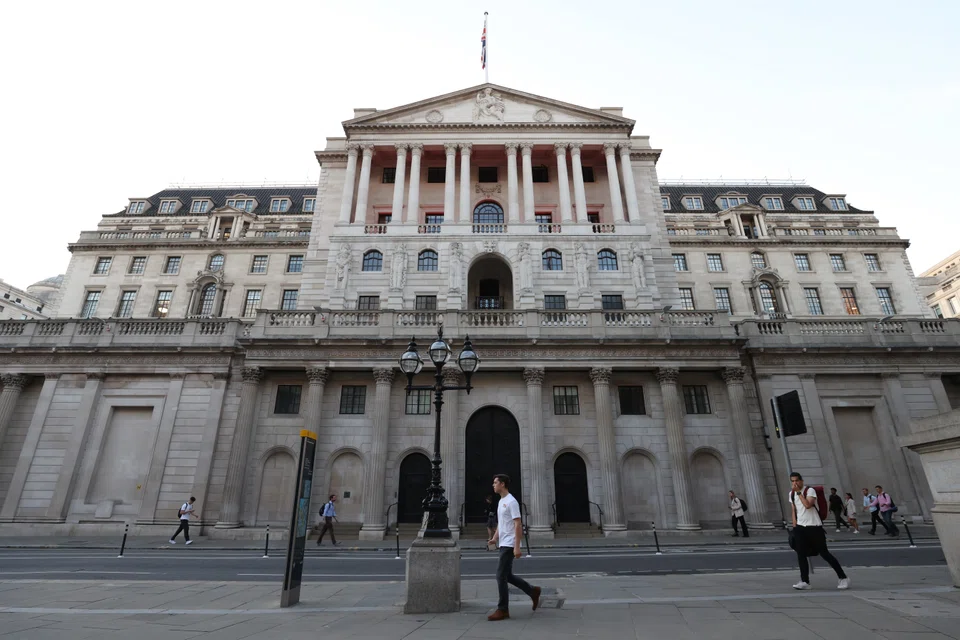
DeeperDive is a beta AI feature. Refer to full articles for the facts.
THE Bank of England (BOE) is unlikely to offer a digital form of the pound that works like banknotes, opting instead for an instrument managed through some sort of account.
Deputy governor Jon Cunliffe, who is overseeing the BOE's work on central bank digital currencies, said policy makers are thinking about how to make the pound work better for consumers in online transactions.
However, the new form of currency is unlikely to be a "bearer" instrument like banknotes, where no information is recorder about the holder. That reflects concerns that new digital pounds could be used in crime and money laundering.
"I think it's very unlikely that any of us would issue a retail CBDC as a bearer instrument," Cunliffe said at a panel discussion in London on Wednesday (Jul 6). "It would probably be some form of account-based instrument."
The BOE along with other central banks is studying how to adapt currencies for online technology as more transactions move onto the Internet and toward credit and debit cards. With cash declining as a payment method across the US and Europe, the BOE and is looking at new forms of the pound that appeal to consumers.
That's elevating a number of issues about the appropriate role central banks play in issuing digital currencies and whether those would compete with securities like Bitcoin.
Navigate Asia in
a new global order
Get the insights delivered to your inbox.
"We will produce the asset and the rails" - or the system to transact with the currency - "but the interface with the public would actually be done by private-sector payment providers," Cunliffe said.
The BOE plans to release a consultation paper at the end of the year about how a retail CBDC might look. Cunliffe said it's unlikely that any digital pounds will start trading within the next 3 years, that it's more likely in 5 or more years.
"It could be banks that will have the customer accounts payable to integrate money into their digital applications," he said. "There are other models. One model is we allow the private sector to do the tokenization, to provide their own money that we back 1-for-1 with central bank money."
The government will have do decide whether the BOE can issue digital pounds and in what form. Cunliffe said the decision will be based on what's most efficient and secure. BLOOMBERG
Decoding Asia newsletter: your guide to navigating Asia in a new global order. Sign up here to get Decoding Asia newsletter. Delivered to your inbox. Free.
Copyright SPH Media. All rights reserved.
TRENDING NOW
Autobahn Rent A Car directors declared bankrupt over S$50 million each owed to DBS

Higher costs, lower returns: Why are Singaporeans still betting on real estate?

Richard Eu on how core values, customers keep Singapore’s TCM chain Eu Yan Sang relevant

Loyang Valley sold for S$880 million to SingHaiyi-led consortium

