Bank of Japan becomes Japan's biggest stock owner with 45.1 trillion yen hoard
Central bank overtakes Government Pension Investment Fund, which has holdings of 44.8 trillion yen
 Add BT as a preferred source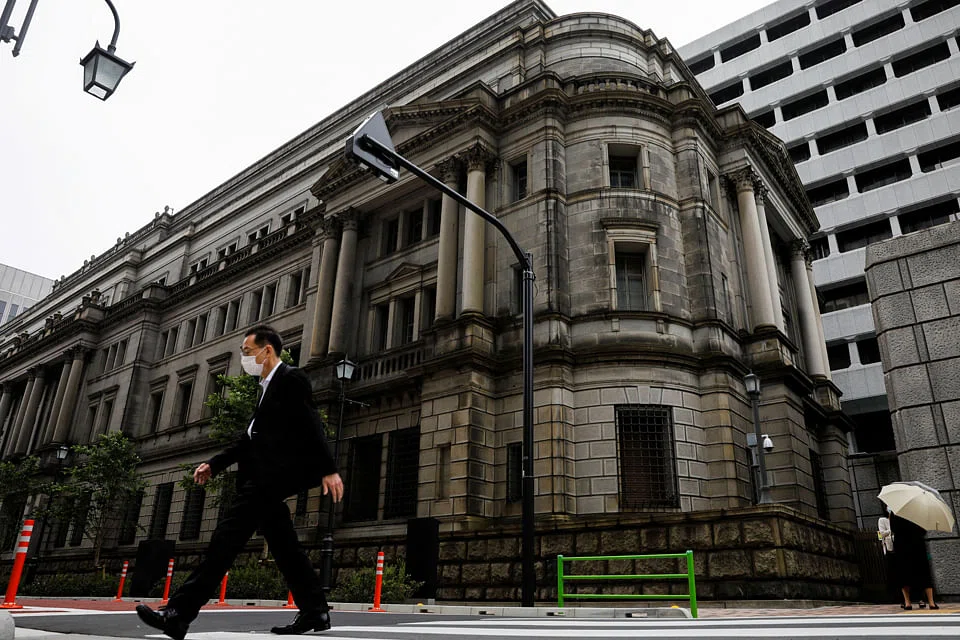
DeeperDive is a beta AI feature. Refer to full articles for the facts.
Tokyo
THE Bank of Japan has taken over as the biggest owner of the nation's stocks, with the total value of its holdings climbing to 45.1 trillion yen.
Massive exchange-traded fund (ETF) purchases by the BOJ to support the market amid the pandemic this year combined with subsequent valuation gains pushed its Japanese equity portfolio to 45.1 trillion yen (S$579 billion) in November, according to estimates by Shingo Ide, chief equity strategist at NLI Research Institute.
That marks the first time that the central bank's holdings have eclipsed those of the Government Pension Investment Fund, which Mr Ide estimates stood at 44.8 trillion yen last month, based on gains on top of its holdings as at end-September.
Regardless of which whale is larger, the dominant presence of these two public entities has raised concerns over their influence on market prices. The combination of "a state-run institution, the BOJ, and the country's representative public pension fund, the GPIF, buying up local equities feels distorted", said Satoshi Okumoto, chief executive officer at Fukoku Capital Management Inc.
The GPIF, the world's largest pension fund, increased its equity market presence in 2014 when it doubled its allocation target for local stocks to 25 per cent as part of an effort to increase returns through a shift into riskier assets.
Navigate Asia in
a new global order
Get the insights delivered to your inbox.
The BOJ's ETF purchases started in 2010 and accelerated later as part of Governor Haruhiko Kuroda's unprecedented stimulus package aimed at revitalising the economy.
The BOJ ramped up its support programme even further this year as the coronavirus outbreak sent equity markets tumbling, saying in March it could potentially purchase 12 trillion yen worth of Japan ETFs this year, double its annual target. After a few months of heavy buying the pace has slowed back down, and it's likely the total for 2020 will fall far short of the new theoretical limit.
Even at the current pace, however, "the gap between the BOJ and GPIF's stock holdings will widen further," according to NLI Research's Mr Ide, especially if share prices continue to rise.
Amid a global rebound on the back of Covid-19 vaccine developments, the benchmark Topix climbed 11 per cent in November while the Nikkei 225 Stock Average surged 15 per cent in its best month since 1994. That pushed unrealised gains on the BOJ's stock purchases to over 10 trillion yen at one point in November, according to Ide. The Topix fell 0.9 per cent on Monday after capping its first weekly decline since October.
"The BOJ has never taken profits on its holdings and only continues to build its holdings in ETFs," said Takashi Ito, an equity market strategist at Nomura Securities Co. The GPIF, meanwhile, "has to sell equities when prices are high to adjust the weight of stock holdings within its portfolio".
NLI Research's Mr Ide says the BOJ "could face more scrutiny" over whether it needs to continue buying equities when prices are elevated like they are presently. BOJ Governor Mr Kuroda has repeatedly said that the ETF purchases are needed as part of monetary stimulus to reach the BOJ's inflation target. BLOOMBERG
Decoding Asia newsletter: your guide to navigating Asia in a new global order. Sign up here to get Decoding Asia newsletter. Delivered to your inbox. Free.
Share with us your feedback on BT's products and services