

Bank of Japan to consider pausing bond taper next fiscal year: sources
It is also expected to raise its short-term policy rate to 1% from 0.75% at next week’s meeting
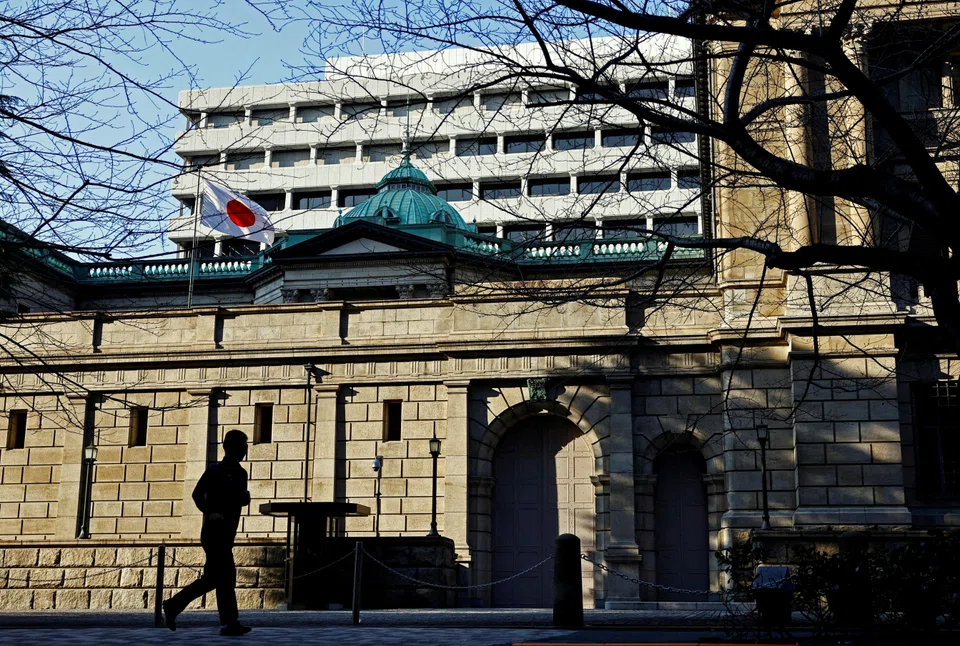
[TOKYO] The Bank of Japan (BOJ) will consider maintaining the current pace of bond purchases beyond next fiscal year, sources said, pausing a taper process that would mark a turning point in its quantitative tightening (QT) plan.
But the decision could be a close call as the nine-member board is seen as split between those who want to focus on soothing investor nerves and others who see the need to steadily slow purchases to reduce the BOJ’s large balance sheet, they said.
At its next meeting from Jun 15 to 16, the BOJ will review its bond taper plan, running through March next year, and lay out a new plan for fiscal 2027 and beyond.
With no change expected to the existing taper plan, market participants are focusing on whether the BOJ will keep reducing its monthly bond purchases beyond fiscal 2027 or maintain the current pace of roughly 2.1 trillion yen (S$16.7 billion) per month.
Having made some progress in reducing its huge balance sheet, the central bank is leaning towards pausing its bond taper, said four sources familiar with its thinking. The sources cited in this article spoke on the condition of anonymity as they were not authorised to speak publicly.
“The BOJ can afford to pause its taper as its holdings will fall significantly just with the runoff of maturing bonds,” said one of the sources, a view that was echoed by the other three sources.
The BOJ could discontinue its practice of outlining a taper plan each year and instead use an open-ended one, committing to buy at 2.1 trillion yen per month, they said.
Aside from the decision on QT, the BOJ is also expected to raise its short-term policy rate to 1 per cent from 0.75 per cent at next week’s meeting.
Having already priced in a nearly 90 per cent chance of a rate hike in June, investors are focusing on whether mounting inflationary pressures from the US-Israeli war on Iran could prod the BOJ to accelerate the pace of future rate increases.
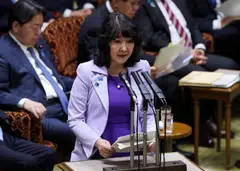

While financial conditions remain loose in Japan, the BOJ sees little need for faster or consecutive rate increases, at least for now, two other sources said, citing uncertainty over the economic fallout from the Iran war.
Board split on QT
A reduction in the BOJ’s bond holdings, which currently stand at around 530 trillion yen, has been in process since 2024 under governor Kazuo Ueda as part of efforts to normalise monetary policy after decades of ultra-low interest rates. It currently trims monthly buying by 200 billion yen each quarter.
Rising debt and volatile yields have heightened challenges for the world’s central banks, which are unwinding balance sheets that ballooned from years of heavy asset purchases to reflate their economies.
The BOJ still owns 49 per cent of all Japanese government bonds (JGB) sold in the market, making its every move hugely influential on yields and the cost of funding Japan’s huge debt pile.
Taper or not, the runoff of maturing JGBs means the BOJ will likely see its bond holdings shrink by up to 50 trillion yen per year. Already, its holdings have fallen by nearly 20 per cent from a peak in late 2023.
The BOJ has said its QT plan will seek to reduce its control over yields without causing undue volatility in a market that risks not having enough buyers to fill a huge hole left by the central bank.
Last week, Ueda said the BOJ must be mindful of maintaining bond market stability, signalling its focus on avoiding sharp fluctuations in yields.
Board member Hajime Takata, an ex-bond strategist, warned in February that the BOJ’s reduced buying could strain a market that is already awash with supply.
A taper pause, however, is not a done deal as some on the board have signalled their preference to move steadily towards reducing the BOJ’s balance sheet.
Among them is banker-turned-board-member Naoki Tamura, who voted against the BOJ’s decision last June to slash its bond buying by 200 billion yen per quarter in fiscal 2026. He instead called for a reduction of 400 billion yen.
In a speech earlier this month, board member Junko Koeda said the BOJ should “proceed steadily” with normalising its balance sheet with its huge bond holdings being an “essential factor” in doing so. REUTERS
Decoding Asia newsletter: your guide to navigating Asia in a new global order. Sign up here to get Decoding Asia newsletter. Delivered to your inbox. Free.
Share with us your feedback on BT's products and services
TRENDING NOW

DBS, OCBC, UOB rout lops billions off STI as inflation, rate concerns spook investors

Grab CEO’s wife Chloe Tong on life with Anthony Tan and finding her purpose

OCBC sheds S$8 billion in value as shares close nearly 6% down; analysts cautious on banks

Deal between tycoon friends sparks scrutiny of Philippine power sector

