Bank of Japan keeps yen watchers on edge for rate-hike clues
Yen weakness and negative real rates risk fuelling inflation, leaving the BOJ behind the curve
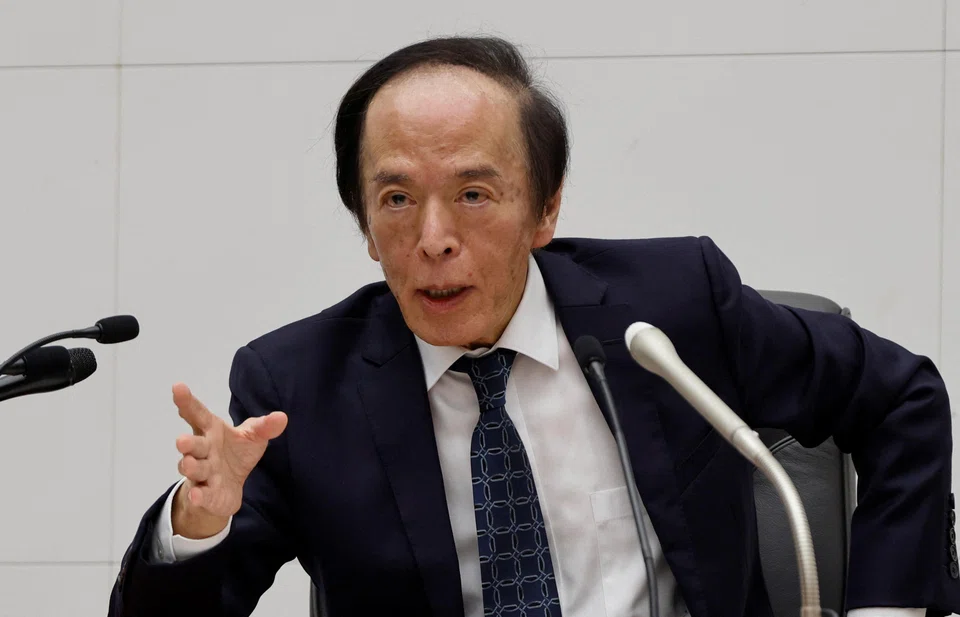
[TOKYO] The upcoming Bank of Japan (BOJ) meeting offers scope for sharp movements in the yen as investors try to gauge the timing of its next hike – with a looming election adding to the confusion.
All 52 economists surveyed by Bloomberg see an unchanged outcome on Friday (Jan 23) after policymakers raised their overnight interest rate last month to 0.75 per cent, the highest in 30 years. While that move further narrowed the gap in rates with the US, it has done little to stop downward pressure on the currency.
That means governor Kazuo Ueda will need to tread carefully during a post-decision press conference to ensure that the widely expected outcome does not trigger another yen sell-off. He will have to make clear that rates will keep going up, without boxing himself into an early move. And if he sticks too passively to existing language, yen bears may try to push their luck further.
Ueda has plenty of reasons to lift borrowing costs again. Data on Friday are set to show Japan’s inflation has averaged above the 2 per cent target for four straight calendar years, the latest sign that price growth is embedded into the economy.
Continued yen weakness, partly caused by rates that are still deeply negative in real terms, could also start to give inflation too much momentum, leaving the BOJ behind the curve in controlling it.
Nearly 60 per cent of surveyed economists already think the central bank has fallen behind. It is a view shared by US Treasury Secretary Scott Bessent, who did not miss a chance to again mention the need for “sound formulation and communication of monetary policy” by Japan after a recent discussion of currency volatility with Finance Minister Satsuki Katayama in Washington.
While 68 per cent of polled BOJ watchers see one rate hike every six months or so, a pace that would place the next move in June or July, three quarters see the yen as a risk that could hasten the next move.
That view appears to be gaining traction at the BOJ, too. While officials don’t have a preset course for rates, further yen weakness that fuels inflation could prompt them to move earlier, according to people familiar with the matter.
“We see the next hike in July. With Prime Minister Takaichi looking poised to call a snap election, we expect governor Ueda to play his cards close, sticking to recent guidance to avoid inviting any unwanted attention,” Taro Kimura, senior economist of Bloomberg Economics.”He’ll probably bat down any questions on the yen, pointing out the government calls the shots on exchange rates.”
SEE ALSO

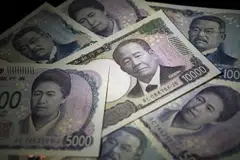

One factor that appears to have dislodged the exchange rate is the emergence of Prime Minister Sanae Takaichi, a known critic of BOJ hiking. Her plan for a snap election as soon as next month has added to downward pressure on the yen, and market players are betting on a win that would giving her more room to spend freely and slow down BOJ normalization efforts.
For Ueda, the early election is an unwanted distraction that will add to the difficulty of calibrating his post-meeting remarks to avoid a knee-jerk reaction in markets. BLOOMBERG
Decoding Asia newsletter: your guide to navigating Asia in a new global order. Sign up here to get Decoding Asia newsletter. Delivered to your inbox. Free.
Share with us your feedback on BT's products and services