

Bank of Japan should stick to easing policy: PM Kishida
 Add BT as a preferred source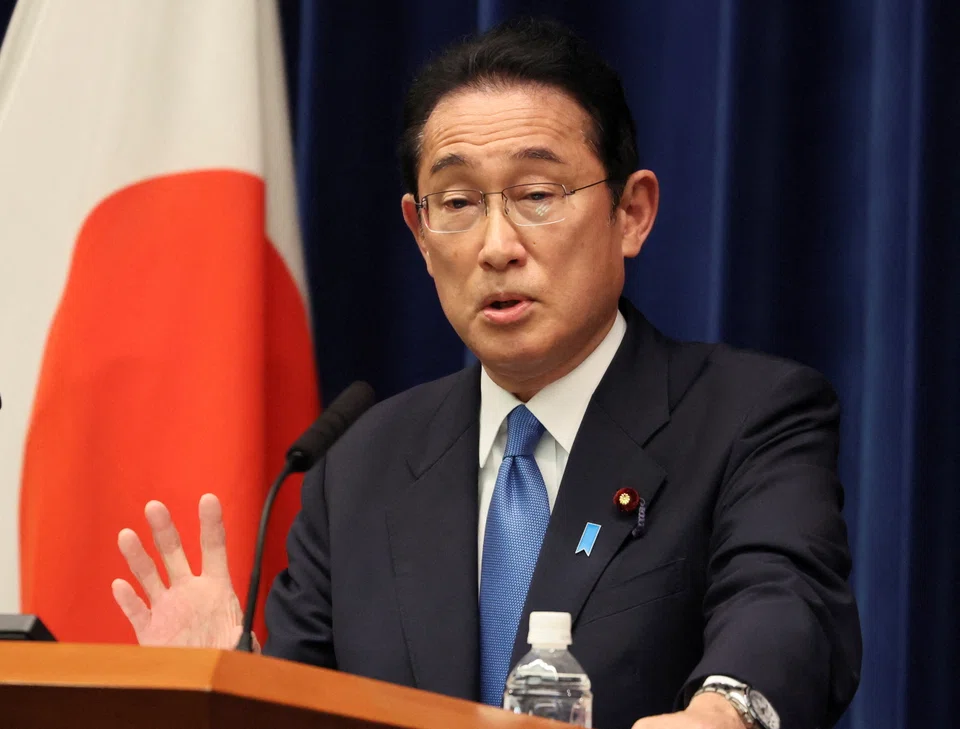
DeeperDive is a beta AI feature. Refer to full articles for the facts.
JAPANESE Prime Minister Fumio Kishida said the Bank of Japan’s (BOJ) policy of monetary easing should remain on track for now, considering the negative impact a change would have on smaller companies.
Monetary policy “should be judged comprehensively by taking into account the trends of the economy as a whole”, Kishida said on Sunday (Jun 19) on a Fuji Television network programme. A policy change could increase interest rate burdens for small and mid-sized bushinesses, which need to be taken into consideration, he added.
While the current easing policy accelerates a weakening yen, which has increased costs for items such as food and energy, Kishida said the government should take measures to stem rising prices.
The central bank last Friday pushed back against speculation of policy tightening by maintaining its yield curve control programme. The yen weakened following the decision, adding to concerns about higher import costs for the nation.
Kishida also pushed back against a call from some opposition parties to acquire a nuclear-powered submarine, saying it is likely not warranted given the high costs of the boats. Japan is already rolling out new submarines, such as its diesel-electric Taigei-class. It is looking to establish a fleet of 22 submarines, the Defense Ministry said in a security white paper.
Separately, the approval rating for Kishida’s cabinet fell 5 percentage points to 48 per cent in a poll published by the Mainichi newspaper, which showed respondents were worried about rising prices. BLOOMBERG
Decoding Asia newsletter: your guide to navigating Asia in a new global order. Sign up here to get Decoding Asia newsletter. Delivered to your inbox. Free.
Share with us your feedback on BT's products and services
TRENDING NOW

Shelving S$5 billion office redevelopment plan proved ‘wise’ as geopolitical risks mount: OCBC chairman

China pips the US if Asean is forced to choose, but analysts warn against reading it like a sports result

Beijing’s calculated silence on the Iran war

Middle East-linked energy supply shocks put Asean Power Grid back in focus

