Bank of Japan to weigh ‘pros and cons’ of rate hike in December, governor Ueda says
The slow pace of hikes has been a factor behind a weakening yen
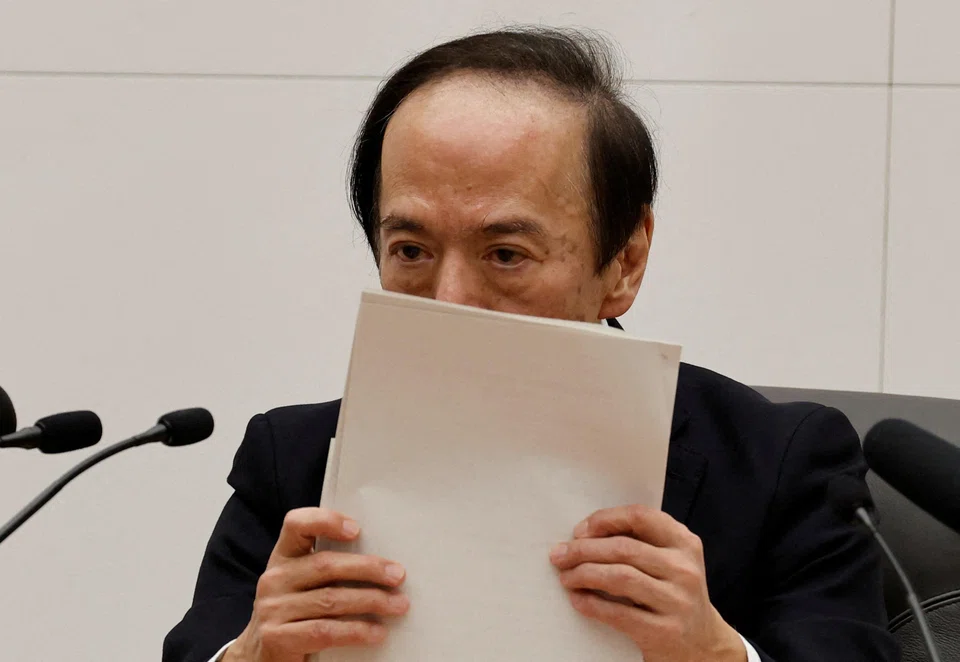
[NAGOYA] The Bank of Japan (BOJ) will consider the “pros and cons” of raising interest rates at its next policy meeting, governor Kazuo Ueda said on Monday (Dec 1), giving the strongest signal yet of a hike later this month.
The yen and bond yields rose after the remarks, which led markets to price in a roughly 80 per cent chance of a rate hike at the Dec 18 to 19 meeting – compared with around 60 per cent last week.
In a speech to business leaders in the city of Nagoya, Ueda voiced confidence that Japan’s economy will rebound from a contraction in the third quarter with the hit from US tariffs proving smaller than initially feared.
With tariff impact worries receding, the likelihood of the BOJ’s economic and price projections being met is rising, Ueda said, signalling conditions for a hike were falling into place.
“The BOJ is at the stage where it should examine whether firms’ active wage-setting behaviour will continue,” which is key to how soon it will raise the policy rate, Ueda said.
Labour shortage is more acute, corporate profit remains high and the main business lobby has called on members to continue raising wages, he said.
The BOJ was “actively collecting” data on the wage outlook ahead of its December policy meeting, he added.
“We will examine and discuss economic and price developments at home and abroad, as well as market moves ... and consider the pros and cons of raising interest rates,” Ueda said.
The yen rose 0.4 per cent to a session high of 155.49 per US dollar after Ueda’s remarks. The yield on the two-year Japanese government bond – the most sensitive to the BOJ’s policy rate – rose two basis points to 1.01 per cent, its highest since June 2008.




“Ueda essentially pre-announced a December hike,” said Naomi Muguruma, chief bond strategist at Mitsubishi UFJ Morgan Stanley Securities. “With a December hike pretty much baked in, standing pat would cause huge market turbulence.”
Not applying the brakes
The BOJ exited a massive, decade-long stimulus programme last year and raised its policy rate to 0.5 per cent in January on the view inflation was on the cusp of sustainably meeting its 2 per cent target.
While the bank has kept the rate steady since, a growing number of board members either proposed a hike, or called for doing so as stubbornly high food prices keep consumer inflation beyond 2 per cent for well over three years.
A Reuters poll last month showed a slim majority of economists expect a rate hike in December. All project an increase to 0.75 per cent by March.
With real interest rates deeply negative, another hike would still leave borrowing costs low and be tantamount to “easing off the accelerator” rather than “applying the brakes”, Ueda said.
“Being too late in adjusting the degree of monetary support could cause very high inflation and force us to respond rapidly, which would cause turmoil,” Ueda told a news briefing after the speech.
Ueda offered no clues on how high the BOJ could eventually raise rates. He said the BOJ will provide more information on how far the rate is from levels deemed neutral to the economy, once it raises the policy rate to 0.75 per cent.
The slow pace of hikes has been a factor behind a weakening yen, which has been a headache for government policymakers concerned about higher import costs stoking inflation.
Asked about the yen on Monday, Ueda said the weakness is likely to accelerate consumer inflation – a factor to which the BOJ must be vigilant in setting policy.
Renewed declines in the yen has raised the prospect of currency intervention, highlighting the administration’s concern over the negative impact of the currency’s fall.
Sources have told Reuters the BOJ is preparing markets for a possible rate hike as soon as December, as worries about sharp yen falls return and political pressure to keep rates low fades. REUTERS
Decoding Asia newsletter: your guide to navigating Asia in a new global order. Sign up here to get Decoding Asia newsletter. Delivered to your inbox. Free.
Share with us your feedback on BT's products and services