

Bank of Japan chief says he agreed to maintain dialogue with PM, no talk of June rate hike
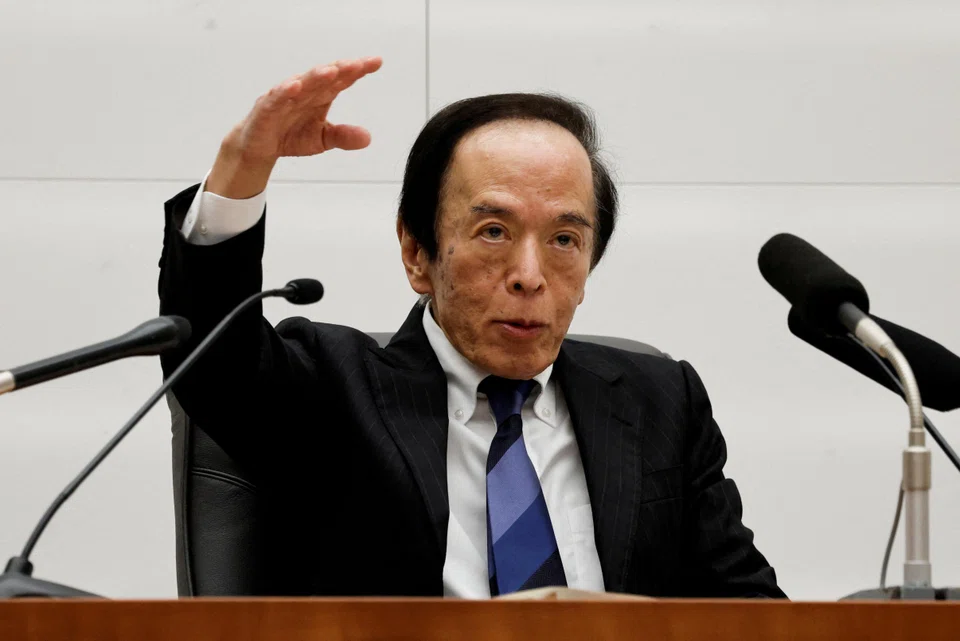
[TOKYO] Bank of Japan Governor Kazuo Ueda said on Friday he had agreed to communicate closely with Prime Minister Sanae Takaichi on monetary policy, but added the two did not discuss the possibility of a June interest rate hike.
Ueda said he met Takaichi as part of a regular exchange of views on the economy, and explained the central bank’s basic thinking on monetary policy.
The meeting came amid growing market expectations the BOJ will raise its policy rate to 1 per cent from 0.75 per cent next month, as rising fuel costs from the Middle East conflict add to mounting inflationary pressure.
However, Ueda told reporters: “There wasn’t any specific discussion on that.”
“The prime minister said she hoped the BOJ conducts appropriate policy mindful of the fact the government is taking steps to cushion the blow from rising living costs, and promoting crisis management and growth investment,” Ueda said.
“We agreed to continue communicating closely,” he said.
BOJ policymakers have recently made a series of hawkish comments that led to markets pricing in a roughly 80 per cent chance of a rate hike at the next policy meeting on June 15 to 16.
Takaichi an advocate of loose monetary policy
Analysts have said the key hurdle for a June hike would be gaining informal consent from Takaichi, an advocate of loose fiscal and monetary policy.
Takaichi and her aides have publicly voiced reservations over a near-term BOJ rate hike, arguing that the central bank should align its policy with government efforts to keep reflating the economy through spending and investment.
The BOJ’s meeting in June comes around the time the government will compile a supplementary budget to fund subsidies aimed at cushioning the blow to households from soaring fuel costs caused by the war in Iran.
The conflict is boosting the cost of living and causing supply disruptions in an economy heavily reliant on fuel imports from the Middle East.
While the BOJ is guaranteed independence in setting monetary policy by law, it has historically come under political pressure to ramp up stimulus or maintain ultra-loose monetary policy to blow life into a moribund economy.
The last time the two met was in February, when markets were simmering with speculation the BOJ could raise rates in April.
At that time, Ueda said there was nothing to reveal, when asked whether he had gained consent from the premier on the BOJ’s rate-hike stance. The central bank held off on raising rates in April. REUTERS
Decoding Asia newsletter: your guide to navigating Asia in a new global order. Sign up here to get Decoding Asia newsletter. Delivered to your inbox. Free.
Share with us your feedback on BT's products and services
TRENDING NOW

Inside Singapore’s government team that kills its own products

Once staunchly pro-China, Malaysian Chinese businesses are now distancing themselves from Beijing

Cliff Tan has 7 million followers and a 4-month waitlist. Why won’t he expand his business?

Grab CEO’s wife Chloe Tong on life with Anthony Tan and finding her purpose

