Bank of Korea delivers back-to-back rate hike to curb inflation risks
The central bank last raised rates at consecutive meetings in early 2023
 Add BT as a preferred source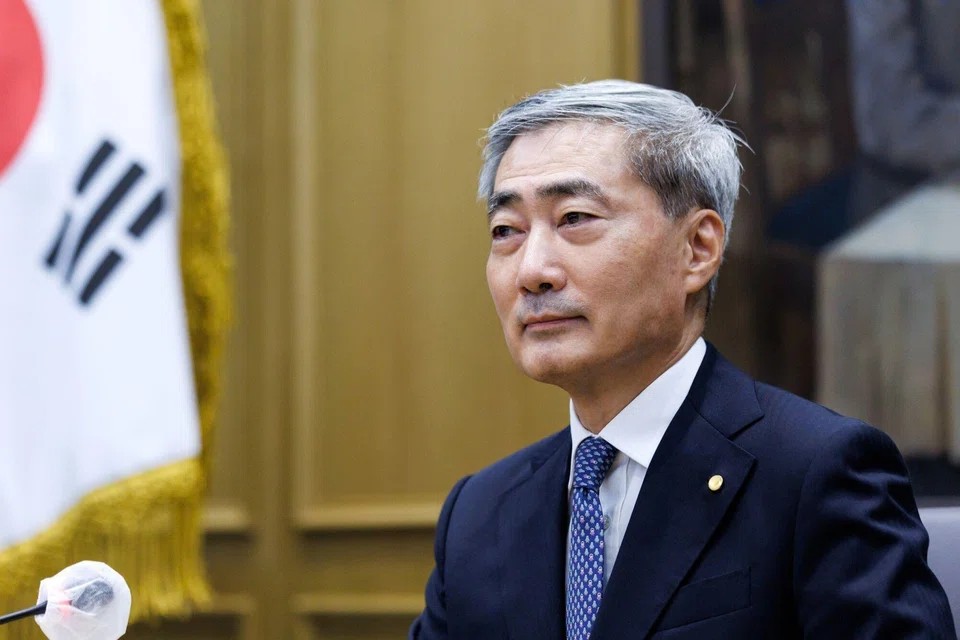
THE Bank of Korea raised its benchmark interest rate for a second consecutive meeting, moving to contain inflation risks fueled by stronger-than-expected economic growth amid an unprecedented semiconductor boom.
The won nudged higher, adding to gains in the run-up to the decision.
The central bank increased its seven-day repurchase rate by a quarter point to 3 per cent on Thursday (Aug 27), a move predicted by 14 of 22 economists surveyed by Bloomberg.
Authorities also raised the rate by a quarter point in July, the BOK’s first hike since January 2023. The central bank last raised rates at consecutive meetings in early 2023, capping a run of seven straight hikes.
The decision comes as South Korea’s export-driven economy powers ahead on exceptionally strong demand for semiconductors tied to the global artificial-intelligence build-out.
In addition to tightening policy, the BOK raised its growth forecast for this year and next substantially. For this year, gross domestic product is now seen rising 3.3 per cent, up sharply from 2.6 per cent previously, while 2027 GDP is seen expanding 2.9 per cent.
“With next year’s growth forecast at 2.9 per cent, there’s no reason for the BOK to hesitate,” said Park Jeong Woo, an economist at Nomura Holdings who had predicted the quarter-point hike. “They’ll probably be more optimistic about domestic consumption and construction next year. Government fiscal spending is also geared toward construction, and the governor has argued that higher gross domestic income will feed through to consumption.”
The won advanced to as strong as 1377.40 per dollar after the decision.
Since the July meeting, South Korea’s currency has strengthened beyond 1,400 per dollar after touching 1,562 in June, its weakest level in 17 years. The decision to conduct another increase even after the currency’s recent rally underscores the BOK’s resolve to stay ahead of inflation risks.
SEE ALSO
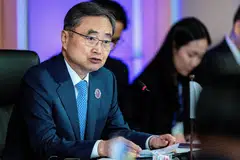


The board left its price growth forecasts intact, saying it still expects consumer inflation of 2.7 per cent this year and 2.3 per cent in 2027.
Governor Shin Hyun Song said after the July decision that the next several policy meetings would all be “live”. Since then, fresh data have largely reinforced the case for another increase.
The economy expanded 0.6 per cent in the second quarter from the previous three months, triple the 0.2 per cent pace the BOK had projected in May. The economy grew 3.7 per cent from a year earlier.
Inflation has stayed at or above the BOK’s 2 per cent price stability target for almost a year. Consumer-price growth slowed to 2.8 per cent in July from 3.2 per cent in June, while underlying price pressures remained sticky, with core inflation excluding food and energy registering 2.6 per cent growth.
Shin is scheduled to hold a press conference from around 11.10 am in Seoul, where he’ll explain the board’s thinking behind the decision and shed light on his expectations for what lies ahead. BLOOMBERG
Decoding Asia newsletter: your guide to navigating Asia in a new global order. Sign up here to get Decoding Asia newsletter. Delivered to your inbox. Free.
Share with us your feedback on BT's products and services