

Bank of Korea says higher rates needed amid housing, debt risks
The central bank also flags rising credit risks among vulnerable borrowers and businesses
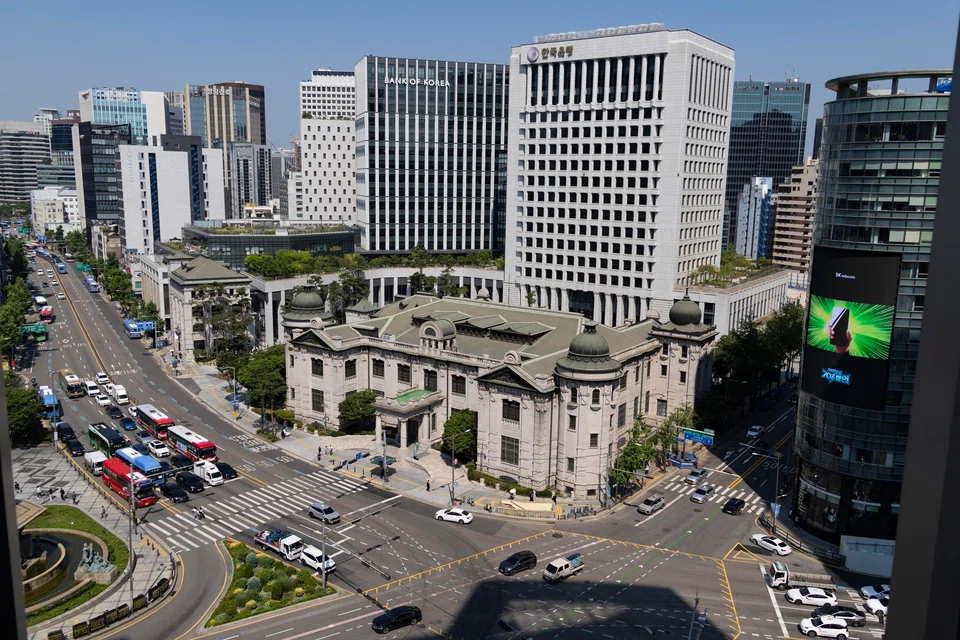
[SEOUL] South Korea’s central bank reinforced its hawkish shift, saying higher interest rates will be needed at an appropriate time as rising home prices, household debt and leveraged investment threaten to stoke financial imbalances.
In its semi-annual Financial Stability Report released on Wednesday (Jun 24), the Bank of Korea (BOK) said that the nation’s financial system remained broadly stable despite heightened uncertainty at home and abroad, supported by stronger economic growth, resilient financial institutions and a strong external payments position.
Still, the report warned that financial imbalances could build further as housing price gains accelerate in Seoul and surrounding areas, and investors increasingly rely on leverage to buy assets. The central bank also flagged rising credit risks among vulnerable borrowers and businesses, even as banks and other financial institutions maintain capital and liquidity buffers.
“The Bank of Korea has kept its benchmark interest rate at 2.5 per cent since the second half of 2025, but sees a need to raise the policy rate at an appropriate time, taking into account inflationary pressures, economic conditions and financial stability risks,” the report said.
Monetary policy board member Hwang Kunil, who oversaw the report, warned that widening polarisation across the economy could emerge as a source of financial instability. Growing stress in vulnerable sectors, together with renewed increases in household debt linked to the property market rally and leveraged investment, warrants close monitoring, he said in a separate statement.
The BOK said that it would continue coordinating monetary and macroprudential policies while strengthening oversight of household debt, leveraged investment and liquidity risks in the non-bank sector. Policymakers also said that authorities should remain vigilant over potential spillovers from global oil prices, interest rates and currency markets.
SEE ALSO

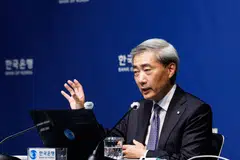

The report adds to a series of increasingly hawkish signals from the central bank under governor Shin Hyun-song. He said stronger growth, persistent inflation pressures, currency risks and rising housing prices are increasingly pointing in the same policy direction, reducing the trade-offs that often complicate monetary policy decisions. BLOOMBERG
Decoding Asia newsletter: your guide to navigating Asia in a new global order. Sign up here to get Decoding Asia newsletter. Delivered to your inbox. Free.
Share with us your feedback on BT's products and services
TRENDING NOW

DBS, OCBC, UOB rout lops billions off STI as inflation, rate concerns spook investors

Grab CEO’s wife Chloe Tong on life with Anthony Tan and finding her purpose

OCBC sheds S$8 billion in value as shares close nearly 6% down; analysts cautious on banks

Deal between tycoon friends sparks scrutiny of Philippine power sector

