Bank of Korea's governor warns of heavy Covid-19 impact on country's economy
The country's central bank held its policy rate at 0.75%, suggesting that although the economic outlook is bad, it would rather bide its time than make further major moves
 Add BT as a preferred source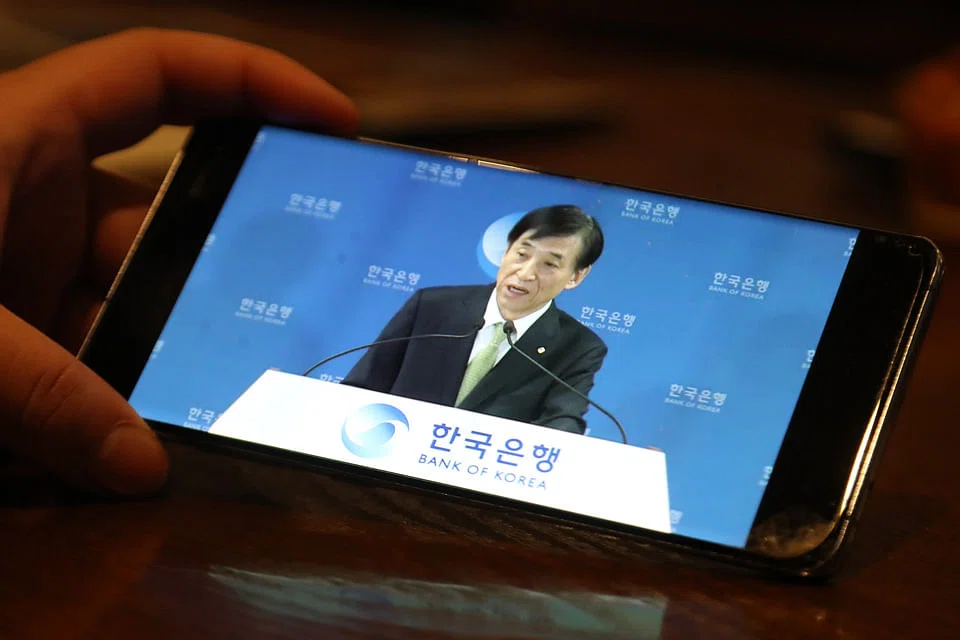
DeeperDive is a beta AI feature. Refer to full articles for the facts.
Seoul
BANK of Korea (BOK) governor Lee Ju-yeol warned that the economy would take a bigger hit from the coronavirus pandemic than the global financial crisis, but stopped short of another big ramping up of stimulus for now.
South Korea's central bank held its policy rate at 0.75 per cent in a move forecast by nine of 17 analysts surveyed by Bloomberg.
The BOK announced further measures to channel liquidity to the economy, expanding the range of bonds eligible for its open-market operations and flagging outright purchases of government bonds.
The stand-pat decision and governor Lee's comments suggested that while the outlook for the economy is bad, the bank would rather bide its time before any further major moves.
Mr Lee said the BOK still has room to take rates below the current record low, and pledged to take active steps within the legal boundaries set out for the bank.
Navigate Asia in
a new global order
Get the insights delivered to your inbox.
"The chances of a global recession are high, with the shock to economies expected to be larger than that during the global financial crisis," he said in a post-decision briefing.
South Korea's economic growth will significantly trail the 2.1 per cent forecast made in February, but will manage to stay above zero per cent this year, he said.
The BOK is taking stock after a flurry of measures last month, including an emergency rate cut and a pledge to inject unlimited liquidity into the market via repurchase agreements.
South Korea's government is also rolling out stimulus like never before, with a second extra budget lined up.
Chang Min, a researcher at the Korea Institute of Finance and a former central bank official, said: "Considering the diminishing ammunition after previous cuts, it's not surprising the BOK is holding.
"This doesn't mean that the situation is improving, though. The BOK is likely to keep coming out with non-rate measures to stabilise markets."
While the BOK has taken unprecedented steps to backstop the economy, it has been relatively modest compared with global peers who cut rates to close to zero and stepped into quantitative easing.
While some of the moves Mr Lee has taken to ensure ample liquidity could inch the BOK a little closer towards QE, there is still no clear sign that the bank is ready to take a deep plunge into non-conventional policy.
The South Korean bank appears to prefer more targeted approaches, while preserving bazooka shots of another rate cut and non-traditional measures for when the economy is really in need.
Mr Lee said BOK lending to private firms could exceed the typical role of a central bank and would require discussions with the government.
South Korea's bond futures jumped while government bond yields fell as he said that the central bank would announce an outright purchase of government bonds later in the day.
After his briefing, the BOK said it planned outright purchases of 1.5 trillion won (S$1.75 billion) worth of government bonds to help financial firms unload some of their holdings to increase their liquidity. The amount was in line with a previous operation.
With the pandemic continuing to wreak havoc on South Korean economy, the BOK's rate pause may indeed be short-lived.
About half the surveyed analysts had expected the BOK to ease on Thursday. Two of the BOK's board members dissented and called for an immediate 25-basis-point cut at the meeting.
While virus cases are slowing in South Korea and in China, its largest trade partner, a recovery in global demand is elusive as large parts of the world are at a virtual standstill.
South Korea's government also extended its social-distancing rules as a precaution against a second wave of infections.
Many economists expect South Korea to grow this year at the weakest pace since the Asian financial crisis two decades ago, or even contract.
Recent reports show South Korea's retail sales, confidence and investments all sliding, and a mild contraction in exports is set to deepen as the pandemic puts global supply chains in disarray and hurts overall demand.
One silver lining though, amid the pandemic, has been greater demand for the country's memory chips, the largest source of export revenue. The increase in online activities has led to Samsung Electronics beating earnings estimates this week.
"The BOK has left the door open for another cut by mentioning it still has room," said Yoon Yeo-sam, a fixed income analyst at Meritz Securities. "But Lee won't necessarily go overboard, given that he says markets have become stable. A rate cut and loans to securities companies are cards that he could use if situations get worse."
The BOK's next scheduled meeting is on May 28, when the bank will revise its 2.1 per cent growth and one per cent inflation projections for this year.
The board will have new faces by then, as four of the seven-member board have terms ending on April 20. BLOOMBERG
Decoding Asia newsletter: your guide to navigating Asia in a new global order. Sign up here to get Decoding Asia newsletter. Delivered to your inbox. Free.
Share with us your feedback on BT's products and services