

Bank of Korea’s new chief signals flexible policy amid oil risks
Shin Hyun-song also highlights a longer-term need to reassess the role of the central bank
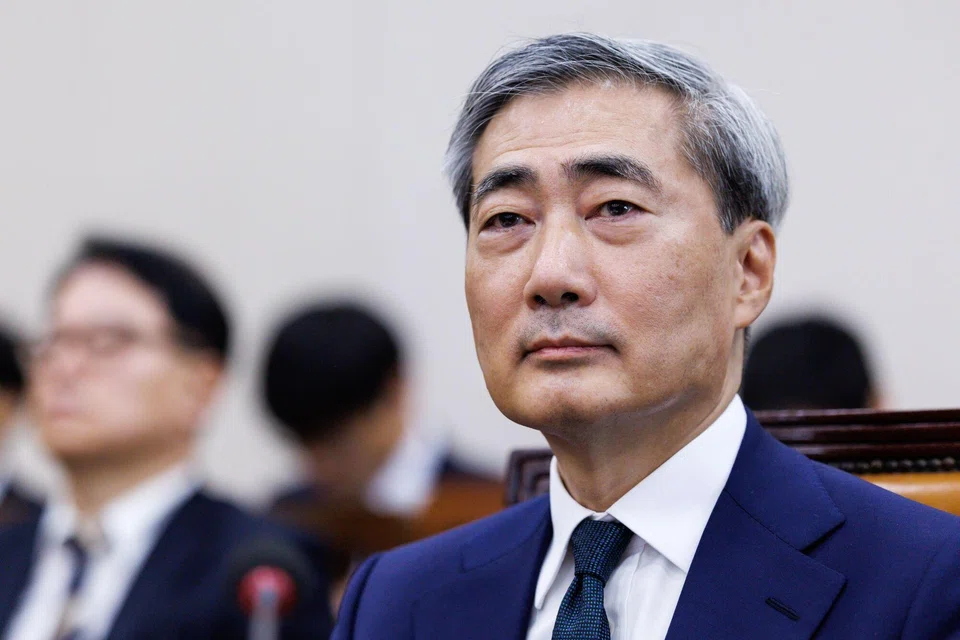
[SEOUL] South Korea’s new central bank chief signalled a cautious and flexible approach to monetary policy as higher oil prices add to inflation pressures while clouding the outlook for economic growth.
Shin Hyun-song, who took office on Tuesday (Apr 21) succeeding Rhee Chang-yong, also highlighted a longer-term need to reassess the role of the central bank, saying structural challenges such as demographic shifts, inequality and the property market should be considered an integral part of monetary policy.
The new governor said that the economy currently faces mounting uncertainty as the Middle East crisis continues, with higher global energy prices lifting upside risks to inflation even as downside risks to growth strengthen.
“Uncertainty over the paths for inflation and growth has increased significantly due to supply shocks stemming from the Middle East conflict,” Shin said in his inaugural address. He pledged to conduct monetary policy “in a prudent and flexible manner” to ensure price and financial stability.
Shin’s remarks suggest the Bank of Korea (BOK) will maintain a data-dependent stance in the near term, as policymakers weigh the impact of rising import costs and exchange-rate pressures against slowing domestic momentum. The comments come after import prices surged last month by the most in nearly three decades, underscoring the pipeline pressure from higher oil prices.
Looking at the bigger picture of the central bank’s role, the governor noted that structural challenges should no longer be considered external constraints. “Structural factors are not separate from monetary policy, but a key part of the environment in which it operates,” Shin noted, adding that the central bank will deepen research and policy recommendations in these areas.
The comments build on warnings from outgoing governor Rhee that traditional policy tools are becoming less effective in steering the economy, as structural shifts weaken the transmission of interest-rate decisions.
The former head of the economic department at the Bank for International Settlements also outlined plans to strengthen the central bank’s approach to financial stability, highlighting the need to better capture risks across non-bank institutions and increasingly interconnected markets. He said that the BOK will expand its use of market-based indicators and enhance early-warning systems to detect vulnerabilities.
On the currency, Shin pointed to efforts to enhance the global presence of the won, including plans to extend foreign-exchange market trading hours and develop offshore settlement infrastructure. He explained that these measures would help improve accessibility and resilience in currency markets, while supporting broader financial stability.

The new governor also stressed the need to prepare for a more digital financial system, pledging to advance work on a central bank digital currency and related technologies while ensuring safeguards are in place to maintain stability.
Oxford-educated Shin takes office at a time of heightened global volatility, as geopolitical tensions, shifting trade dynamics and rapid technological change reshape the economic landscape.
“The evolution of central banks has not been driven by established theory, but rather a process in which experience has given rise to theory,” Shin added. “The challenges we face today likewise require us to find answers through practice and to develop new frameworks along the way.” BLOOMBERG
Decoding Asia newsletter: your guide to navigating Asia in a new global order. Sign up here to get Decoding Asia newsletter. Delivered to your inbox. Free.
Share with us your feedback on BT's products and services
TRENDING NOW

Once staunchly pro-China, Malaysian Chinese businesses are now distancing themselves from Beijing

Looking beyond looming CEO succession, should UOB potentially pursue a transformative merger?

Could stablecoins be the future of money?

Grab CEO’s wife Chloe Tong on life with Anthony Tan and finding her purpose

