

Bank lending to plastics industry faces scrutiny as pollution concerns mount
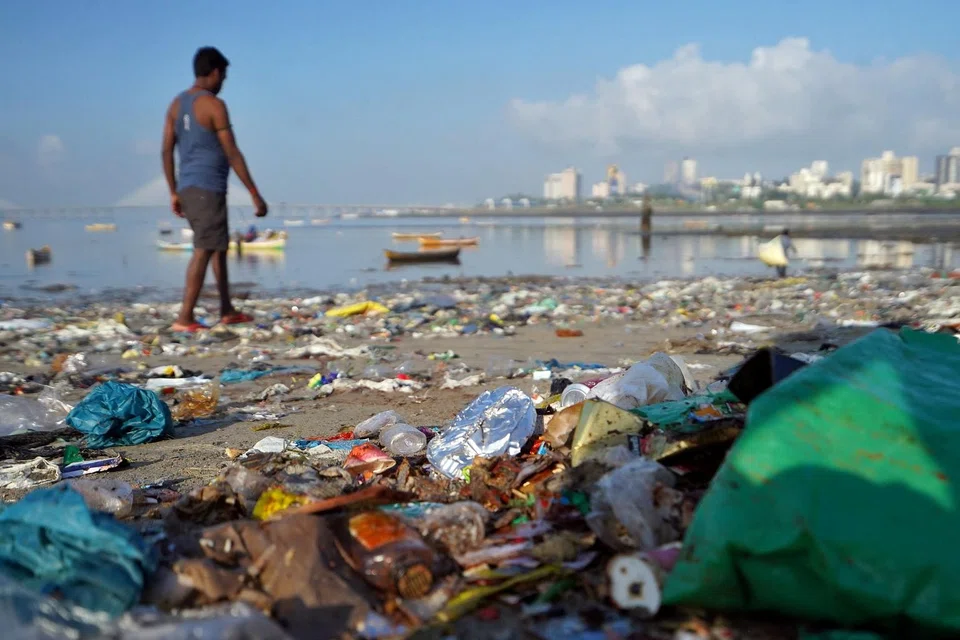
[LONDON] Banks have provided US$1.7 trillion of finance to 40 companies in the plastics supply chain without imposing any requirements to tackle plastic pollution pouring into the world's rivers and oceans, according to a report published on Thursday.
With European and US banks increasingly spurning the most polluting fossil fuel projects to help slow climate change, campaigners want lenders to take a similar approach to plastics by making loans conditional on measures to boost recycling.
"What the financial sector needs now is someone to step forward and say 'okay, we're going to take a look at plastics,' and then others will follow," said Robin Smale, director of Vivid Economics, a consultancy, which audited the report.
Compiled by Portfolio.earth, a research network, the report ranked Bank of America Corp, Citigroup Inc and JPMorgan Chase & Co as the three biggest financiers of plastics between January 2015 and September 2019.
Each bank provided from US$144 billion to US$172 billion in loans and underwriting to companies from chemicals, packaging and drinks manufacturers to retailers, the report found.
Barclays and HSBC were ranked as the largest plastics financiers among European peers, extending US$118 billion and US$96 billion respectively.
Citigroup referred Reuters to existing sustainability commitments. JPMorgan, Barclays and HSBC declined to comment.
Bank of America did not immediately respond to a request for comment.
Public concerns over plastic have risen in recent years, as scientists have discovered contamination in once pristine environments from ocean depths to the Arctic.
The report said none of 20 global banks that provided the bulk of financing for the plastic packaging industry had introduced any due diligence or exclusion criteria.
But banks could tackle plastic pollution by making loans contingent on ambitious re-use and recycling schemes, and by lobbying governments to support such measures, the report said.
REUTERS
Decoding Asia newsletter: your guide to navigating Asia in a new global order. Sign up here to get Decoding Asia newsletter. Delivered to your inbox. Free.
Share with us your feedback on BT's products and services
TRENDING NOW

He built the Vingroup empire. Now South-east Asia’s richest man is handing some key roles to his sons
US dollar falters after Iran’s offer to reopen Hormuz sends oil lower
Temasek’s Wan Chee Foong to helm PIL, Lars Kastrup to be board adviser
Despite the de-dollarisation debate, demand for dollar liquidity in Asia is growing

