

Bank of Korea considers timing of next hike after standing pat
 Add BT as a preferred source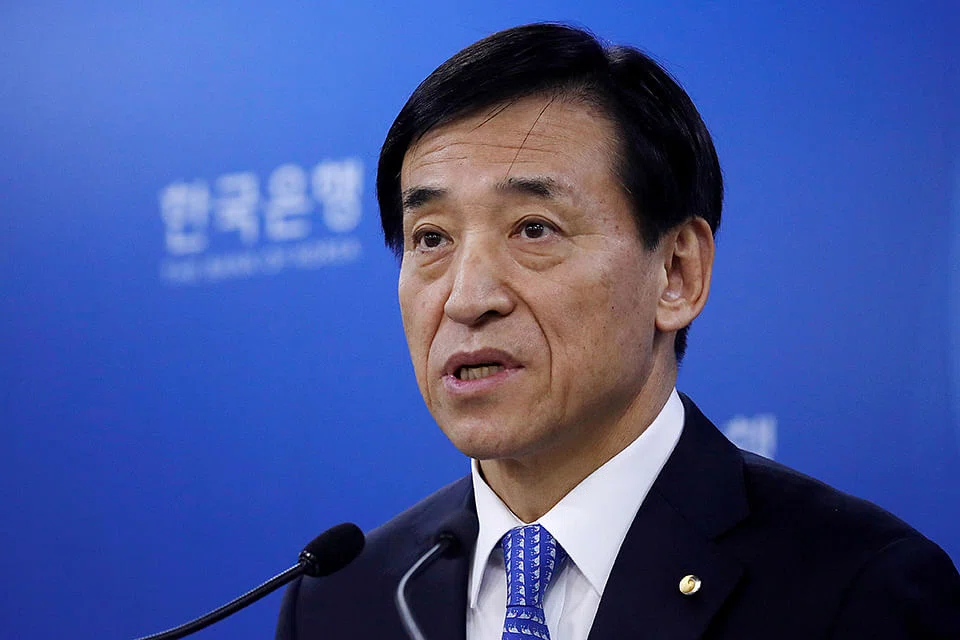
DeeperDive is a beta AI feature. Refer to full articles for the facts.
Seoul
BANK of Korea (BOK) Governor Lee Ju-yeol gave his strongest signal yet that a rate hike is likely in the works in November, as he flagged worsening financial imbalances, growing inflationary pressures and solid recovery momentum.
The central bank's decision to hold rates at 0.75 per cent on Tuesday (Oct 12) was opposed by two members, who called for a back-to-back increase following August's liftoff.
Dissension on the board typically comes before a BOK policy move, and the latest example pushed up South Korean bond yields.
"We held the rate this month, but we will look into whether to raise the rate again next month while watching the situation," Lee said. "If the situation doesn't deviate too much from the one the board is looking at, it's the view of the majority today that it will be good to consider an additional hike."
The BOK's determination to pursue higher rates puts it at the forefront of the region's monetary tightening, with New Zealand the only other developed Asian nation to have raised interest rates.
Navigate Asia in
a new global order
Get the insights delivered to your inbox.
Still, the BOK will keep a close eye on Federal Reserve policy and any tapering moves as it plots its rate path and ensure it does not trigger market volatility by moving too fast.
Roh Hyun-woo, a strategist at Hanwha Asset Management, said: "Lee has grown increasingly confident that the economy can withstand another hike, mostly picking indicators that shore up his view. He has offered as strong a signal for a hike at the next meeting as he could."
The governor also said borrowing costs were still well below a neutral rate for the economy and that one hike was not enough to deal with the financial imbalances that are the main concern for the central bank.
Lee said risk-taking and excessive leveraging have continued despite macroprudential regulations, and said monetary policy needs to move in tandem if there is to be an impact.
The housing market rally has been a concern for policy makers as it is built on leverage and is at risk of a sharp correction if shocks emerge.
The BOK sees debt bubbles as a threat to long-term economic growth. Continued strength in the recovery of Korea's economy is giving the central bank confidence that it can crack on with policy normalisation.
The bank maintained its view that the economy will expand 4 per cent this year. Even with local outbreaks, consumption will improve on the back of rising vaccinations, Lee said.
While acknowledging external headwinds from supply chain woes and China risks, he said the global recovery would continue as economies reopen. Inflation is also providing a reason for the BOK to act sooner rather than later. It expects price gains to run at the mid-2 per cent level for some time before cooling.
Swap markets show bets for two quarter-percentage-point hikes within six months. With a November hike in sight, complicating rate projections beyond that would be Lee's term, which ends in March 2022.
Korea's government bonds reversed gains and fell following the governor's briefing. The three-year yield jumped nine basis points to 1.79 per cent as of 1.19 pm in Seoul. The won was down 0.4 per cent at 1,199.65 per dollar, after briefly slipping below its key 1,200 level earlier. Lee said the bank can take appropriate steps if the market becomes volatile. BLOOMBERG
Decoding Asia newsletter: your guide to navigating Asia in a new global order. Sign up here to get Decoding Asia newsletter. Delivered to your inbox. Free.
Share with us your feedback on BT's products and services
TRENDING NOW

StarHub hands Ensign InfoSecurity control back to Temasek in S$115 million deal, books S$200 million gain
Singaporeans can now buy record amount of yen per Singdollar

Air India asks Tata, Singapore Airlines for funds after US$2.4 billion loss

Keppel DC Reit posts 13.2% higher Q1 DPU of S$0.02833 on strong portfolio performance

