Bank of Korea hikes rates as price fears mount
 Add BT as a preferred source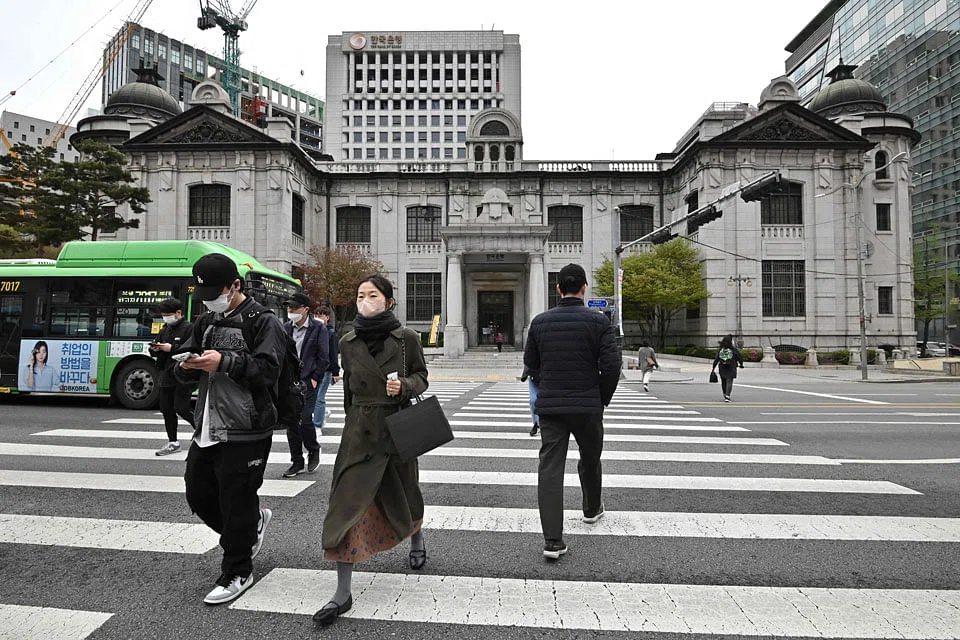
DeeperDive is a beta AI feature. Refer to full articles for the facts.
Seoul
THE Bank of Korea (BOK) added to a wave of global action against inflation this week by raising its key interest rate on Thursday (Apr 14), brushing aside concerns about a leadership vacuum at the bank and global risks to the export-dependent economy.
The central bank raised its 7-day repurchase rate by a quarter percentage point to 1.5 per cent in the board's first-ever decision without a governor in place. Some 11 economists surveyed by Bloomberg had expected the hike, while 10 forecast policy would remain unchanged.
While the BOK warned that the economy would grow less than previously forecast this year, the decision highlights the more pressing sense of urgency among policymakers to tackle inflation fuelled by the war in Ukraine. The bank last week warned it's likely to remain in a 4 per cent range for the foreseeable future.
"Big changes have happened since the February meeting," Joo Sang-yong, acting chairman of the policy committee, said at a press briefing after the decision. "We concluded the existing inflationary pressures could go on for longer than expected due to the Ukraine situation. So despite the vacancy of the governor position, we had no choice but to respond."
South Korean bonds rallied, with the yield on the nation's 3-year bond falling as much as 10 basis points to 2.9 per cent, as uncertainties over the central bank's policy path eased. The won was little changed, up 0.2 per cent to 1,224.65 per US dollar.
Navigate Asia in
a new global order
Get the insights delivered to your inbox.
Central banks worldwide are struggling to cool consumer prices fuelled by pandemic-era stimulus and exacerbated by Russia's invasion of Ukraine. Singapore also took action Thursday, using an aggressive dual move to tighten its currency-focused policy for the first time since 2010. The Bank of Canada and the Reserve Bank of New Zealand weighed in with jumbo half-percentage point hikes on Wednesday. Meanwhile, Federal Reserve policymakers have signalled they could move in half-point steps if needed, starting when they next meet in early May.
The BOK's decision should be seen as a pre-emptive step in light of higher-than-expected inflation, consumer-price concerns among the presidential transition committee, the large hikes in New Zealand and Canada and the strong possibility of the Fed following them, said Cho Yong-gu, a fixed-income strategist at Shinyoung Securities.
"Realistically speaking, this paves the way for a maximum of 2 more hikes by the end of the third quarter," Cho said, raising the chance of the rate reaching 2.25 per cent by year-end.
The BOK already raised rates 3 times between August and January to tackle soaring asset prices and inflation, before standing pat in former Governor Lee Ju-yeol's final meeting in February.
The nominated new Governor Rhee Chang-yong has made clear he sees inflation as a pressing concern ahead of a parliamentary hearing on Apr 19. Assuming Rhee is confirmed in the role, as is widely expected, he may continue with the push towards normalisation, starting as early as the next policy meeting on May 26. The unanimous decision to raise rates even in the absence of a governor, suggests Rhee doesn't face any immediate opposition to continuing along a tightening path.
The BOK has been in the vanguard of central-bank tightening since the global economy began to emerge from the grip of the pandemic last year. The bank was initially concerned about inflated asset prices from ultra-low rates, before switching to focus more on intensifying inflationary pressure. BLOOMBERG
Decoding Asia newsletter: your guide to navigating Asia in a new global order. Sign up here to get Decoding Asia newsletter. Delivered to your inbox. Free.
Share with us your feedback on BT's products and services