

Bank of Thailand's governor won't seek a second term
 Add BT as a preferred source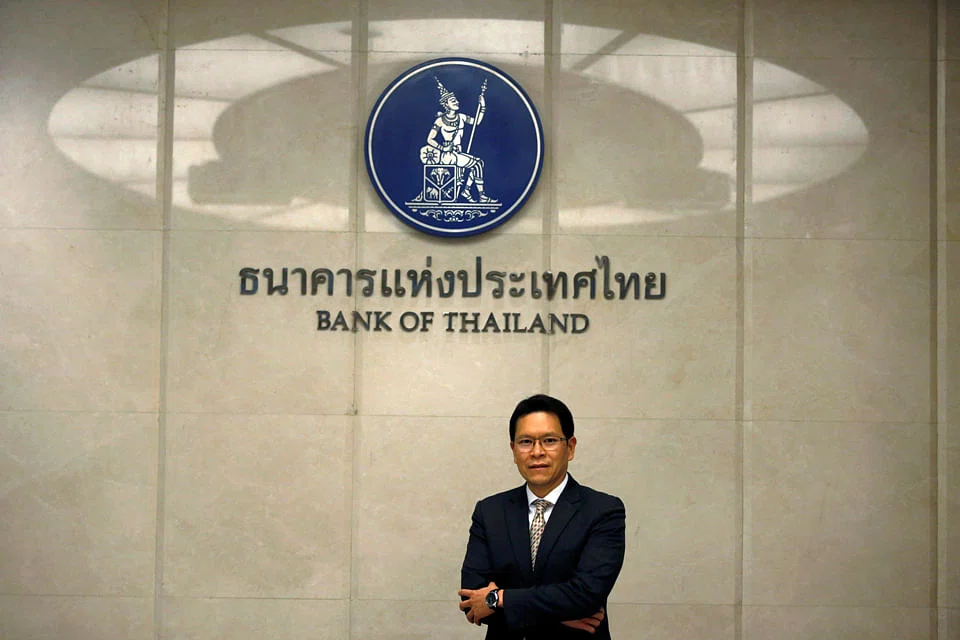
Bangkok
A NEW governor will take on the task of shaping Bank of Thailand policy for the Covid-19 induced economic crash after incumbent head Veerathai Santiprabhob decided against seeking a second term.
Mr Veerathai, for family reasons, won't apply for another five years as the head of the central bank, assistant governor Chantavarn Sucharitakul said in a statement on Monday. He'll ensure a smooth transition when his term ends in September, she said.
The window for applications for the post runs from Tuesday to June 16, and until Monday's statement there had been speculation about whether 50-year-old Mr Veerathai planned to carry on. His successor faces the task of steering an economy set to shrink the most this year since the 1990s Asian financial crisis.
"The change of governor is unlikely to affect policy direction," said Jitipol Puksamatanan, the head of market strategy at SCB Securities Co, in Bangkok. "The risk may arise if there's a strong sense of government intervention in the selection, which could impact the confidence of foreign investors."
The government has repeatedly stressed the Bank of Thailand's seven-member monetary policy panel independently votes on interest-rate decisions.
Navigate Asia in
a new global order
Get the insights delivered to your inbox.
The central bank has cut interest rates three times to a record low 0.5 per cent in 2020, and said that it's studying options such as a large-scale asset purchase programme and some form of yield-curve control, if they become necessary.
In March, the Bank of Thailand rolled out a liquidity facility spanning more than 1 trillion baht (S$45 billion) of fixed-income and money market portfolios after corporate bond markets globally suffered major stresses during the worst of the coronavirus-sparked plunge in risk assets. Last month, the central bank started a 400 billion baht stabilisation fund for companies rolling over maturing debt. It's also taken steps to provide cheap funds for commercial banks to lend to small and medium-sized companies.
The National Economic & Social Development Council earlier in May forecast the Thai economy may shrink as much as 6 per cent this year. The pandemic has damaged the country's traditional drivers of tourism and trade.
Mr Veerathai became governor in October 2015, about a year and a half after a military coup in Thailand. He faced a sluggish economy burdened by elevated household debt and a strengthening currency. His tenure was marked by a series of steps to restrain the baht. An economist and devout Buddhist with a doctorate from Harvard University, Mr Veerathai previously said that meditation is his way of staying balanced in a volatile world. BLOOMBERG
Decoding Asia newsletter: your guide to navigating Asia in a new global order. Sign up here to get Decoding Asia newsletter. Delivered to your inbox. Free.
Share with us your feedback on BT's products and services
TRENDING NOW
On the board but frozen out: The Taib family feud tearing Sarawak construction giant apart

Is it time to scrap COE categories for cars?
Thai and Vietnamese farmers may stop planting rice because of the Iran war. Here’s why
As more Asean states turn to Russia for fuel, will Moscow boost its influence in the region?

