

Banking and insurance are different businesses, but together they can yield synergies: analysts
The debate over banking and insurance ownership, and the merits of different models, recently resurfaced in the Singapore market

BANKING and insurance may be two different businesses, but analysts say there are undeniable opportunities for both of them when partnered together.
For instance, banks can gain fee income as well as lower credit risks and customer attrition through insurance partnerships.
Meanwhile, insurers benefit from having a productive distribution channel, access to a large customer base, and the connection with wider financial services, said Bernhard Kotanko, senior partner at McKinsey & Company.
“You can get a good (ROE) for your business, but then I could also go into the jam-making business and say that’s a great business as well.”
DBS CEO Piyush Gupta
However, DBS chief executive Piyush Gupta believes there is “no obvious synergy” between banks and insurers.
“Manufacturing insurance takes a very different skill set. If you’re doing your own manufacturing and distributing it, you still have to run two separate companies – an insurance company and a banking company,” Gupta said in response to queries on DBS’ insurance strategy at a media briefing in May.
DBS in 2001 sold its insurance unit, The Insurance Corporation of Singapore, to CGNU – now known as Aviva. It maintained a bancassurance deal with Aviva until 2015, and is now partnered with Manulife until 2031.
While the deal was before Gupta’s time, he said he would have made the same choice.
Companies need to pick and choose their businesses based on their core competencies and where they think they can create the greatest value for their shareholders, he added.
Analysts agree that the distributor model allows banks to focus on their core banking business.
There are many pathways to enjoy the benefits of banking and insurance without the entities having to own each other, said Thilan Wickramasinghe, Maybank Securities’ head of research in Singapore.
For example, bancassurance partnerships – where the bank receives fees and incentives for distributing insurance products manufactured elsewhere – frees the bank from having to manage an insurance business, he said.
This reduces volatility to earnings from mark-to-market changes of insurance portfolios, and could release capital for opportunities that could generate higher returns on equity (ROEs), he added.
Bancassurance gaining popularity
For DBS, focusing on banking and the distribution part of insurance was a better use of its capital and management capabilities, Gupta said.
“You can get a good (ROE) for your business, but then I could also go into the jam-making business and say that’s a great business as well,” he said.
Ivan Tan, a banking analyst at S&P Global Ratings, said the bancassurance model also allows banks to offer insurance products to its customers without incurring significant investments or needing to maintain internal expertise.
One potential disadvantage, he notes, is that there could be low levels of integration between the bank and the insurer.
In contrast, the wholly owned insurance model can leverage the bank’s existing customer base to develop fully integrated product suites, reflecting a high degree of control and autonomy, he said.
Nevertheless, there is no indication that one banking-insurance model is better than the other, said McKinsey’s Kotanko.
The true success factor would be mutual commitment based on shared aspirations, jointly designed and run initiatives, and an effective shared governance model.
“In that context, purely transactional ‘open architecture’ bancassurance has shown to be less productive in many places,” he said.
Today, the bancassurance model is gaining popularity.
For the first time in eight years, US banks are selling off their insurance units at a quicker pace than they are acquiring them, based on a November 2023 report by S&P Global Market Intelligence.
Banking and insurance synergy
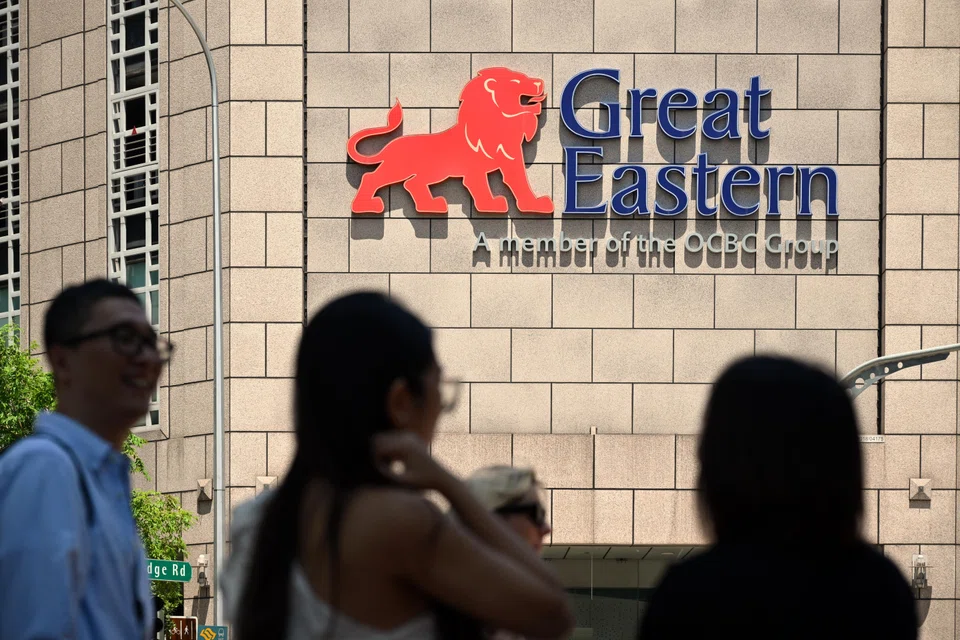
Debate over banking and insurance ownership, and the merits of different models, recently resurfaced in the Singapore market after minority shareholders of Singapore’s largest insurer, Great Eastern Holdings (GEH), in February requested the board to improve GEH’s depressed share price and valuations.
The minority shareholders also questioned OCBC’s plans for the insurer, given its 88.44 per cent stake in GEH. The bank operates its insurance business under the majority-owned subsidiary, and both are listed on the Singapore Exchange (SGX).
On May 10, OCBC made a voluntary unconditional general offer of S$1.4 billion for the remaining 11.56 per cent stake it does not own, with the aim of delisting the insurance arm.
The lender expects the privatisation to strengthen its business pillars of banking, wealth management and insurance, as well as optimise its capital to enhance shareholder returns.
OCBC has always emphasised the importance of GEH as one of its strategic pillars.
The insurance segment was a key contributor to its record earnings in the first quarter of 2024. Its net profit rose 22 per cent to S$1.98 billion amid record total income, cost controls and lower allowances.
Insurance income was S$289 million, significantly higher than Q4 2023’s S$88 million, due to better investment performance and an improvement in claims experience.
During OCBC’s annual general meeting in April, its chairman said the lender should be seen as a financial conglomerate of many parts.
Maybank’s Wickramasinghe noted that entities with conglomerate structures typically attract conglomerate discounts.
“Sometimes, these structures are justified as synergies and gains in scale more than offset the (discounts),” he said.
Notably, there are other banks, such as HSBC, that choose to retain their insurance arms.
UOB also still has UOI , its SGX-listed general insurance unit. But the lender already sold its life insurance arm to Prudential in 2010, and its current strategy is to focus on distributions.
UOB chief executive Wee Ee Cheong believes the existence of companies willing to manufacture and distribute their own insurance products is “exciting for the market”.
He told reporters in May: “You provide investors the diversity to pick and choose, rather than have everybody following the same path.”
TRENDING NOW
DBS remains analysts’ pick ahead of Q3 earnings after Singapore banks’ share slump

Singapore identifies 7 firms responsible for haze fires, notices issued urging action: Grace Fu

Good Class Bungalow market activity picks up pace on ‘realistic’ pricing

High Court rules against Julius Baer’s Singapore trust arm in US$50 million family trust dispute

