

Banking services disruption heightens need for multiple payment methods, say retailers


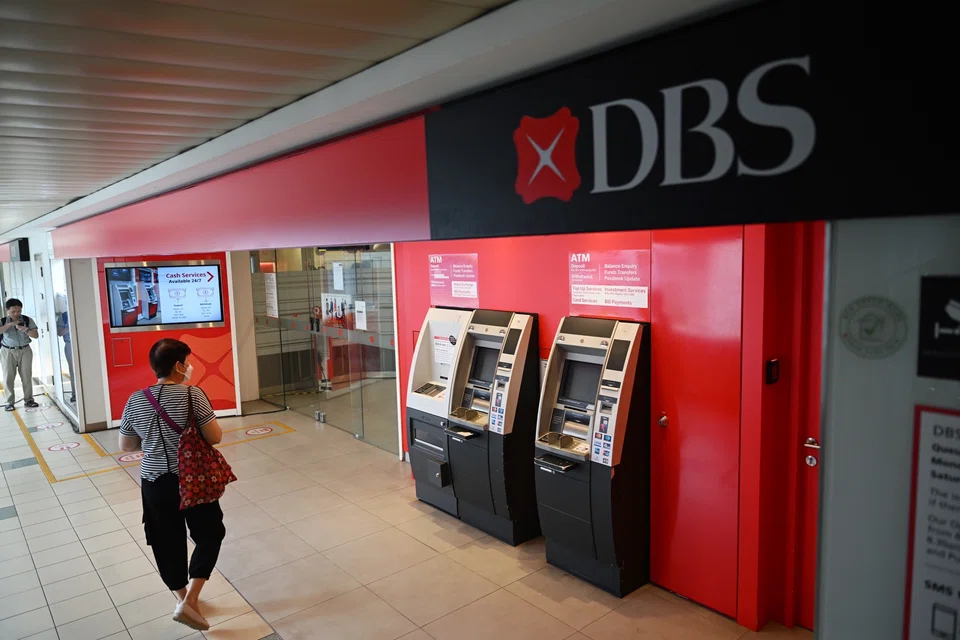
AFTER the weekend’s major disruption of DBS and Citi banking services, it was business as usual for small retailers on Monday (Oct 16), though some say the incident has reinforced the need for multiple payment methods.
In an informal poll by tenant group Singapore Tenants United for Fairness (SGTuff) on Monday, about one-third of the 76 respondents said they were still affected by the outage “to a small extent”.
This includes not having received customer payments that were made via PayNow to DBS accounts over the weekend, SGTuff chairman Terence Yow told The Business Times (BT).
In response to queries from BT, a DBS spokesperson said: “We are aware that some of our corporate customers’ transactions were interrupted when the disruption happened, and have been processing these with utmost priority.
“This has now been completed, and we are in the midst of notifying the affected merchants.” Both DBS and Citibank said all their banking services resumed on Sunday.
On Saturday, shoe retailer Jernn accepted a few payments via PayNow, with customers’ apps showing successful transactions.
But the funds had not been received on Monday, said owner Janet Tan. Each transaction involved about S$200 to S$300.
“We stopped (the PayNow payments) after a while, because we felt insecure… the transfer is supposed to be immediate, but we didn’t receive the notification on our end,” she said.
As a stopgap measure over the weekend, customers were directed to make PayNow payments to an employee’s personal OCBC account.
As her retail stores have only DBS payment terminals – which were not working over the weekend – Tan estimates that the outage resulted in about 20 per cent of would-be sales being unrealised, given that most of her customers favoured paying by credit card.
Lik Wong, managing director of outdoor gear brand X-Boundaries, said he lost about S$500 in sales on Saturday from customers who were unable to make a purchase on the spot. His store uses a DBS payment terminal only.
Most credit card payments could not be processed, except for transactions using American Express cards – which lessened the impact, he added.
Most companies BT spoke to said they were unaffected by the disruptions on Saturday, as they did not bank with DBS or Citi.
But they said the outage reinforced the wisdom of accepting multiple payment options, including cash.
Andrew Tan, owner of Japanese lifestyle store Atomi, told BT that he banks only with Standard Chartered. Most of his customers also had credit cards from other banks on hand, which minimised disruptions on Saturday.
Even so, it is important for operators to have a contingency plan for times when credit card machines are down, he said.
Tan’s store has two credit card payment terminals: one wireless and one connected by a landline. His store also accepts payments through Atomi’s website, PayNow, bank transfer – or cash, “if all else fails”.
Since Sunday, X-Boundaries has put in place PayPal as an alternative payment method, said Wong. Customers can also make payment via X-Boundaries’ website or in cash.
Singapore Retailers Association treasurer Pang Fu-Wei said banking services were restored by Sunday for the association’s members.
Retailers – especially those with multiple brick-and-mortar stores – typically have accounts with multiple banks, said Pang, who is also group managing director of retailer Mothercare.
This is important, even though it means additional costs and complexities, he added. “You have to do reconciliation at month’s end, and it’s an additional business cost, (but) for retailers, it’s essential.”
Small and medium-sized enterprises (SMEs), however, might find that it makes more sense for them to stick with just one bank, he added.
Digital payment methods such as PayNow and Nets comprise only 10 per cent of sales at the only physical outlet of IT equipment wholesaler DBR Systems.
Its general manager Lim Yen San said SMEs have limited resources, and that “using another bank would complicate the accounting work”.
“It’s better to have two banks, but you also have to consider the added complexity from that.”
DBR Systems banks only with UOB and was unaffected by the disruptions.
Another issue is that different banking terminals also mean multiple transaction fees, on top of a minimum spend, said Atomi’s Tan.
The weekend’s disruption was the third that Jernn’s Tan has experienced with DBS over the past year. She now intends to link her store’s payment terminals to another bank account “so that if one fails, the other will still work”.
“We cannot depend on just one bank for our terminal. We’re not going to put our eggs in one basket,” she said.
TRENDING NOW

China recruited exec at Singapore data centre firm to spy on Nvidia CEO Jensen Huang: US intelligence
DBS, OCBC, UOB’s big sell-off: Was it their Q3 numbers or a broader market de-rating?

Could Japan trigger the next global financial crisis?
Philippines’ FDI slowdown exposes uneven investment prospects across S-E Asia

