Banks, even state banks, are untold story of Ukraine’s survival
 Add BT as a preferred source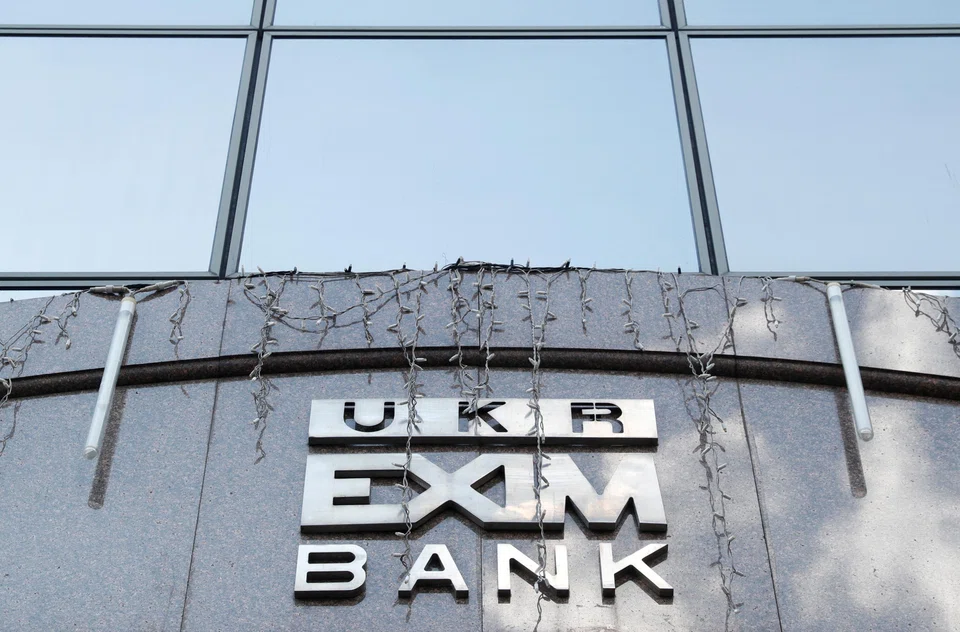
DeeperDive is a beta AI feature. Refer to full articles for the facts.
WHEN Sergii Naumov took over as chief executive at one of Ukraine’s biggest state banks before Russia’s invasion, his job was to privatise it. Now he is glad he did not get the chance.
The role of Ukraine’s banking system is one of the less told stories of the nation’s resilience. It survived the loss of assets to occupation, power outages and a 30 per cent collapse in gross domestic product without bank runs, service interruption or any significant closures. State-controlled lenders such as Naumov’s Oschadbank have played a part.
“Generally, when you have this state-owned economy it is not good, but during the war it helped,” said Naumov. “We know what our mission is.”
Before the war, the state-run lenders that control about half the system’s assets were seen as part of the country’s problem. They were notorious for poor governance and backroom deals with their government owners.
Now, they have become an important source of funding for an economy under assault, pushing subsidised loans and helping to fund a cash-strapped state, even as private lenders pulled back to reduce their exposure to risk.
Whereas overall bank credit to households and private sector companies contracted last year, Oschadbank increased lending by 11 per cent, and by 81 per cent for small- and medium-sized companies. They would lend more, as there is plenty of liquidity in the system, said Naumov, but in a brutalised economy with high interest rates, demand for credit is low and all but non-existent for mortgages.
Navigate Asia in
a new global order
Get the insights delivered to your inbox.
The financial sector as a whole has been profitable since the start of the war. And with dividend payouts banned for private lenders, those banks have added to their cash buffers. The weighted average of capital adequacy ratios across the sector is up three percentage points, to 14.3 per cent – well above the 10 per cent requirement stipulated by the Ukrainian central bank.
Some of that liquidity is also channelled to finance the state budget, supplementing the aid Ukraine receives from international donors.
Soldiers on the battlefield earn high salaries by Ukrainian standards and get paid via state lenders. Some people also consider state-owned banks safer than their commercial rivals during a war.
As a result of those factors, state banks find deposits rising, without having to offer high interest rates to attract them. That in turn creates a huge pool of cheap money the banks can lend back to their owner, the government, purchasing its bonds at a time when there is no market demand for the paper.
All the same, at a time when that stability is partly enforced, the International Monetary Fund (IMF) has warned of the risk of blow-ups.
“Although the financial system remains stable and liquid thanks to extensive emergency measures, continued vigilance is warranted given the true health of the banking system remains opaque, and the risks of further shocks persist,” the Washington-based lender said in a Jun 29 report.
The central bank is conducting an asset quality review for the country’s 20 largest banks, accounting for 90 per cent of the sector’s assets, with results to be published by March.
Despite the role that state lenders have provided in sustaining the wartime economy, both the IMF and Ukraine’s central bank want to privatise all state lenders other than Ukreximbank, which finances trade, once the war ends.
They argued that such measures are necessary to avoid distorting competition, and the central bank is already encouraging state lenders to clean house in preparation. Ukraine’s US$15.6 billion IMF loan programme calls for bank privatisations, and they will be key to unlock US$115 billion in further aid.
“I have not seen any good examples in general of how the state managed state-owned enterprises, including banks,” said Kateryna Rozhkova, first deputy governor of the National Bank of Ukraine, who heads the central bank’s supervisory functions.
Before Russia’s invasion, Naumov agreed with them. But after his experience keeping funds flowing to a country under attack, he said that two banks should remain under state control.
“Russia will not disappear in the next years,” he noted. “They will be with us all the time.”
In the short term, at least, the state’s share of the financial system is about to get even bigger. On Jul 20, the central bank started the process of nationalising Sense Bank, previously Alfa-Bank Ukraine. That institution was solvent but owned by sanctioned Russian businessmen including the billionaires Mikhail Fridman and Petr Aven.
Rozhkova argued that the root cause of Ukraine’s financial resilience is not lending by state banks, but the clean-up of a sector that until recent years had been riddled with related party lending and hidden losses. That process involved state-owned institutions given funds by the state to recapitalise, and country’s largest lender, Privatbank, was nationalised.
Speaking at her office in the central bank’s elegant 1905 headquarters – built when Kyiv was part of the Russian Empire – Rozhkova said that state control of banks invariably distorts both market competition and regulation. She did acknowledge that state banks have served a vital purpose during the war, providing finance at a time of need, if only because of their sheer size.
More than 80 banks were closed in the years that followed Russian President Vladimir Putin’s 2014 incursions into eastern Ukraine. Others, including state banks, were forced to recapitalise and undergo regular stress tests.
Asked what would be happening now if that clean-up had not taken place, Rozhkova paused.
“It would have been a very, very deep crisis,” she said. “The sector would not be able to support the government, the economy or the people.”
Companies such as Citius-S and AMP Hydro can testify to the importance of state lenders. At the start of the war, the two small manufacturing companies fled Melitopol, the southern city that now lies in the path of Ukraine’s counteroffensive.
Both had to leave their equipment behind and lost most of their staff. When they knocked on Oschadbank’s door for the capital needed to start over about 1,200 km in the west, in Lviv province, they had no collateral or cash flow to offer.
“We even had to destroy our machinery, to make sure the Russians couldn’t use it,” said Alex Serov, the 60-year-old owner and director of Citius-S, which makes bullet-proof glass and armoured security vans.
What they did have was good records and business plans.
With help from international organisations such as USAID, Serov and his daughter Anastasia sat down with Oschadbank to work out a 12 million hryvnya (S$436,676) loan.
Now the company is back up to 50 per cent of its pre-war output, pushing out about 15 vans per month. It has refurbished two abandoned warehouses, and Serov has his eye on a third as he considers reviving another former business – making ambulances.
AMP Hydro was an even less likely candidate for financing. Not only did it have no collateral, but the company had stopped payments on a 10 million hryvnya loan it took to buy equipment abandoned in Melitopol. It was now asking for a further 22 million hryvnya.
“First they thought it was funny,” said chairman Gennady Barabash, whose plant makes hydraulic cylinders.
But the company did have orders. So with 47 pages of conditions including resumption of payments on the bad loan, Oschadbank eventually relented.
Finding skilled staff is now a bigger problem than finance, Barabash said, as he tries to ramp production back up to pre-war levels.
More strains are likely to appear among Ukraine’s banks as the war continues, and households and companies run through their savings. A staggering 49 per cent of Oschadbank’s total loan portfolio is non-performing, although those are 100 per cent provisioned, said Naumov.
Those non-performing loans are a legacy issue, he said, driven by loans that already had been restructured before the war and then got into trouble when the economy cratered.
For loans made since the invasion, the non-performance ratio is just 0.4 per cent, even if that figure flatters because most borrowers have had little time to get in trouble yet.
As he contemplates the prospect of operating under the threat of Russian aggression for years to come, Naumov argued that it is critical for the Ukrainian state to retain the capacity to channel funding to companies like Citius-S and AMP Hydro in extreme situations.
“War showed a lot of things,” he said. BLOOMBERG
Decoding Asia newsletter: your guide to navigating Asia in a new global order. Sign up here to get Decoding Asia newsletter. Delivered to your inbox. Free.
Share with us your feedback on BT's products and services