

Banks face fight-or-join decision with tech firms: McKinsey report
Fintech startups threatening to shrink bank margins by offering cheaper services
New York
GLOBAL banks, seeking to protect billions in annual profits from encroaching technology companies, face a choice: battle the upstarts or join them, McKinsey & Co said.
Weak relationships with their individual customers have left lenders vulnerable to competition from so-called fintech startups and established companies like Apple Inc, the consulting firm said in a report released on Wednesday in London. Banks must choose whether they'll try to revamp their brands, give customers services they didn't know they wanted, and hire more engaging employees or allow new entrants to do these things and just provide funding for loans.
Banking profits have rebounded since 2009, topping US$1 trillion globally for the first time in 2014 and surpassing every other industry, according to the report. That's attracted more than 12,000 so-called fintech startups that threaten to shrink bank margins by offering cheaper services and force lenders to pick a fight-or-join strategy.
"The window for making this choice is narrowing," McKinsey analysts wrote in the report. "Banks must decide soon, probably within three years, or the choice will be made for them." In five retail banking businesses - consumer finance, mortgages, small-business lending, retail payments and wealth management - 20 per cent to 60 per cent of profits are at risk, McKinsey said. Some of those profits will be lost from margin compression rather than stolen by a competitor. Banks are already seeing a drop in margins, a decrease that has lowered returns among lenders in North America, Europe and emerging markets, according to the report.
Lenders who choose to take on new entrants need to use data they already have to improve customers' digital experience as both millennials and baby boomers move to doing more interactions online and on mobile devices, McKinsey said. Banks must also try to transform their brands beyond "strength and stability" to one that's "emotionally appealing", according to the report.
"Banks certainly have the perception of solidity, of safeness, of competence when it comes to financial services," Philipp Haerle, an author of the report, said. "It's not that they're starting from a desperate spot. But of course, the type of brand you need in this new environment is different."
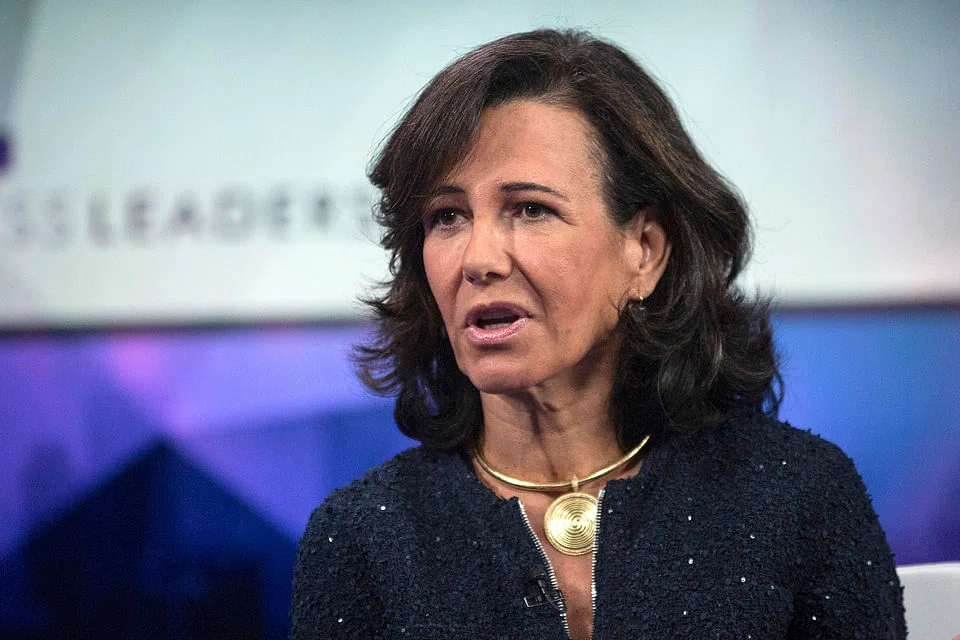
Some banks already are trying to keep customers by partnering with new players. Banco Santander SA developed its own spending-tracking application to use with Apple Pay in the UK, and partnered with online loan marketplace Funding Circle for clients who don't meet the Spanish bank's criteria, chairman Ana Botin said last week. Still, Ms Botin said regulators must ensure everyone plays by the same rules.
"If I share my customer information, the new entrants should share their customer information because, otherwise, it's very difficult to run a business," she said.
Other banks may choose to allow technology companies to have the primary relationship with customers, scaling back costs and focusing on essential products like checking accounts. The banks will offer funding for loans and a regulated lending operation to act as "the banking equivalent of server farms", according to the report. "To do this successfully, you will need to run this in a very effective fashion with relatively low cost," Mr Haerle said. "The transition is anything but easy. It takes years."
The increase in profits to a record US$1.03 trillion was helped by rapid growth in China, where bank earnings were US$262 billion last year, up from US$43 billion in 2006. Return on equity at global lenders was unchanged at 9.5 per cent, about the average of the last 35 years as lenders held more capital. Rising interest rates may boost banks' return on equity by about two percentage points in the US and Europe, according to the report.
A growing number of bank leaders already have signalled their awareness of the threat new ventures might pose.
"Silicon Valley is coming," JPMorgan Chase & Co chief executive officer Jamie Dimon wrote in an April letter to shareholders, noting there are many smart people working on alternatives to traditional banking. "We are going to work hard to make our services as seamless and competitive as theirs. And we also are completely comfortable with partnering where it makes sense." BLOOMBERG
TRENDING NOW

Inside Jensen Huang’s last hours as Nvidia CEO

Higher rates, weaker spending: Is the Philippines entering stagflation?

‘I’ll be buying more’: Singapore investors pour into Nvidia shares on Jensen Huang’s exit

Demand, tech capabilities position Apac and AI as Skyscanner’s next growth frontiers: CEO Bryan Batista

