

Biggest stablecoin loses US dollar peg as crypto anxiety spreads
 Add BT as a preferred source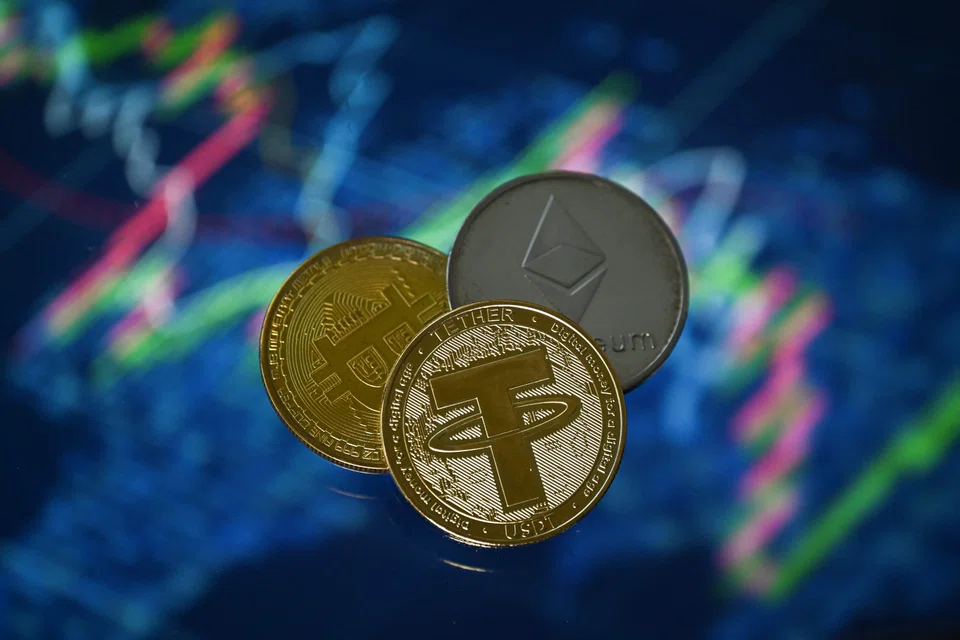
DeeperDive is a beta AI feature. Refer to full articles for the facts.
TETHER, the largest of the stablecoins used in cryptocurrency markets to facilitate trading, briefly dropped to the lowest level since December 2020 as the fallout from the collapse of the TerraUSD token continues reverberate across the digital-asset landscape.
The price slipped as low as 94.55 US cents from its intended 1-to-1 peg to the US dollar on Thursday (May 12) morning in London before recovering to just above 98 US cents, Bloomberg-compiled data show. Paolo Ardoino, Tether’s chief technology officer, said in a tweet that investors can continue to redeem the tokens at a one-to-one value to the US dollar via its platform.
With a market value of about US$84 billion, Tether is an essential cog to the array of crypto trades being actioned across the market at any given time. Investors turn to stablecoins as a way of retaining value without leaving the digital asset ecosystem, acting as a safe haven from volatile coins or even simply as a means of digital payment. It is the most traded cryptocurrency by far, charting more than double the volume of second-place Bitcoin over the last 24 hours at US$178 billion.
The Tether price dip came as a massive sell-off in cryptocurrencies wiped more than US$200 billion in value from the market in 24 hours. Tether operates differently to TerraUSD, or UST, which was designed to use a complex mix of code, trader incentives and swaps with its sister token Luna to maintain its peg. Its decline highlights the overall risk-off mood that is sweeping through crypto markets, analysts said.
“Tether’s de-pegging seems more driven by market sentiment rather than real concern over its reserves, which demonstrates how important centralised markets are for maintaining a stablecoin’s peg,” said Clara Medalie, research director at Kaiko.
Ardoino appeared to seek to alleviate any concern about Tether’s stability, saying in his tweet that it had redeemed over US$300 million in tokens in the last 24 hours “without a sweat drop”.
Navigate Asia in
a new global order
Get the insights delivered to your inbox.
As at Thursday morning in London, the broader stablecoin market had experienced bouts of volatility but largely avoided the same dramatic collapse as Terra’s UST. Other major tokens including Circle Internet Financial’s USDC, Binance Holdings’s Binance USD and Maker’s DAI were trading at their pegs on Thursday, according to pricing data from CoinGecko.
“There may be some stablecoin contagion following UST, however Tether continues to honour 1:1 redeemable ratio on their platform,” said Fadi Aboualfa, head of research at crypto custodian Copper. “Anyone who was around 2017-2019 and saw massive drops in Tether, and it was really an opportunity to buy at a discount.”
Tether’s price activity has not been limited just to traders wanting to exchange it directly for fiat currency, either.



Data from Dune Analytics, which tracks the distribution of currency reserves in a pool where traders can swap one stablecoin for another, showed a sharp surge in Tether’s share of the total liquidity pool on Thursday. On May 7, Tether’s USDT constituted 42.6 per cent of the total reserves in Curve’s 3pool — a figure which jumped to 92.6 per cent as on Thursday mid-morning. Tether’s value against the other stablecoins in that pool, DAI and USDC, has slipped as a result.
“I think given the situation with UST and market volatility retail traders are motivated to exchange their stablecoins for actual dollars, and the imbalance in the Curve pool is a result of that fluctuating demand rather than a full-on bank run,” said Andrew Thurman, who is in charge of content at blockchain data firm Nansen.
“Quite a few people are lacking confidence in all stablecoins at the moment. I wouldn’t be surprised if a lot of USDT holders saw what happened to Terra and are now exchanging for cheap Bitcoin,” said Mati Greenspan, founder of crypto research outfit Quantum Economics.
More than US$1.8 billion of Tether was removed from the market between Wednesday and Thursday, as Tether’s market value dropped to as low as US$82.2 billion from US$84.2 billion, according to data from CoinGecko. BLOOMBERG
Decoding Asia newsletter: your guide to navigating Asia in a new global order. Sign up here to get Decoding Asia newsletter. Delivered to your inbox. Free.
Share with us your feedback on BT's products and services
TRENDING NOW

‘Boring’ is the new black: The stars are aligning for a Singapore stock market revival

Near sell-out launches in March boost developer sales to 1,300 units after four slow months

China pips the US if Asean is forced to choose, but analysts warn against reading it like a sports result

Genting Singapore’s Lim Kok Thay receives S$7.5 million pay package for FY2025

