

BNP Paribas warns on profit after US$1.2b virus hit
 Add BT as a preferred source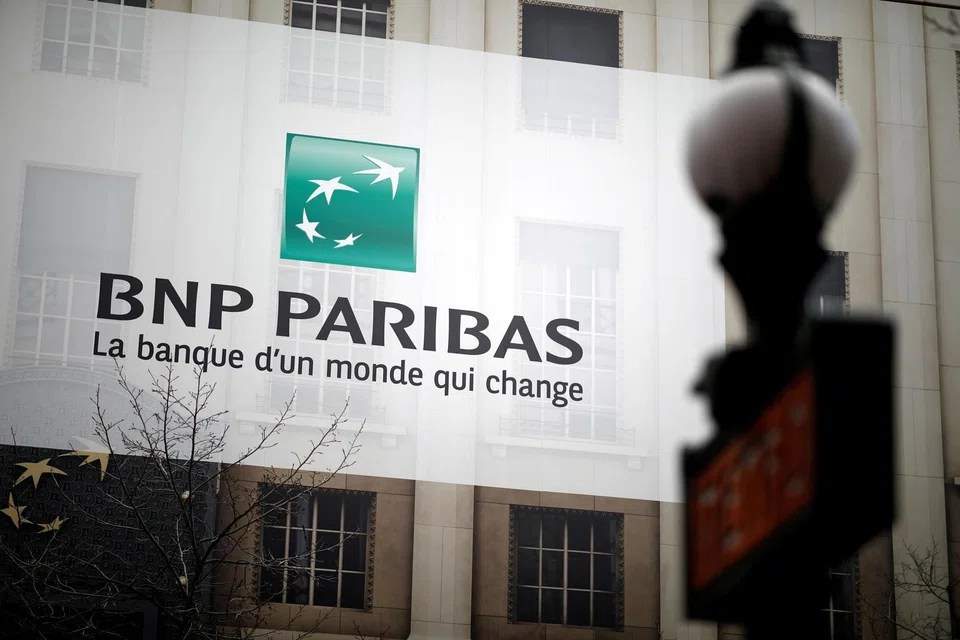
DeeperDive is a beta AI feature. Refer to full articles for the facts.
[ZURICH] BNP Paribas warned full-year earnings will take a pounding from the coronavirus outbreak after the bank followed Societe Generale (SocGen) in setting aside more cash to cover problem loans and posted a US$200 million hit at its trading unit.
The French lender said net income this year - without any new crisis - could be 15 per cent to 20 per cent lower than in 2019 because of the impact of the lockdown measures, according to a statement on Tuesday. In addition to the profit warning, the bank took more than US$1 billion in charges and writedowns for the first quarter, including 502 million euros (S$774.4 million) to account for future bad credit.
Equities income was wiped out after complex products backfired as markets went into a tailspin. Both BNP and SocGen were blindsided as companies moved to cancel dividends, impacting structured products. The equities slump offset a near 35 per cent increase in revenue from fixed income, currency and commodity trading, above the Wall Street average.
The results are a setback to chief executive officer Jean-Laurent Bonnafe's effort to bolster the equities and prime services unit after the firm last year agreed to take over Deutsche Bank prime brokerage clients to take market share from rivals cutting back their investment banks. At the same time, the increase in provisions in is line with many of the bank's larger rivals in a dismal quarter and revenue excluding one-time items posted a slight increase.
Spain's Banco Santander is leading the way among continental European lenders posting large provisions after setting aside 1.6 billion euros specifically for losses linked to the virus. Italy's UniCredit is taking an additional 900 million euros in provisions, Deutsche Bank about 500 million euros and UBS Group approximately half that.
BNP's total US$1.2 billion hit for the first quarter is similar to that at Credit Suisse, which saw a US$1 billion impact divided between loan losses and writedowns.
Navigate Asia in
a new global order
Get the insights delivered to your inbox.
BNP said net income fell by about a third from a year earlier because of the virus and revenue declined by about 2.3 per cent. Rival SocGen slumped to a surprise first-quarter loss after coronavirus-related market volatility wiped out stock trading revenue and bad loan provisions surged. While it said provisions could hit five billion euros this year, BNP didn't give a forecast.
"A lot will depend on how this deconfinement will work," BNP Paribas chief financial officer Lars Machenil said in a Bloomberg TV interview. "In our view, a pickup of the economy back to normalisation will happen at best by the end of the year and therefore a return of GDP (gross domestic product) to normal will not happen before 2022."
BNP's equities trading revenue was down about 80 per cent even when excluding the dividend impact because of the impact of the "dislocation" of hedging strategies during March volatility, the bank said, while overall global markets revenue declined about 14 per cent. The results compare with gains of 28 per cent in equities trading at the biggest US firms and an average jump of 31 per cent in fixed income trading. In Europe, trading result were uneven, with Barclays and UBS Group leading gains.
The hit from equities derivatives comes a little more than a year after BNP lost tens of millions of dollars from derivatives linked to the US stock market. The episodes underscore the volatile nature of such products, which derive their value from an underlying stock. French investment banks in particular have prided themselves on their expertise in this area.
At BNP, Mr Bonnafe had embarked on a series of cost-cutting measures over the past year and could point to improvement at the trading unit. But expectations that interest rates would stay low for longer forced him to cut a profitability target.
BNP in February introduced a 10 per cent return on tangible equity target for 2020, dropping a previous and slightly higher target. That figure stood at 8 per cent in the first quarter. For 2020, the bank targets business growth in all its operating divisions and a decrease in the absolute value of its operating expenses.
The bank's common equity Tier 1 ratio, a measure of financial strength, fell slightly to 12 per cent from 12.1 per cent at the end of the year.
Other highlights of the bank's first-quarter earnings release:
Equities revenue was negative 87 million euros;
Covid impact also included 384 million euro accounting impact on insurance revenue;
Net income of 1.28 billion euros, revenue of 10.9 billion euros;
Sees increase in net interest income partially offsetting fee pressure; and
Expects to further cut costs; could be offset by increase in cost of risk.
BLOOMBERG
Decoding Asia newsletter: your guide to navigating Asia in a new global order. Sign up here to get Decoding Asia newsletter. Delivered to your inbox. Free.
Share with us your feedback on BT's products and services
TRENDING NOW

China pips the US if Asean is forced to choose, but analysts warn against reading it like a sports result

Beijing’s calculated silence on the Iran war

Shelving S$5 billion office redevelopment plan proved ‘wise’ as geopolitical risks mount: OCBC chairman

Vietnam formalises new state leadership, redefining ‘four pillars’ power balance

