

BOE raises rates to highest since 2009, warns more to come
 Add BT as a preferred source
DeeperDive is a beta AI feature. Refer to full articles for the facts.
THE Bank of England (BOE) raised interest rates for a fifth straight time, and sent its strongest signal yet that it is prepared to unleash larger moves if needed to tame inflation.
The 9-member Monetary Policy Committee (MPC) voted 6-3 to increase the benchmark lending rate by 25 basis points (bps) to 1.25 per cent, the highest level since the global financial crisis in 2009. A minority of officials maintained their push for a move of double that size.
Policymakers led by governor Andrew Bailey hinted that they may join a growing global trend for larger hikes if inflation continues to soar, saying “it would be particularly alert to indications of more persistent inflationary pressures, and would if necessary act forcefully in response”.
Crucially, that language was endorsed by all the BOE’s voters, a departure from May when 2 declined to sign up to guidance that more hikes were needed.
The bank also raised its forecast for the peak of inflation this year to “slightly above” 11 per cent, reflecting the planned increase in the energy price cap in October, and said it now expects the economy to contract in the current quarter.
The pound declined against the US dollar, dropping as much as 1.1 per cent to US$1.2042. Gilts pared losses.
Navigate Asia in
a new global order
Get the insights delivered to your inbox.
For now, though, the BOE - the first major central bank to hike rates after the pandemic - is moving slower than some of its peers.
The US Federal Reserve raised interest rates by 75 bps on Wednesday (Jun 15), the biggest increase since 1994. The Swiss National Bank also surprisingly hiked rates by 50 bps earlier on Thursday.
The BOE “continues to balance the inflationary effects on the economy, with the very real chance that they tighten too much and the UK economy lurches into a full blown recession”, said Alan Custis, managing director at Lazard Asset Management.
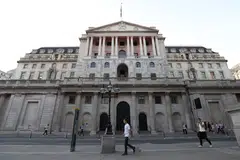
But while the BOE is grappling with an inflation rate that has already hit a 4-decade high of 9 per cent, officials are also concerned about an economic slowdown that is putting the United Kingdom at risk of recession.
Data this week showed that the economy contracted in April, and officials now predict it will shrink 0.3 per cent in the second quarter, after previously expecting a 0.1 per cent expansion. The longer-term outlook is also grim, with the Organisation for Economic Co-operation and Development (OECD) saying this month that it sees no growth in the UK next year — the worst outlook among major nations.
The BOE’s move stirred unease among some economists and business groups, which are concerned about a dimming outlook for the economy. The British Chambers of Commerce said higher rates will “add further concern” on top of “soaring cost pressures, and labour shortages”, said the lobby group’s head of research, David Bharier.
“It would seem somewhat short-sighted to keep chasing inflation upwards, especially if the consequence is deteriorating growth and the risk of recession,” said Melissa Davies, chief economist at Redburn, who dubbed the BOE’s outlook “increasingly myopic”.
To the BOE members backing a 25 bps move this month, including Bailey, demand might be starting to slow. But with prices soaring and officials seeing no signs of deterioration in the ultra-tight labour market, Michael Saunders, Catherine Mann and Jonathan Haskel all voted for a half-point increase.
Those members saw more prospect of a surprising resilience in demand or shortfall in supply. The minutes of the meeting said there were “mixed signs” on the extent to which the living standards squeeze was weighing on consumer spending. Confidence has dropped but “indicators had held up”.
Either way, the trend for higher rates is clear, threatening to heap more pain on an already creaking UK economy that is dealing with surging tax, fuel and food bills, along with political turmoil and the messy repercussions of Brexit.
Adding to the misery, next week railway workers are due to hold 3 days of strikes, which economists say will cost the nation almost £100 million (S$169 million).
The decision is also the first since Chancellor of the Exchequer Rishi Sunak announced a multi-billion-pound aid programme to help households cope with soaring energy bills, allaying some concerns of the depth of the nation’s cost of living crisis.
The BOE estimated that package will raise the level of output by around 0.3 per ent, and inflation by 0.1 percentage point, in the next 12 months “with some upside risks around these estimates”. BLOOMBERG
Decoding Asia newsletter: your guide to navigating Asia in a new global order. Sign up here to get Decoding Asia newsletter. Delivered to your inbox. Free.
Share with us your feedback on BT's products and services
TRENDING NOW

Shelving S$5 billion office redevelopment plan proved ‘wise’ as geopolitical risks mount: OCBC chairman
OCBC is said to emerge as lead bidder for HSBC Indonesia assets

Middle East-linked energy supply shocks put Asean Power Grid back in focus

Eurokars Group introduces rental car franchises Enterprise Rent-A-Car, National Car Rental, and Alamo to Singapore

