

BOE's Taylor backs extended hold for interest rates
It’s the right response to the increase in price pressures spurred by conflict in the Middle East
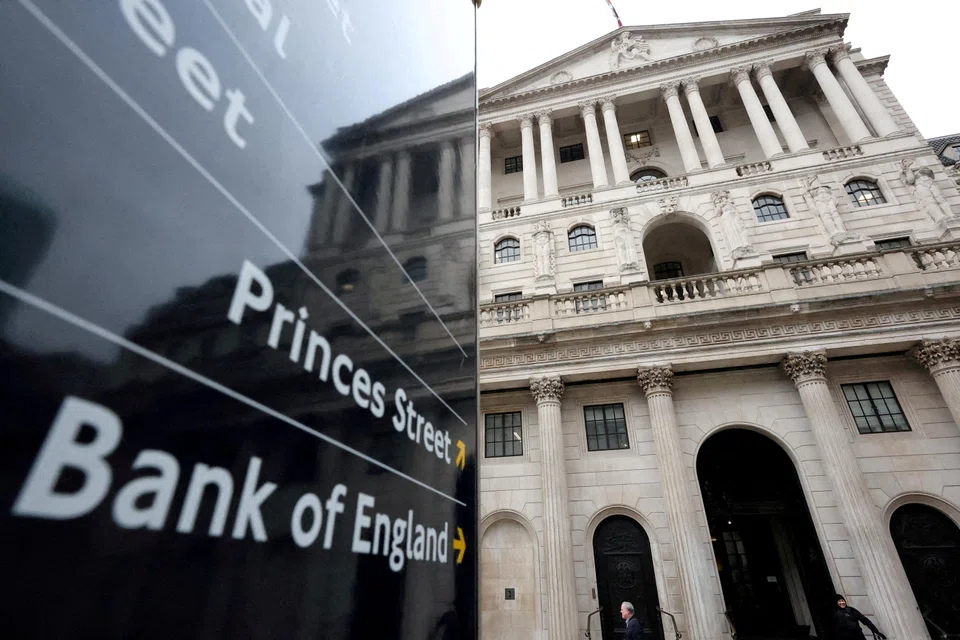
[LONDON] Bank of England policymaker Alan Taylor said on Tuesday (Jun 23) that an “extended hold” for interest rates was the right response to the increase in price pressures spurred by conflict in the Middle East.
Taylor, an external member of the Monetary Policy Committee (MPC), said he doubted a new cycle of wage and price inflation could be reignited by the current “benign” financial market pricing for interest rates and energy.
He also described Britain’s economy as “very weak” before the outbreak of war.
But Taylor, an academic economist who favoured cuts to interest rates before the Iran war, emphasised the lack of clarity around the economic outlook and whether peace would hold in the Middle East.
“Until we have greater certainty, then, an extended hold at this level is, to me, very much the correct and appropriately measured policy response we need, given the balance of risks,” Taylor said in the text of a speech due to be delivered at an event hosted by Barclays and the Centre for Economic Policy Research, a think tank.
Unlike other members of the MPC, Taylor places the most weight on downside risks for Britain’s economy that might in the future require rate cuts from their current level of 3.75 per cent.
If a benign scenario in terms of inflation pressure plays out, Taylor said interest rate cuts should resume towards his 3 per cent estimate of neutral – the point at which monetary policy no longer stimulates nor restrains the economy.
He described the BOE’s high-inflation scenario “C” as a tail risk, albeit one that would force the central bank to act to preserve the inflation target.
Taylor expressed misgivings about the ways in which the BOE conditions its forecasts for the economy and its policy stance.

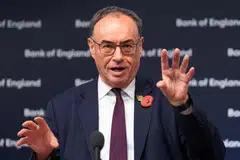

He said the market rate curves used to underpin the BOE’s forecasts had overstated where investors actually expected rates to go, because those curves include a risk premium on top of rate expectations. This made the BOE’s implied policy stance “excessively restrictive”, Taylor said, especially towards the end of its three-year forecast horizon where the central bank’s economic models would infer the existence of a positive demand shock to get inflation to the 2 per cent target. REUTERS
Decoding Asia newsletter: your guide to navigating Asia in a new global order. Sign up here to get Decoding Asia newsletter. Delivered to your inbox. Free.
Share with us your feedback on BT's products and services
TRENDING NOW

DBS, OCBC, UOB rout lops billions off STI as inflation, rate concerns spook investors

Grab CEO’s wife Chloe Tong on life with Anthony Tan and finding her purpose

OCBC sheds S$8 billion in value as shares close nearly 6% down; analysts cautious on banks

Deal between tycoon friends sparks scrutiny of Philippine power sector

