BOJ to signal more rate hikes as yen, politics fuel inflation risks
The BOJ is expected to hold its policy rate steady at 0.75%
 Add BT as a preferred source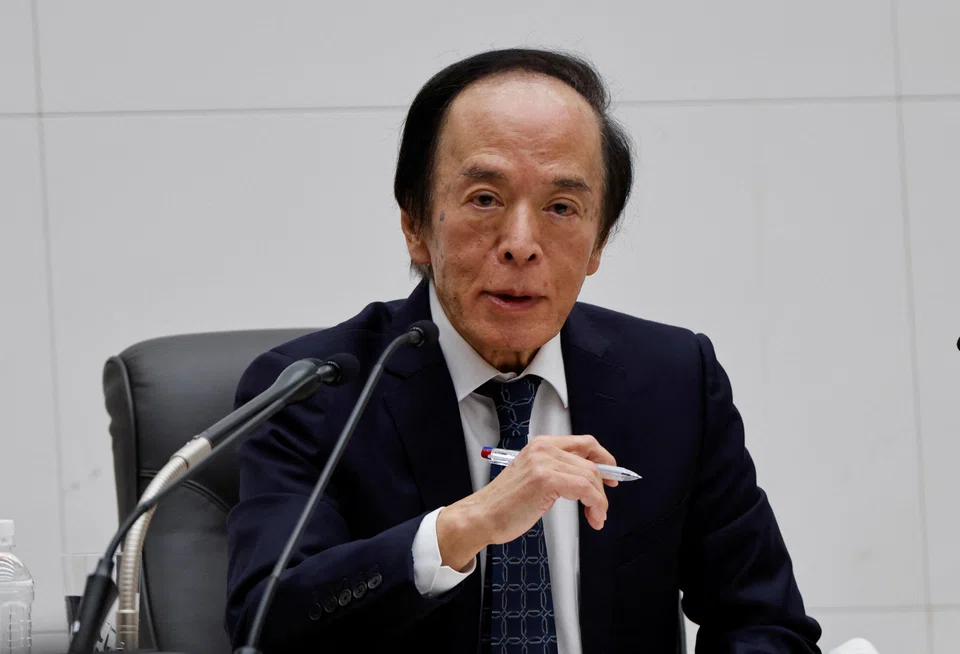
DeeperDive is a beta AI feature. Refer to full articles for the facts.
[TOKYO] The Bank of Japan (BOJ) is expected to raise its growth forecast on Friday (Jan 20) and signal its readiness to hike interest rates further, as recent yen falls and prospects of solid wage gains keep policymakers alert to containing inflationary pressure.
But BOJ governor Kazuo Ueda is likely to offer few clues on how soon the central bank could resume rate hikes, a decision complicated by rising bond yields and Prime Minister Sanae Takaichi’s announcement on Monday to call a snap election in February.
Having just raised interest rates to a 30-year high of 0.75 per cent in December, the central bank is set to keep borrowing costs steady at its two-day policy meeting ending on Friday.
Markets will be looking to Ueda’s post-meeting press conference for policy signals, particularly focusing on how the BOJ chief reconciles the need to keep unwelcome yen falls at bay while seeking to avoid further rises in bond yields.
Takaichi on Monday echoed proposals by rival parties to cut Japan’s consumption tax and vowed to end “excessively tight fiscal policy”, heightening the chance of more spending and tax cuts after the election.
While expansionary fiscal steps may push up inflation and give the BOJ another reason to raise rates, a Takaichi victory may embolden her reflationist advisers favouring low rates to underpin a fragile economy, some analysts say.
Navigate Asia in
a new global order
Get the insights delivered to your inbox.
“So far, the BOJ has maintained a negative stance towards consecutive rate hikes” on concerns over the impact on Japan’s financial system and pressure from Takaichi’s administration, said Ayako Fujita, Japan chief economist at JPMorgan Securities.
“Whether the recent yen depreciation will prompt a change in this stance is a key point to watch,” she said.
Concern over Japan’s worsening finances has driven bond yields sharply higher since early November, with the 10-year Japanese government bond yield hitting a 27-year high of 2.3 per cent on Tuesday.



Moreover, since fiscal and monetary dove Takaichi became prime minister in October, the yen has fallen about 8 per cent against the US dollar to briefly hit an 18-month low of 159.45 last week, its lowest level since Japan last intervened in July 2024.
The yen bounced back somewhat and stood around 158.18 on Tuesday. But the currency’s downtrend, which boosts import costs and broader consumer prices, has led to market views the BOJ could speed up rate hikes to forestall the risk of too-high inflation.
Sources have told Reuters some BOJ policymakers see scope to raise rates sooner than markets expect, with April a distinct possibility, as a sliding yen risks adding to already broadening inflationary pressure.
The central bank ended a decade-long, massive stimulus in 2024, followed by several sequences of hikes in its short-term policy rate, including one to 0.75 per cent from 0.5 per cent last month.
Analysts polled by Reuters expect the BOJ to wait until July before raising rates again, with more than 75 per cent of them expecting it to climb to 1 per cent or higher by September.
The BOJ’s quarterly outlook report, due on Friday, will likely highlight the bank’s growing conviction that Japan is on course to meet the conditions for further rate increases.
In the report, the BOJ is expected to revise up its economic forecast for fiscal 2026 from the 0.7 per cent growth rate expected three months ago, reflecting the boost from the government’s stimulus package and the fading impact of US tariffs, the sources said.
The BOJ may slightly revise up its fiscal 2026 core consumer inflation forecast from 1.8 per cent projected three months ago, with the effect of government steps to curb utility bills offset by rising goods prices and steady wage gains, they said.
The central bank is expected to maintain its projection that inflation in Japan will durably hit 2 per cent around October, or the latter half of the fiscal year starting in April. REUTERS
Decoding Asia newsletter: your guide to navigating Asia in a new global order. Sign up here to get Decoding Asia newsletter. Delivered to your inbox. Free.
Share with us your feedback on BT's products and services