BOJ seen holding rates in messaging risk for Ueda as yen teeters
The US Federal Reserve and European Central Bank also meet this week and are widely expected to stand pat
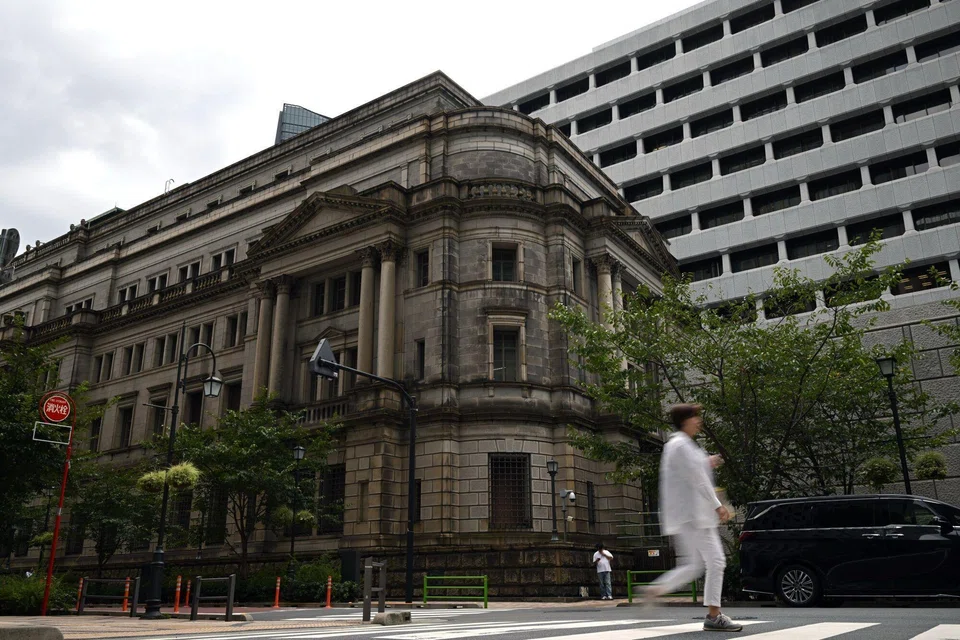
[TOKYO] The Bank of Japan (BOJ) is widely expected to keep interest rates unchanged on Tuesday (Apr 28), setting up a communication challenge for governor Kazuo Ueda as the foundering yen hovers near levels that have prompted past interventions.
Just weeks ago, markets and economists were betting Ueda and his board would press ahead with their normalisation efforts and deliver another hike at the end of their two-day meeting on Tuesday. Those bets dissipated as US President Donald Trump’s war on Iran sent oil prices surging, with markets now pricing just a 7 per cent chance of a move, and many economists switching to a June increase.
Assuming there’s no shock, which cannot be ruled out as sources familiar with deliberations have said the final decision will be made at the last possible moment, focus will rapidly shift to Ueda’s policy signals. The statement usually lands around noon in Tokyo, with Ueda’s press conference typically starting at 3.30 pm.
“The key thing is how strongly the BOJ will communicate their determination to continue rate hikes to curb the yen’s depreciation,” said Shigeto Nagai, former head of the BOJ’s international department.
The currency was hovering around 159.50 per US dollar early Monday in Tokyo, not far from the level where authorities last intervened to support the yen in 2024. At a Bloomberg New Voices event in Tokyo on Thursday, Finance Minister Satsuki Katayama warned that officials are in close contact around the clock with their US counterparts as Tokyo remains on high alert over speculative moves that are weighing on the yen.
Last week, sources familiar with planning told Bloomberg that the BOJ was leaning towards keeping its policy rate unchanged at 0.75 per cent, given uncertainties stemming from the war in Iran. Officials are still committed to raising borrowing costs sooner or later, they said.
But differing viewpoints suggest the possibility of a widening divergence among the board’s nine members, who voted 8-1 to hold policy settings steady at the last meeting in March.
Volatility tied to the Iran conflict has heightened uncertainty around energy costs and supply-chain durability, making it difficult for policymakers to pull the trigger on their next hike.
“There are limits to how hawkish the BOJ’s communication can be,” said Naka Matsuzawa, chief strategist at Nomura Securities. “It is unclear whether Japanese authorities will be able to contain yen depreciation and bond curve steepening in the run-up to the next meeting in June.”
SEE ALSO



The yen’s three-month option-implied volatility fell to a two-year low last week as speculation of potential intervention capped downside risks.
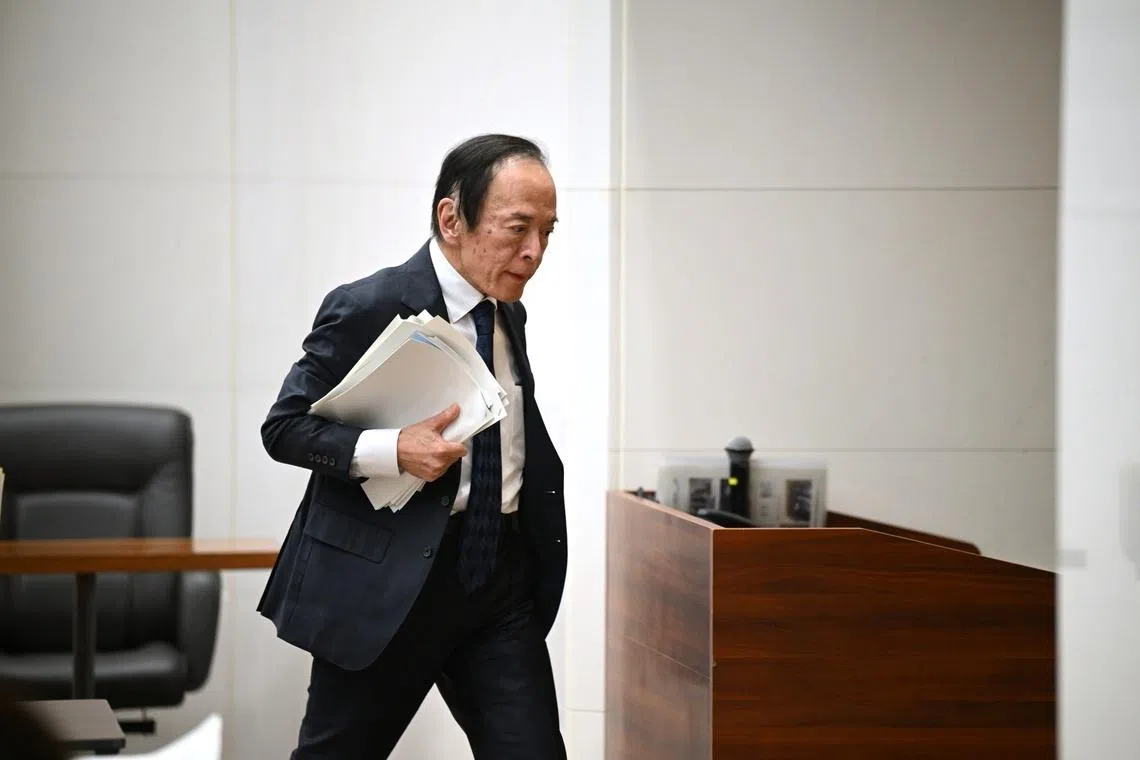
Memories remain fresh among market participants of Ueda’s press conference in April 2024, after authorities held settings steady. The governor’s comments on the yen were taken as dovish, sparking a rout in the currency that ultimately prompted intervention days later. Ueda will be keen to avoid repeating that experience this week.
The US Federal Reserve and European Central Bank also meet this week and are widely expected to stand pat. The BOJ’s pressure to sustain monetary normalisation is driven in part by the ongoing gap with its peers and the fact that real rates that factor in inflation remain deeply negative.
An updated quarterly economic outlook to be released with the policy statement should help justify an ongoing hawkish stance. The BOJ board is likely to consider a sharp increase in its price outlook for the fiscal year that started this month from the latest projection of 1.9 per cent, sources familiar with the matter told Bloomberg earlier this month.
“We see the risk of upward pressure on prices as greater than the hit to growth, given firms’ increasingly proactive pricing behaviour and the intensifying depreciation pressure on the yen,” said Shotaro Mori, senior economist at SBI Shinsei Bank.
Japan’s inflation quickened in March for the first time in five months, data on Friday showed. A separate gauge showed service producer prices rose 1.25 per cent from a month earlier, the most in about 36 years, excluding periods when there was a hike in the sales tax.
Meantime, sentiment among consumers has tumbled by the most since the Covid-19 pandemic, foreshadowing a looming blow to demand. The median estimate of analysts is for the BOJ to cut its growth projection for this year to 0.8 per cent from 1 per cent.
“It will be important to see how the economic outlook is revised to assess how policymakers view the downside risks to growth from higher oil prices and, in turn, their impact on underlying inflation,” said Naoya Hasegawa, chief bond strategist at Okasan Securities.
Ueda entered the fourth year of his governorship this month. In that period, he’s dismantled yield curve control, ended negative interest rates, and lifted policy rates to their highest in three decades.
“He has only two years left,” said Toshitaka Sekine, a former BOJ chief economist. “He has done what’s needed and he will keep doing it when it’s necessary.” BLOOMBERG
Decoding Asia newsletter: your guide to navigating Asia in a new global order. Sign up here to get Decoding Asia newsletter. Delivered to your inbox. Free.
Share with us your feedback on BT's products and services