BOJ's Kuroda determined to maintain stimulus as world tightens
 Add BT as a preferred source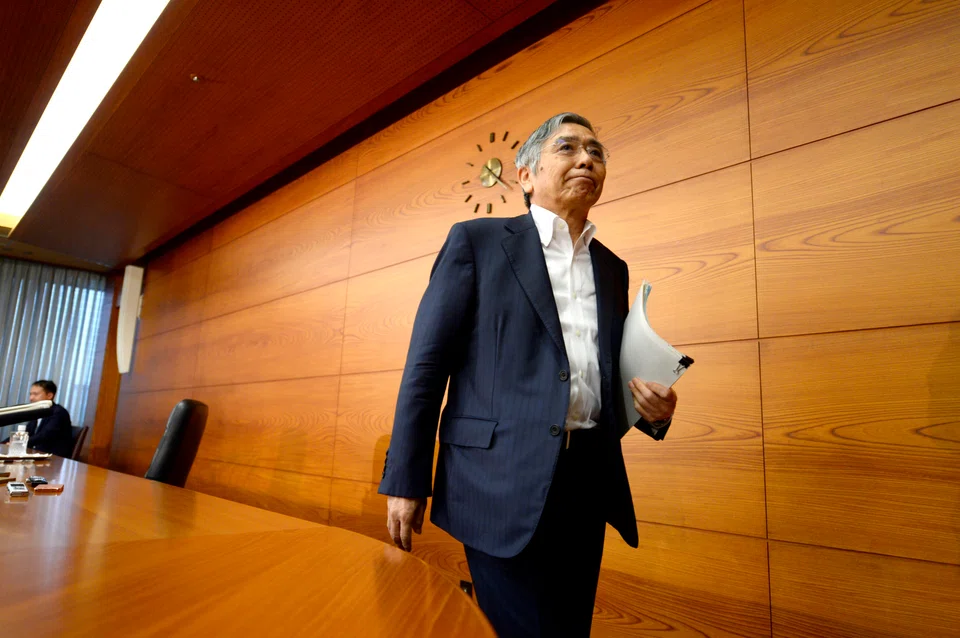
BANK of Japan (BOJ) governor Haruhiko Kuroda appears more determined than ever to weather political and market pressure in pursuit of sustainable inflation.
With just months remaining of his decade-long mission to push up price gains to a consistent rate of 2 per cent, Kuroda is in no mood to give up on stimulus and jeopardise his legacy now, according to people familiar with the matter. BOJ officials see some potential green shoots of sustainable inflation that need encouragement not elimination, the people said.
That leaves the BOJ alone among major central banks in trying to hold rates near zero and cap bond yields, stimulus Kuroda sees as needed for an economy that's smaller than it was before the pandemic. The BOJ spent a record US$115 billion defending yields last month as traders bet it may have to scrap the policy given the yen's slide to a 24-year low, which is driving up the cost of fuel and staples like soy sauce and sushi.
Yet economists warn that any policy tweaks or signal of softening resolve by the central bank will only encourage more speculation of further change to come. In line with a Bloomberg survey, the takeaway is that even with the yen's weakness and inflation already in the targeted 2 per cent range, the BOJ will stand firm when it announces its policy decision on Thursday (Jul 21).
Hours later, the BOJ's status as the world's dovish outlier is set to be showcased, with the European Central Bank poised for its first hike in more than a decade. Like the yen, the euro has bombed against the dollar as the Federal Reserve's rate trajectory steepens.
While the shocking murder of former premier Shinzo Abe has deprived Kuroda of one of his key backers in the ruling party, the strong election victory of current Prime Minister Fumio Kishida has bought more time for continued policy coordination between the government and the central bank.
"Following Abe's death, Kuroda may now be even more eager to stick with the current unprecedented level of easing," said Hiroaki Muto, economist at Sumitomo Life Insurance. "Even if Kishida tries to exert pressure for policy adjustments, Kuroda may not go along with it."
In the election, voters were offered few realistic alternatives to the government's policy stance and opted to support Kishida's approach of subsidising key prices to lessen the pocket-book pain of inflation. Petrol subsidies are keeping prices at the pump around 20 per cent below where they would be otherwise and more subsidies and help are likely on the way.
At the same time, rock-bottom interest rates enable the economy with the developed world's largest public debt load to keep its borrowing affordable. But this cosy arrangement could break down if the yen keeps heading south.


BNP Paribas economists estimate that if the yen goes above 140, annual gains in the BOJ's key inflation gauge could rise from 2.1 per cent to 3 per cent, the highest level since 1991 barring years when increases to the sales tax pushed up prices. Inflation at 3.5 per cent would prompt the BOJ to tweak policy, they said.
Surveyed economists converge on 145 as the mark that would prompt a rethink at the bank, though they say a change in communications would come first.
Kuroda has already shifted his messaging on the yen to emphasise that rapid movements are bad for the economy, in a move that appears partly aimed at keeping the government on board with its easing stance.
While BOJ officials see abrupt moves as undesirable, they still maintain the view that a weak yen is positive overall for the economy because it boosts corporate profits, enabling companies to increase wages and investment, the people said.
Still, market players remain unconvinced the BOJ will be able to hold its ground indefinitely. And Kuroda's own history of springing policy surprises means an abrupt shift can't be ruled out entirely.
The BOJ racked up its largest ever monthly bill of bond-buying in June, spending more than 16 trillion yen to help protect its 0.25 per cent ceiling on 10-year debt. Following the collapse of Australia's yield curve control under market pressure last November, some investors are convinced Kuroda will also have to buckle.
Ten-year yen swap rates - which are popular with international funds - have surged since the BOJ's first fixed-rate buying offer this year, breaking their close relationship with domestic yields. While off their mid-June highs, they are trading just under 0.40 per cent, well past the central bank's 0.25 per cent line in the sand.
Markets are "determined to test the BOJ's resolve", said Ray Attrill, head of FX strategy at National Australia Bank.
"Japan's inflation outlook, JGB liquidity concerns and the fact that now further yen weakness would be more of a problem than a benefit supports our view that the BOJ will look to widen its YCC band some time in Q3, with its September meeting our pick," Attrill and his team wrote in a recent note.
BOJ officials have described a widening of the range as tantamount to an interest-rate increase, effectively boxing themselves in until there are signs of improvement in the economy and more lasting price growth.
Among officials, the painful memories of premature tightening moves in the 2000s and a perceived reluctance to ease at that time are communication and policy errors to learn from. Kuroda was one of the critics of BOJ policy at that time.
If changes were to come, they would likely be couched in terms of improving the sustainability of stimulus, rather than a move toward policy normalisation.
New quarterly economic projections to be released with this week's policy statement are forecast to back up Kuroda's argument that stimulus is still needed. A recent surge in Covid cases also supports the BOJ's cautious stance. BLOOMBERG
Decoding Asia newsletter: your guide to navigating Asia in a new global order. Sign up here to get Decoding Asia newsletter. Delivered to your inbox. Free.
Share with us your feedback on BT's products and services