

BOK holds fire for now as growth outlook cut
S Korean central bank now expects economy to shrink 1.3% this year
 Add BT as a preferred source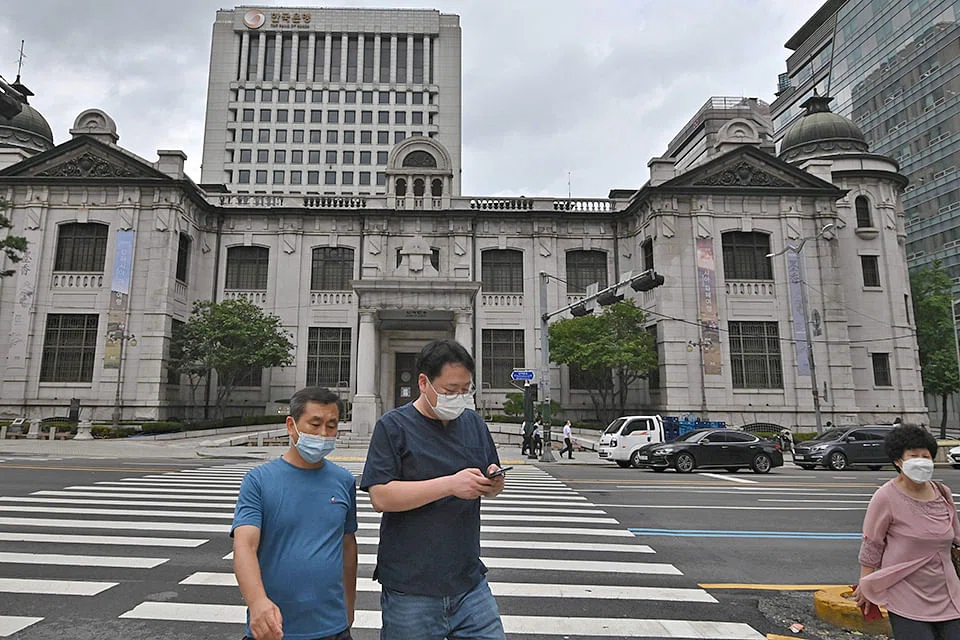
DeeperDive is a beta AI feature. Refer to full articles for the facts.
Seoul
BANK of Korea's governor Lee Ju-yeol held off from adding immediate stimulus on Thursday even as the central bank offered a gloomier forecast for the economy grappling with a resurgence of the coronavirus.
The South Korean central bank said it expects the economy to shrink 1.3 per cent this year, far worse than the 0.2 per cent contraction forecast in May. Following a unanimous decision to hold the seven-day repurchase rate at 0.5 per cent, Mr Lee said both rate and non-rate tools are options that could be used, without giving indications of any new near-term action. "There is still room in the rate policy, but we'll be careful," Lee said at a post-decision briefing. It's necessary to weigh the benefits and side-effects from cutting a benchmark rate that's already low, he added.
The BOK's hold on stimulus underscores the balancing act facing the bank, as it remains wary of adding stimulus that could further fuel property gains while the economic toll from the latest virus wave becomes evident. South Korea reported 441 new coronavirus cases on Thursday, the biggest daily increase since March.
Bonds dropped after Mr Lee offered no details on the timing and scale of additional debt purchases, while reiterating his previous stance that the BOK will step in should yields become volatile.
"Disappointment apparently grew about direct bond purchases as the market digested Lee's comments," said Theo Huh, an analyst at Samsung Futures Inc. "The governor is being seen as passive about market stabilisation."
Navigate Asia in
a new global order
Get the insights delivered to your inbox.
In a statement released after the decision, the central bank said uncertainties around the growth path are "very high", and the board will keep policy accommodative as the pandemic saps demand-side inflationary pressure. The bank sees inflation picking up slightly to 0.4 per cent this year, from 0.3 per cent earlier.
"The cut in the growth forecast speaks to falling demand," said An Young-jin, an economist at SK Securities. "The elevation in the inflation projection, however, reflects gradual price increases among supply-side factors such as commodities and oil after some extreme slides earlier this year."
So far this year, the BOK has cut its benchmark rate by 75 basis points to blunt the impact of the pandemic, in addition to supplying liquidity and purchasing bonds to stabilise markets. The government has also implemented three extra budgets this year, the biggest stimulus of its kind on record. Still, the BOK lowering its projection by a significant margin shows the bank sees stimulus falling short of offsetting the fallout from the pandemic. Mr Lee cited the virus flare-up at home, floods that pounded parts of South Korea, and a slower recovery in exports and consumption as reasons for the downgrade.
How the BOK will respond should the economy worsen is a key focus for central-bank watchers. Mr Lee said he isn't considering measures such as yield-curve control at the moment and that the series of steps the bank has taken so far to supply amounts to a "form of quantitative easing".
Any further stimulus by the BOK would have to be carefully implemented as not to run counter to efforts by the government to curb property prices. BLOOMBERG
Decoding Asia newsletter: your guide to navigating Asia in a new global order. Sign up here to get Decoding Asia newsletter. Delivered to your inbox. Free.
Share with us your feedback on BT's products and services
TRENDING NOW

China pips the US if Asean is forced to choose, but analysts warn against reading it like a sports result

Beijing’s calculated silence on the Iran war

Shelving S$5 billion office redevelopment plan proved ‘wise’ as geopolitical risks mount: OCBC chairman
Vietnam formalises new state leadership, redefining ‘four pillars’ power balance

