
The case of the missing ESG
 Add BT as a preferred source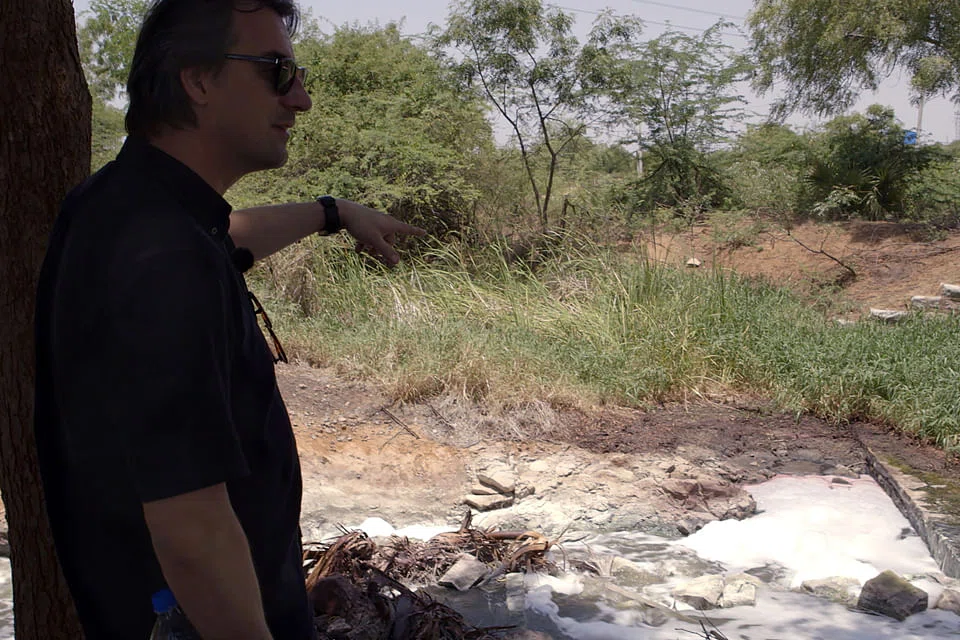
London
IF FUND managers are serious about clean investments, they need to get their hands dirty. That's the view of Sasja Beslik, head of sustainable finance at Swiss bank J Safra Sarasin, as demand surges for companies that perform well on environmental, social and governance (ESG) issues.
He himself has turned ESG detective in the past, flying to southern India after reading studies that found high water pollution levels around some factories mass-producing medicines. Accompanied by a cameraman, Mr Beslik spent 10 days meeting villagers and taking samples from streams close to the plants supplying companies that his then-firm had invested in.
He said his samples were confiscated by airport authorities, but that he sent his video evidence of foaming scum in streams to 27 international and local companies with operations there. "We got a response in a week from all of them," he said, adding that most were keen to fix the problem.
Returning to India a year later, he found many of the factories had "improved the capacity of the water-treatment plants".
Mr Beslik's visits were in late 2017 and 2018, but he says it's now more important than ever to probe ESG credentials, rather than relying on ratings assigned by data providers that are often based on self-reporting by companies.
Navigate Asia in
a new global order
Get the insights delivered to your inbox.
Investor demand for companies deemed to have high ESG standards has never been higher. ESG-focused funds manage US$1.1 trillion, more than double 2016 levels, according to industry tracker Morningstar. As much as anything, such investments are a way to mitigate risk; Bank of America estimates more than US$600 billion of S&P 500 company market capitalisation alone was lost to "ESG controversies" in the last seven years.
Recent high-profile examples include German payments firm Wirecard and British fashion retailer Boohoo, where allegations of accounting fraud and factory labour abuses, respectively, erased years - and in Boohoo's case, months - of returns in a matter of days.
Mr Beslik, who heads a team of eight ESG specialists at J Safra Sarasin, is now focusing on Democratic Republic of Congo to assess mining of cobalt, a key component of batteries used by tech firms and carmakers. The cobalt industry has been dogged by allegations of child labour and environmental damage.
He is by no means the only player turning ESG sleuth. Vontobel Asset Management's head of ESG, Sudhir Roc-Sennet, employs three ex-investigative journalists to bolster his traditional team of analysts.
A central element of their job is kicking the tyres on ESG scores. One example concerned Nestle. Despite the firm's AA ESG score from one provider, Vontobel became concerned in 2018 about media and NGO reports of excessive water use at Nestle's US bottled water subsidiary.
Mr Roc-Sennet remains invested in Nestle, praising its overall environmental track record. But after consulting water rights lawyers, hydrogeologists, and environmental inspectors, Vontobel pushed Nestle to reduce water intensity - the amount of freshwater used per million dollars of sales.
It's unclear whether Vontobel's efforts led to Nestle reducing its water intensity, which had been falling for years across its businesses.
Nestle said the amount of freshwater used per bottle at the US subsidiary was one of the lowest among beverages and its "team of engineers, hydrologists, biologists and geologists consistently monitors and cares for the springs and local environment in California".
ESG scores can miss such issues, Mr Roc-Sennet said. "The water division is small and Nestle's other business is sustainable." When data isn't available, basic detective work is the answer, he says. To assess diversity among senior management at companies, for example, he has scoured the Web to check "thousands of photos and names, doing Google and LinkedIn searches on people's backgrounds".
Providers of ESG scores, including Sustainalytics, MSCI and Refinitiv, say that alongside company disclosures they use external sources including media and NGO reports. Some, like Truevalue Labs, say they eschew company data altogether. But the system has flaws. Small companies with limited disclosure can earn lower scores than multinationals, meaning relatively new renewable energy outfits might rank below tobacco giants.
Scores can also vary wildly across providers. In contrast to credit-ratings agencies, whose assessments vary significantly in just 0.1 per cent of cases, one in four ESG ratings differ between providers, according to Nathan Cockrell, Lazard Asset Management's co-director of global research. Take Tesla - its environmental scores range from 10 per cent to 65 per cent, where 100 per cent is the best possible score, according to a 2019 study by Anthony Renshaw at financial intelligence firm Qontigo. Tesla can rank both above and below rivals Ford and General Motors.
Mr Beslik of J Safra Sarasin said inconsistencies between ESG scores and reality could ultimately leave investors exposed. "There is a huge gap in the world of ESG investing," he added. "A gap between what ESG investments stipulate that they do and what is really going on on the ground. One day it will boomerang back and it will hurt the entire industry." REUTERS
Decoding Asia newsletter: your guide to navigating Asia in a new global order. Sign up here to get Decoding Asia newsletter. Delivered to your inbox. Free.
Share with us your feedback on BT's products and services

