

China halts run of yuan fixing cuts that rattled global markets
More volatility seen in China as govt tries to shift away from a planned economy to one driven by market forces
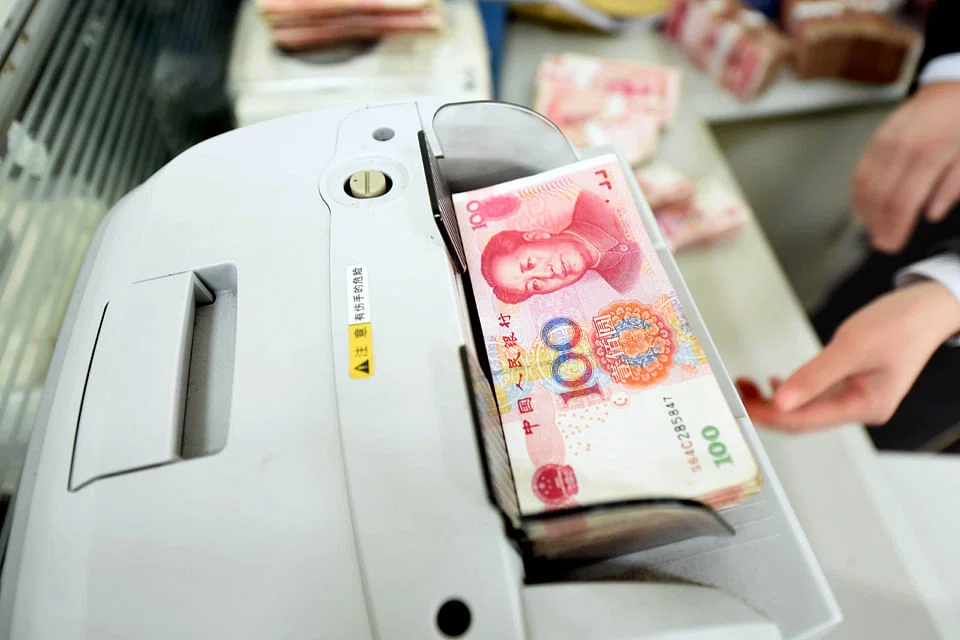
Beijing
CHINA ended an eight-day run of reductions to the yuan's reference rate that sent shockwaves through financial markets and escalated fears of a global currency war.
The People's Bank of China (PBOC) set the daily fixing, which restricts onshore moves to a maximum 2 per cent on either side, at 6.5636 a dollar, 0.02 per cent stronger than the previous day's reference rate. It was cut 1.42 per cent over the last eight days.
The yuan's weakness is threatening to spark a cycle of competitive devaluations, Mexican Finance Minister Luis Videgaray said after his nation's central bank spent US$400 million supporting its currency on Thursday.
The Standard & Poor's 500 Index had its worst-ever start to a year over four days and about US$4 trillion was wiped from the value of global equities in that time. Stock trading in China was suspended on two days as sliding prices triggered circuit breakers.
"It's about time; the weak fix has really caused a lot of panic," said Roy Teo, a Singapore-based currency strategist at ABN Amro Bank NV, which Bloomberg data show had the most accurate forecasts for the yuan over the past year. "As much as there are economic reasons for a weaker exchange rate, I think the past few weak fixings have really caused a lot of uncertainty over whether they're seeking to devalue the currency."
The offshore yuan fell 0.03 per cent to 6.6843 a dollar as at 4.03pm in London, according to data compiled by Bloomberg. It sank as low as 6.7618 on Thursday, within 0.4 per cent of a record 6.7850 seen in September 2010. The currency started trading in Hong Kong in the third quarter of 2010 and Bloomberg data goes back as far as August of that year. The onshore rate was little changed at 6.5938 in Shanghai on Friday.
While Commerzbank AG had expected the PBOC fixing to be near Thursday's official close of 6.5939 in Shanghai, the rate was actually 0.5 per cent stronger. If the central bank keeps "spooking the market on the downside, equities and the currency will keep falling significantly and risk financial stability", Singapore-based economist Zhou Hao said before Friday's reference rate was announced.
Asian stocks and currencies rallied on Friday. The MSCI Emerging Markets Index climbed 0.1 per cent, the most since Dec 31, as Chinese shares advanced. A gauge of 20 developing-nation exchange rates extended losses for a sixth day after better-than-estimated US jobs data bolstered the case for an interest-rate increase. The Indian rupee, the Malaysian ringgit and South Korea's won strengthened.
The PBOC has weakened its daily fixing by 2.6 per cent since winning entry into the International Monetary Fund's (IMF) reserves basket on Nov 30. The offshore yuan's discount to the onshore rate reached a record 2.9 per cent on Thursday.
The offshore yuan's recent slide put China effectively in breach of IMF regulations, which stipulates that no member country can operate multiple currency practices that result in spreads of more than 2 per cent, Macquarie Bank strategists led by Singapore-based Nizam Idris wrote in a report. The lender cut its one-month forecast for the onshore yuan to 6.70 a dollar from 6.43.
"There will be a grace period surely applied for the spread to be allowed to contract again and tighten," said Gareth Berry, a foreign-exchange strategist at Macquarie in Singapore. "A problem would arise if there was a persistent breach. It was a technical breach."
The IMF has noted the widening of the spread between the onshore and offshore yuan rates, a spokesman said. The IMF is gathering relevant information and will discuss with the authorities the factors behind it and possible remedies, according to the spokesman.
Government data this week are forecast to show Chinese exports shrank for a sixth straight month in December, according to the median estimate in a Bloomberg survey of economists. A gauge of China's services output fell to a 17-month low in December, according to a report released on Wednesday.
In December, China set up an index comparing the yuan against a basket of 13 currencies, saying that it isn't right to measure performance against the dollar alone. The yuan has "limited" room for further depreciation as slumping energy prices will help boost the current-account surplus in China, the world's second largest importer of oil, and offset capital outflows, according to a Goldman Sachs Group Inc report last week.
The nation's foreign-exchange reserves slid more than forecast in December, capping their first-ever annual decline, as the authorities sought to prop up a weakening yuan.
"Friday's fixing will stabilise sentiment and keep the yuan stable against a basket of currencies," said Tommy Xie, a Singapore-based economist at OCBC Bank. "The risk of the unknown still persists but it has improved a lot. The trend for the yuan to depreciate hasn't changed, considering the fundamentals, but the PBOC's policy stance is clearer."
While China has extended onshore yuan trading hours to 11.30pm, the central bank said last month that it would continue to view the 4.30pm price as the closing level. This is significant because the monetary authority's system of setting the yuan's daily fixing uses the previous day's close as one of the factors.
Investors should expect more volatility in Chinese markets as the government attempts to shift away from a planned economy to one driven by market forces, Mark Mobius, chairman of the emerging markets group at Franklin Templeton Investments, wrote in a blog post on Thursday. Policymakers face a "conundrum" as they seek to maintain financial stability while at the same time loosening their grip on markets, he said.
"Friday's move is a reflection that the authorities want some stabilisation and again aligns with the view that China doesn't like one-way-bets," said Christy Tan, head of markets strategy at National Australia Bank in Hong Kong. "China doesn't have a weak yuan foreign-exchange policy. It is allowing the currency to trade in a more flexible, market-oriented manner. This will imply room for further weakness in the near term." BLOOMBERG
TRENDING NOW

He built the Vingroup empire. Now South-east Asia’s richest man is handing some key roles to his sons
China’s Pinglu Canal likely to benefit Singapore, other South-east Asia ports in the long term
Suntec Reit to increase Singapore focus, sell three Australia properties
Despite the de-dollarisation debate, demand for dollar liquidity in Asia is growing

