

China sovereign bonds tumble from top ranking as funds flee
 Add BT as a preferred source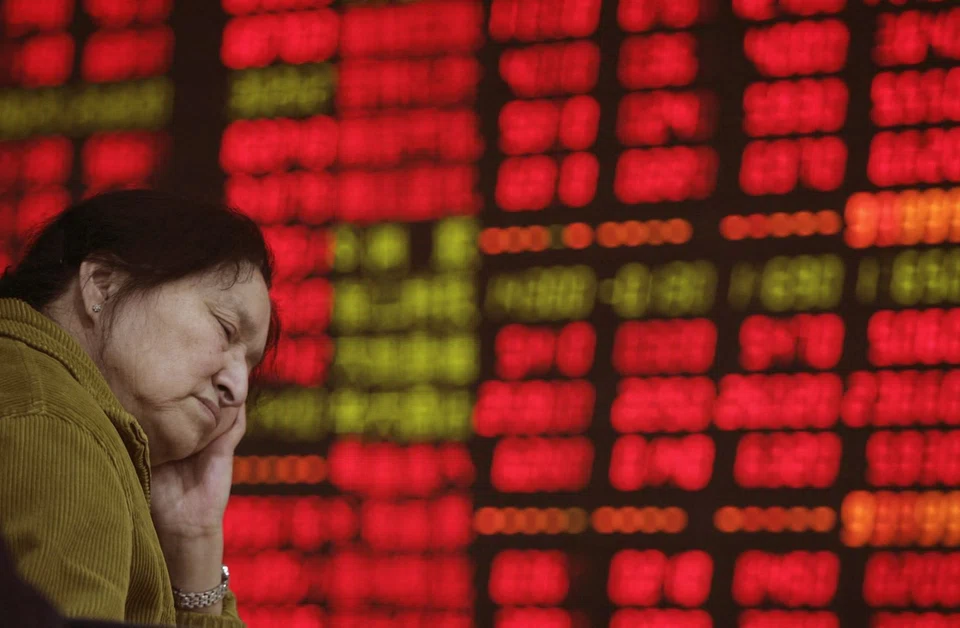
DeeperDive is a beta AI feature. Refer to full articles for the facts.
[BEIJING] China's sovereign bonds slid from the top of global performance rankings to near the bottom in recent weeks, undermining its status as an alternative haven just as global markets are roiled by the war in Ukraine.
The return on yuan debt, excluding currency fluctuations, has slipped to 30th among 46 sovereign markets tracked by Bloomberg since Russia invaded Ukraine on Feb 24, according to data compiled by Bloomberg.
They topped the rankings in January when they were touted as havens due to China's monetary policy divergence with the Federal Reserve.
There are growing signs that investors are unwinding bets, with global funds selling a net US$5.5 billion of Chinese government debt last month, a record reduction. Pacific Investment Management cut its call as yield differentials with Treasuries narrowed, while AllianceBernstein Holding warned that Beijing is going to drive growth by issuing more debt.
"China rates have failed to follow the decline in US Treasuries amid global risk-off trades," Becky Liu, head of China macro strategy at Standard Chartered Bank, wrote in a note. China's stronger-than-expected GDP target for this year "suggests that credit policies may turn more proactive in the near term," she wrote, adding that the 10-year yield may rise to 2.95 per cent by the third quarter.
The benchmark 10-year yield has risen 15 basis points from a 20-month low hit in January to 2.83 per cent, while Treasuries of the same tenor hover near the lowest since early 2022. China on Saturday announced an economic growth target of about 5.5 per cent for 2022, at the higher end of many economists' estimates, while also outlining higher fiscal spending to stimulate the economy.
Navigate Asia in
a new global order
Get the insights delivered to your inbox.
At the same time, there's a growing chorus of investors who see less room for monetary policy loosening by the central bank after it had cut a key lending rate and boosted liquidity. Traders had bid up Chinese bonds from last October as it had pivoted toward easing.
"We see more risks than opportunities for reward" in bonds, China Asset Management wrote in a note. The fund sees no rate cuts or reserve requirement ratio reduction from the People's Bank of China in the near term and expects the 10-year yield rising to as high as 3 per cent on growing credit supply, according to the note.
The selling by foreign investors last month was the first since March 2021, according to data compiled by Bloomberg. Domestic funds, brokerages and commercial banks also reduced their holdings of the Chinese debt during this period, the data show. There was also speculation that some of the selling may have come from Russia as sanctions from the US and European Union cut off the Russian central bank's access to much of its foreign reserves.
Goldman Sachs Group lowered its assessment on Chinese government bonds Monday on expectations they may come under pressure if funds have to make up for their inability to access Russian investments by selling other emerging market assets.
Developing market investors added a net US$1.7 million of China bonds last week, compared with US$16.2 million Indonesian bonds and US$13.7 million Philippine debt, according to exchange-traded funds flow data compiled by Bloomberg.
However, Overseas-Chinese Banking Corp sees Chinese bonds offering diversification value. "On the private investors side, low correlation between the yuan rates and US dollar rates may be appealing to those looking to reduce exposure to the global volatility," said Frances Cheung, strategist at the bank said. BLOOMBERG
Decoding Asia newsletter: your guide to navigating Asia in a new global order. Sign up here to get Decoding Asia newsletter. Delivered to your inbox. Free.
Copyright SPH Media. All rights reserved.
TRENDING NOW

Shelving S$5 billion office redevelopment plan proved ‘wise’ as geopolitical risks mount: OCBC chairman

Why where you park your joint venture matters: Lessons from a US$689 million shareholder dispute
China pips the US if Asean is forced to choose, but analysts warn against reading it like a sports result
Singaporeans can now buy record amount of yen per Singdollar

