

China state banks seen busy with FX swaps, pressing swap points to negative
 Add BT as a preferred source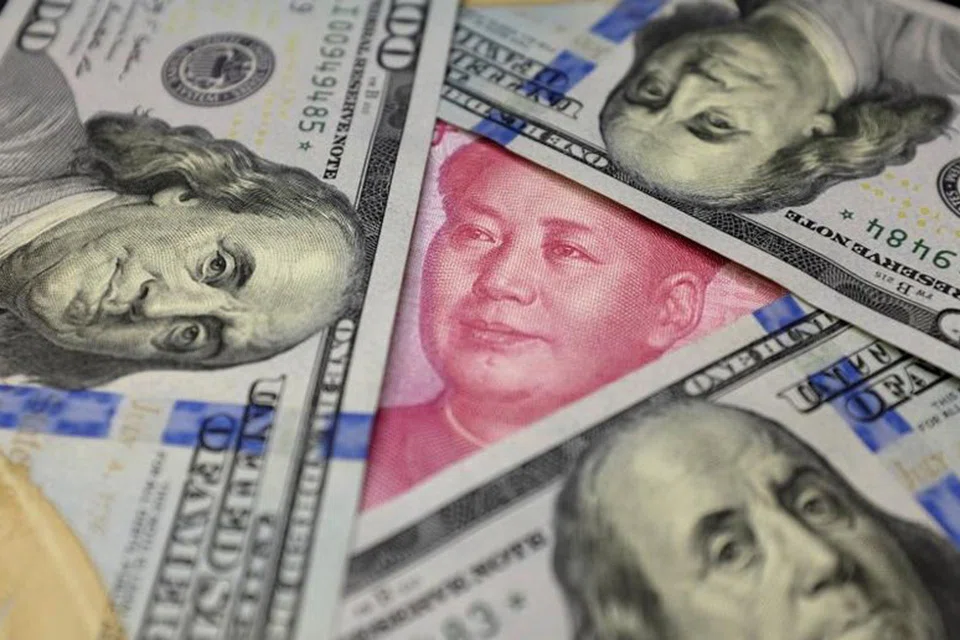
CHINA'S major state-owned banks were actively swapping yuan for US dollars in the onshore forwards market on Tuesday (May 10), 5 banking sources said, pressuring swap points into negative territory for the first time in more than 3 years.
The swaps exacerbated dollar liquidity tensions as US yields rose rapidly and the yield gap between the world's 2 largest economies effectively vanished.
The sources with knowledge of the matter told Reuters that state banks were seen swapping yuan for US dollars in the onshore forwards market, leaving one-year dollar/yuan swap points to a low of -51 points, the lowest level since March 2019.
Buy-sell swaps help to reduce the supply of US dollars that the market can access to short-sell the yuan.
State banks usually trade on behalf of the central bank in China's FX market but they can also trade on their own behalf or execute orders for their corporate clients.
One of the sources noted that the cost of accessing US dollar funding by overseas Chinese banks had been rising rapidly, and using FX swaps to obtain US dollars had become rather "cost-effective".
State lenders used such tactics frequently in 2019 to support the Chinese currency, which faced mounting depreciation pressure due to heightened bilateral trade tensions with the United States.
This time around, the yuan regained some downside pressure, with the onshore yuan losing about 5.5 per cent of its value against the dollar this year to trade at an 18-month low as of Tuesday. REUTERS
Decoding Asia newsletter: your guide to navigating Asia in a new global order. Sign up here to get Decoding Asia newsletter. Delivered to your inbox. Free.
Share with us your feedback on BT's products and services
TRENDING NOW
NDR 2026: Singapore to create new Western island to support 'new generation of industries'

MSCI drops S-E Asian heavyweights Sembcorp, GoTo and Ayala Land from global benchmarks
E-commerce is killing ‘real’ commerce, says China’s beverage king Zhong Shanshan

Asia-Pacific aviation: is up really the only way?

