China steps up efforts to ring-fence Evergrande, not save it
Beijing looks set to prop up homeowners, healthy developers and real estate market at expense of global bondholders
 Add BT as a preferred source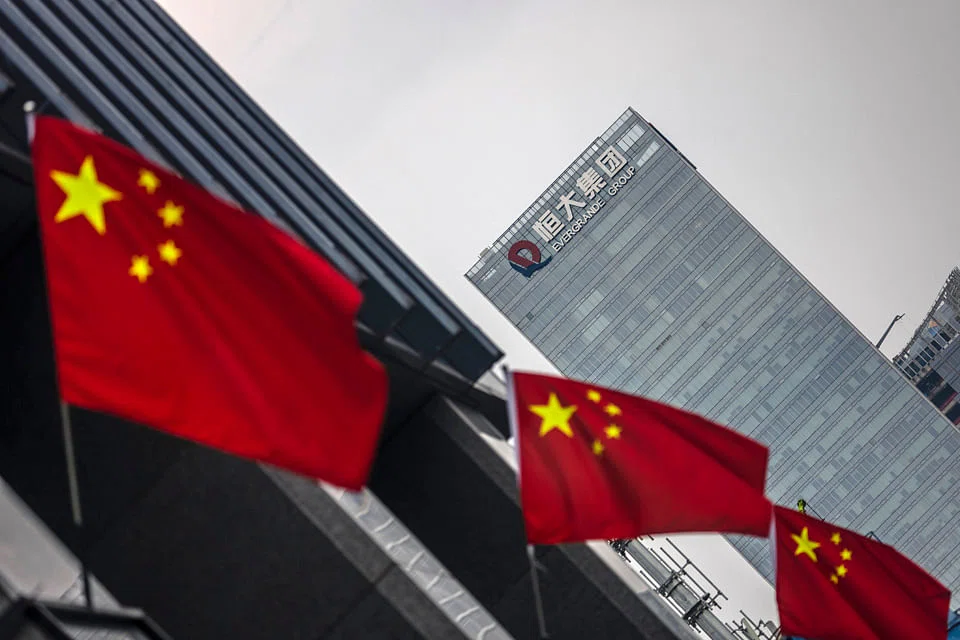
DeeperDive is a beta AI feature. Refer to full articles for the facts.
Hong Kong
AS CHINA Evergrande Group edges closer to a massive restructuring, Beijing has stepped up efforts to limit the fallout, signalling it is willing to prop up healthy developers, home-owners and the real estate market at the expense of global bondholders.
In the last week alone, Chinese authorities have dispatched top financial regulators to nudge the country's massive banks to ease credit for homebuyers and support the property sector. They also bought out part of Evergrande's stake in a struggling bank to limit contagion.
The central bank, meanwhile, has pumped 790 billion yuan (S$166.4 billion) into the financial system over 10 days to ease liquidity. The moves underscore that China will do every-thing it can to ring-fence Evergrande, while showing little interest in a direct bailout of the developer that has roiled global markets for weeks.
That doesn't bode well for bondholders - both onshore and abroad - looking for some kind of rescue from the Chinese government.
"The first obligation is going to make sure that homeowners who bought those homes take delivery and are made whole," said Marathon Asset Management chief executive officer Bruce Richards, who started buying Evergrande debt last week. "At the very end of the pecking order are offshore bondholders."
Navigate Asia in
a new global order
Get the insights delivered to your inbox.
For China, the risk of contagion far outweighs any potential damage from an Evergrande collapse on its own. Though Evergrande is one of the largest developers in China, it accounts for just 4 per cent of sales in the country. A run on property firms in the wake of an Evergrande failure threatens to destabilise an industry that accounts for 29 per cent of China's economy, according to new research from Harvard University economist Ken Rogoff.
Already, developers such as Sunac China Holdings and Guangzhou R&F Properties have plunged in trading, while their bond yields have soared. Some 12 real estate companies have reported bond defaults in the first half of this year, amounting to 19 billion yuan, according to Moody's Investors Service.
Evergrande and its property services arm were halted in Hong Kong stock trading amid a report that the developer agreed to sell a controlling stake in the unit to raise much-needed cash. Trading of Evergrande was suspended pending an announcement on a "major transaction," the developer said on Monday in a stock exchange filing. Hopson Development Holdings plans to acquire a 51 per cent stake in the property services unit, according to Chinese financial news platform Cailian, citing unidentified people.
China also faces a potential backlash from the 1.6 million homebuyers who put deposits on Evergrande apartments that have yet to be built. Getting those projects completed would help avert the type of social unrest sparked last month by retail investors demanding payment on some 40 billion yuan in Evergrande high-yield investment products.
"A disorderly default of Evergrande is unlikely because of the broad-based risk it presents to a large amount of the Chinese population," said Alejandra Grindal, chief economist at Ned Davis Research. "The government is probably less concerned about restructuring the offshore debt."
Given the heightened risk of social unrest, Beijing will try to ensure that construction workers are paid first in any restructuring, followed by homebuyers, then suppliers and lenders, said James Feng, the founding partner of Poseidon Capital Group, a Chinese fund that specialises in distressed and special situation investments. "It's highly likely that Evergrande's offshore bondholders will be wiped out," Mr Feng said.
To limit the real estate contagion, central bank governor Yi Gang and other officials told financial institutions to cooperate with governments to "maintain the steady and healthy development of the real estate market" while safeguarding homeowners, according to a statement by the People's Bank of China last week. The regulators asked banks to refrain from cutting off funding to developers all at once, according to a person familiar with the matter. Lenders should continue supporting projects under construction and approve mortgages for buyers qualified for pre-sales, the person said.
So far, China has been able to limit Evergrande's contagion. Standard & Poor's said it sees little evidence of a broader spillover into other parts of the financial markets, with impact confined to single-B rated developers. Citigroup expects some fallout from Evergrande, prompting a cut in its 2022 economic growth forecast to 4.9 per cent from 5.5 per cent.
The challenge for China is to support the property sector without stoking the type of overheating that it's been working for years to curb. President Xi Jinping's mantra is that housing is for living not for speculating, and Beijing wants to avoid another run up in prices that would exacerbate inequality in the world's second largest economy. Still, inflicting pain on Evergrande and its investors also sends a signal that China doesn't condone massive accumulations of debt and the moral hazard that often comes with it.
"Regulators will make sure no systemic financial crisis will happen, which is their bottom line," said Zhou Hao, senior emerging markets strategist at Commerzbank in Singapore. "At the same time, they will punish developers that are highly leveraged."
Bondholders meanwhile are bracing for a massive haircut from any restructuring. S&P said last week that it expects a "very high chance of default" for Evergrande given its liquidity situation and US$300 billion in total liabilities. BLOOMBERG
READ MORE: Evergrande to raise US$5b from sale of property unit: report
Decoding Asia newsletter: your guide to navigating Asia in a new global order. Sign up here to get Decoding Asia newsletter. Delivered to your inbox. Free.
Share with us your feedback on BT's products and services