

China's 122.8t yuan headache underscored by equity swings
Beijing
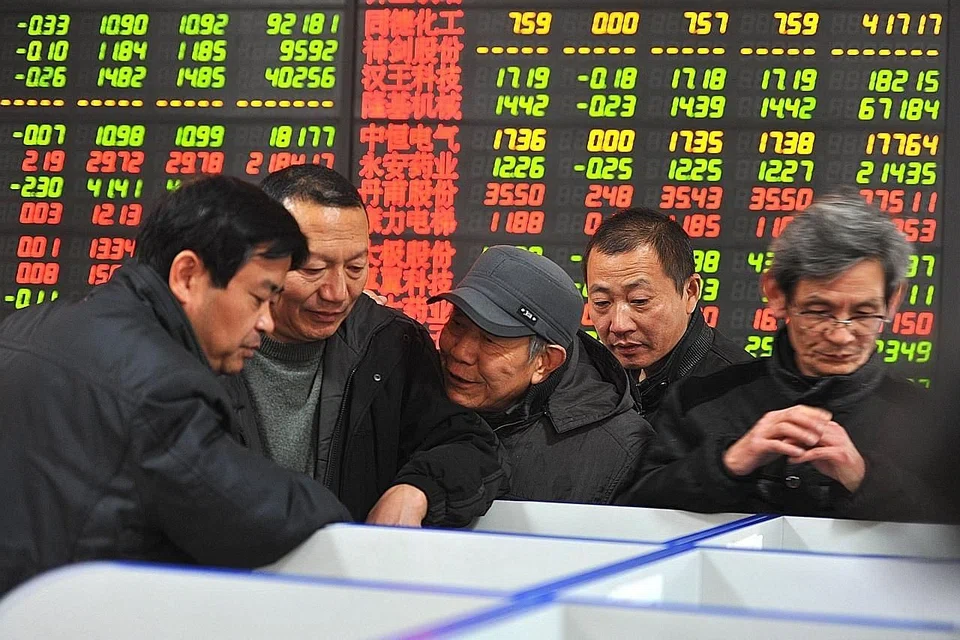
FOR China's central bank, the 36 per cent stock market rally through Jan 16 spurred in part by a surprise November interest-rate cut is the latest reminder that it's easier to unleash money than to guide it to the right places.
Since Zhou Xiaochuan became People's Bank of China governor in late 2002, the broad money supply base has expanded almost seven times to 122.8 trillion yuan (S$26.4 trillion) while the economy has grown about five times. That translates to a M2/GDP ratio of about 200 per cent versus about 70 per cent in the US, according to data compiled by Bloomberg.
That liquidity springs up like a jack-in-the-box, driving property prices, then shifting to stocks, before moving on to whatever may be next. Such sprees help explain the PBOC's reluctance to cut banks' required reserve ratios (RRR) even as the economy slows. Instead, it is trying targeted tools to guide money to preferred areas such as farming and small business.
"The central bank will continue to face structural challenges in 2015 and beyond," said Shen Jianguang, Hong Kong-based chief Asia economist at Mizuho Securities Asia. "Funds aren't flowing into economic activities on the ground. Instead, people are adding leverage to speculate."
China's benchmark stock index plunged the most in six years on Monday in Shanghai, led by brokerages, after regulatory efforts to rein in record margin lending sparked concern that speculative traders will pull back from the world's best-performing stock market in 2014.
The Shanghai Composite Index rose as much as 2.4 per cent on Tuesday after data showing the economy grew 7.3 per cent in the three months through December from a year earlier, beating estimates. Full-year growth was the slowest since 1990.
The move to control margin lending was to "pave the way for more monetary easing", according to Zhu Haibin at JPMorgan Chase & Co in Hong Kong. The action was to stop future monetary easing from flowing into the stock market, Mr Zhu said.
"Regulators are concerned about risks, especially about leveraged stock buying from small retail investors," said Ding Shuang, senior China economist at Citigroup in Hong Kong. "China's overall money supply is getting less loose, and conditions for massive speculation may have gone."
Mr Ding added that the central bank will continue to adopt "targeted easing" in 2015. Meanwhile, the PBOC will also have to take the broad-based measures of cutting banks' RRR and benchmark interest rates to bring down financing costs.
When China was spurring lenders to pump credit to aid growth in 2008 and 2009, investors speculated on everything from pu'er tea to oil paintings. Easy money also pushed up housing prices, forcing local governments to place restrictions on home purchases.
"In the past, they would have put it in property, but now the cash is going to the equity market," Zhang Zhiwei, Hong Kong-based chief China economist at Deutsche Bank AG, said on Jan 7. Mr Zhang was among economists who last month said the surging stock market may delay an RRR cut. BLOOMBERG
TRENDING NOW

He built the Vingroup empire. Now South-east Asia’s richest man is handing some key roles to his sons

Seatrium allocates S$200 million for new share buyback programme

32 companies, 6 individuals bag accolades at Singapore Corporate Awards 2026

Stocks to watch: Mapletree Logistics Trust, Seatrium, Keppel DC Reit, Food Empire

