

China’s cheap money is shaking US$9.5 trillion global loan market
Chinese banks are expanding overseas lending amid weakening domestic credit demand
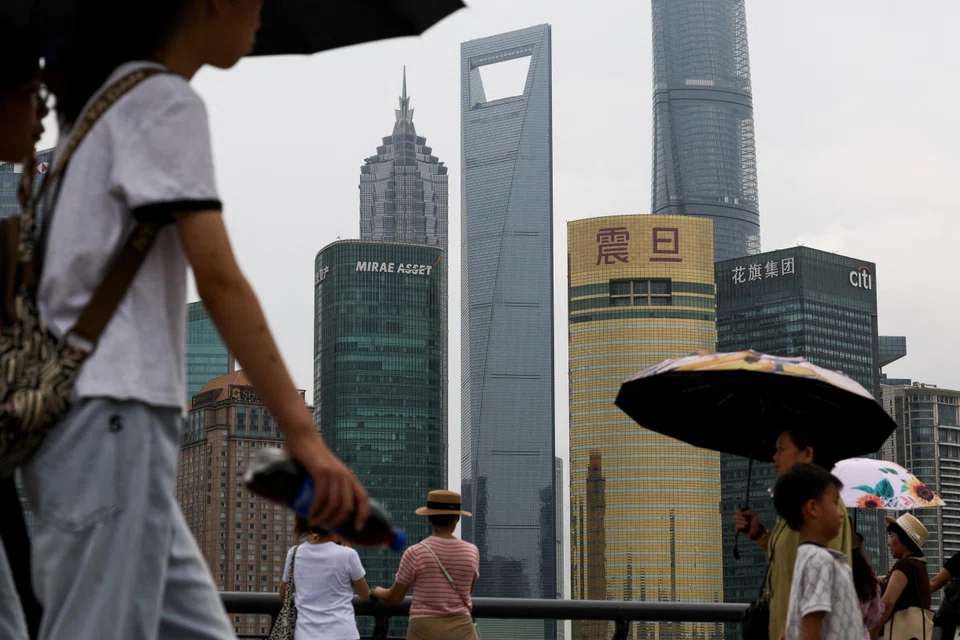
CHINESE banks, flush with low-cost funds, are reshaping parts of the global loan market, underscoring how deflationary pressures in the world’s second-largest economy are increasingly influencing competition with international lenders.
Much like US and European manufacturers who have long complained about being undercut by cheaper Chinese rivals, bankers at global institutions now say they are facing the financial equivalent: being priced out of some of Asia’s most sought-after borrowers as Chinese lenders extend cheaper credit across borders.
Enabled by Beijing’s monetary easing to counter slowing growth, Chinese banks are expanding overseas lending amid weakening domestic credit demand. That edge may prove even more significant as the Iran crisis threatens to upend global energy markets, raising the likelihood that major central banks will hold off easing interest rates amid mounting uncertainty.
“Chinese banks are injecting more liquidity and competition in Asia’s loan market and for established foreign banks, it’s disruptive,” said Alicia Garcia-Herrero, chief economist for Asia-Pacific for Natixis. She said international institutions’ share of US dollar loans could fall in sectors such as infrastructure and commodities as a result.
That disruption is already evident, with Chinese lenders meeting overseas clients more often, initiating refinancings earlier, and stretching repayment periods to sweeten terms, according to sources familiar with the matter.
In November, Chinese lenders underwrote a loan of about US$1.4 billion-equivalent to back a private equity firm’s purchase of a stake in Starbucks’ China retail business, the sources said, who asked not to be identified discussing private matters. The yuan-denominated financing carries a 10-year maturity, longer than the seven-year tenor previously discussed and beyond what most global banks were willing to match, they added.
The month before that, global banks such as ANZ Group Holdings and Standard Chartered wound up not joining a three-year refinancing for Hong Kong-listed delivery firm J&T Global Express. Eight banks, five of them Chinese, lent 10 billion yuan (S$1.9 billion) at 2.6 per cent, far below the US dollar benchmark of around 4 per cent.
“We have seen Chinese banks cutting large underwriting checks, with pretty tight pricing and pretty stretched terms,” said Birendra Baid, head of loan syndications for Asia-Pacific at Deutsche Bank. “That’s something which will continue.”
Shifts elsewhere also highlight the growing clout of Chinese banks. Their syndicated lending to the Gulf jumped nearly three-fold to a record US$15.7 billion in 2025, exceeding about US$4.6 billion from lenders in the US, UK and eurozone combined. However the deepening Middle East turmoil could complicate lending strategies and inject fresh uncertainty into their pursuit of opportunities across the region.

Policy pivot
Regulatory shifts have reinforced the trend. Since the People’s Bank of China eased overseas lending rules in 2022, Chinese banks have been encouraged to tap low-cost domestic funding to boost the yuan’s role in global trade, according to sources familiar with the matter. In recent weeks, policymakers let the interest rate on a one-year loan to banks drop to a record low of 1.5 per cent.
With China embedding the yuan more deeply into international commerce and payments, it is positioning itself to challenge US financial dominance as the two largest economies remain locked in disputes over tit-for-tat tariff hikes and advanced artificial intelligence chip exports. Favourable rate differentials are allowing borrowers to secure cheaper capital, just as many global investors seek to diversify away from the US dollar following Trump’s unpredictable policies at home and abroad.
Yet the yuan’s global footprint is still modest. It still trails the US dollar, euro, yen and sterling, accounting for about 8.5 per cent of global currency transactions as at last September, up from 7 per cent in 2022, according to the Bank for International Settlements.
This gap highlights both the scale of Beijing’s ambitions and the disruptive potential of Chinese banks as they channel low-cost capital overseas. Several Chinese institutions have recently sharpened their strategies to strengthen their competitive edge.
One of China’s four largest state-owned banks, seeking to avoid public attention, has quietly expanded the authority of its Hong Kong branch to approve global loans without a direct mainland link, according to sources familiar with the matter. Announced internally in January, the change gives the offshore unit greater autonomy to pursue overseas deals, alongside double-digit growth targets for fee income and asset expansion, the sources said, who asked not to be identified discussing private matters.
The rise of Chinese lenders comes as Asia-Pacific loan markets outside Japan remain under pressure. Regional volumes fell 7.4 per cent in 2025 to a five-year low of US$572 billion, according to Bloomberg-compiled data.
Rather than retreat, global lenders are adapting. Asia’s abundant liquidity is drawing borrowers from the Middle East and Europe, and international banks, such as HSBC Holdings, are positioning themselves as intermediaries, connecting Chinese capital with new clients.
A case in point was Abu Dhabi wealth fund ADQ’s US$5 billion syndicated loan, which primarily targeted lenders in Greater China. Initially structured with three- and five-year tenors, the deal ultimately closed in October with only the longer maturity after drawing participation from 37 institutions, nearly half of which were Chinese banks.
“Many foreign banks are adapting by joining hybrid syndicates, partnering with Chinese banks rather than competing head on,” said Natixis’ Garcia-Herrero. “Borrowers benefit from more options, lower rates, longer tenors, and flexibility on covenants.” BLOOMBERG
Decoding Asia newsletter: your guide to navigating Asia in a new global order. Sign up here to get Decoding Asia newsletter. Delivered to your inbox. Free.
Share with us your feedback on BT's products and services






