

China’s markets shed ‘uninvestable’ tag as global funds return
Money managers’ still-underweight positioning suggests ample room to build exposure
 Add BT as a preferred source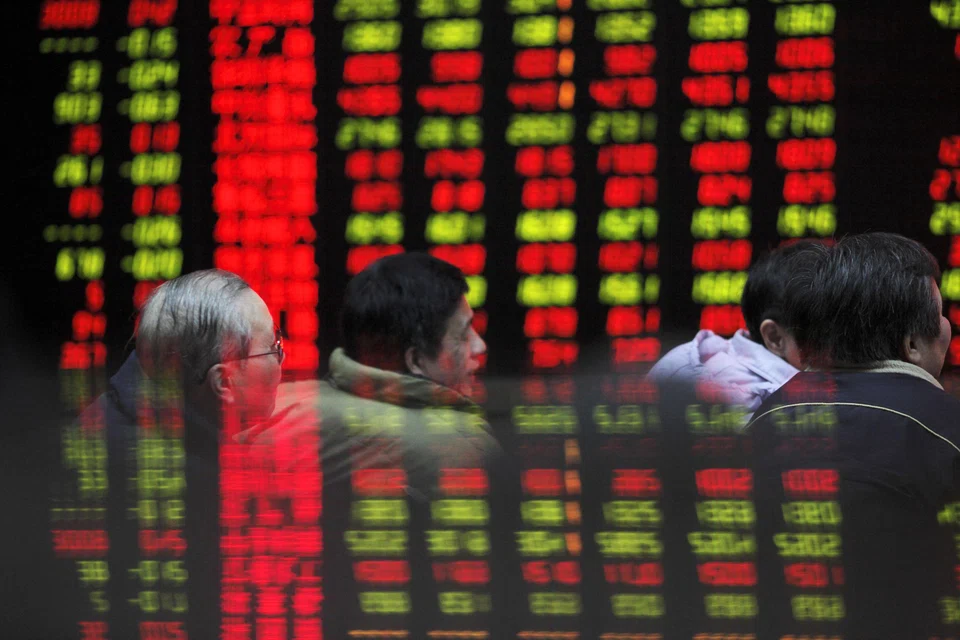
[HONG KONG] Global money managers are venturing back into China after years of aversion, piqued by a world-beating stock rally and the country’s advances in high-tech industries.
Goldman Sachs Group said global hedge funds were last month the most active in onshore equities in recent years – a stark contrast to 2021, when some clients had deemed the market “uninvestable”.
Pacific Investment Management said investors are now more concerned about missing out than the risks. Official data shows foreign inflows rising across asset classes, a coordinated advance that has happened only in three of the past 10 years.
Taken together, these are signs of a turnaround for a market that had fallen out of favour with global investors amid prolonged regulatory crackdowns and a spiralling property crisis. This year’s US$2.7 trillion equity rally onshore has proven too compelling to ignore, and global funds’ still-underweight positioning suggests ample room to build exposure.
“Global investors have been growing notably more interested in Chinese assets,” said Joseph Zhang, a portfolio manager for Fidelity International who has been increasing holdings in the market. “This year is different in the sense that the revaluation of Chinese assets is no longer a policy-fuelled frenzy but driven by better fundamentals. Investor confidence will likely grow stronger.”
This is a far cry from the harrowing years following the 2021 peak, when some money managers said China is just not worth the risk.
The narrative has now changed to one of confidence, spurred by its artificial intelligence (AI) prowess and economic resilience in the face of US restrictions. Stronger inflows could buttress the yuan and aid President Xi Jinping’s ambition to elevate the currency’s role in global finance.

Timing has also worked in China’s favour. US President Donald Trump’s confrontational trade policies, the Federal Reserve’s rate-cut cycle and a ballooning US budget deficit have encouraged investors to seek alternatives to US dollar assets, prompting a fresh look at the vast Chinese market.
As risk appetite continues to improve and the US dollar weakens, markets with compelling valuation and low global fund positioning – such as China – stand to benefit, said Chang Hwan Sung, a multi-asset portfolio manager with Invesco’s investment solutions team. Sung’s fund has been increasing allocation in Chinese equities, he said.

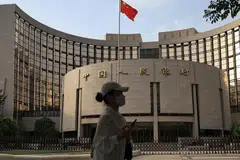
In the first half of this year, foreigners boosted their holdings of onshore stocks, bonds, loans and deposits – a simultaneous increase for the first time since 2021. Net inflows through June have already surpassed the 2024 annual tally by about 60 per cent, according to the latest data from the People’s Bank of China (PBOC).
The momentum has likely carried on. “Foreign investors overall purchased onshore stocks and bonds on a net basis” in August, Li Bin, deputy head of the State Administration of Foreign Exchange, said in a briefing earlier this month.
Tech’s ascent
Underpinning the shift in perception is the technology sector’s advance, as heavyweights including Alibaba roll out their own AI models and chipmakers such as Cambricon Technologies notch breakthroughs.
“Global investors will increase their allocations to Chinese assets in the coming years,” said Yerlan Syzdykov, global head of emerging markets at Amundi UK. Among the drivers will be a sense of “Fomo” from China’s strong performance and attractively priced opportunities in areas such as clean tech and AI, he said.
Among US-listed exchange-traded products that focus on emerging markets, those tracking Hong Kong and China stocks and bonds saw the largest inflow in the week ended Sep 19, according to data compiled by Bloomberg.
Morgan Stanley said inflows from foreign long-only funds reached US$1 billion as at end-August, a reversal from the US$17 billion in outflows last year. Global funds are still 1.3 percentage points underweight China despite some improvement, according to the note released earlier this month, while Asia ex-Japan managers have turned overweight.
Strategist Laura Wang said over 90 per cent of the clients she met during a US marketing trip expressed “explicit willingness” to increase China exposure, the highest level of interest since the early 2021 peak.
And while China has discontinued the release of northbound data – a key route for global funds to buy Chinese stocks through Hong Kong – Goldman Sachs strategist Kinger Lau said available data shows “foreign investors’ participation in China equity, A-shares in particular, has risen to cycle highs”.
He added that gross flows by global hedge funds in August were the largest in recent years.
The CSI 300 Index, a benchmark for onshore shares, has climbed 17 per cent this quarter to reach more than a three-year high. The tech-focused ChiNext Index has rallied 50 per cent during the period in one of the best performances globally.
Despite the advances, they are still below their 2021 highs. The gauges started the week on the front foot on Monday (Sep 29), after a jump in Chinese industrial profits boosted sentiment.
To some, however, the scars of China’s prolonged market downturn run so deep that returning is a non-starter. A wave of regulatory crackdowns that began in 2021 – spanning sectors from tech to tutoring – sent equities into a tailspin and fuelled the “uninvestable” narrative.
Authorities are also keen to tame market exuberance, suggesting runaway rallies may face scrutiny. Geopolitical tensions mean the US’ biggest public and pension funds will continue avoiding China for political reasons. Florida last year joined a number of US states in requesting its pension funds to divest Chinese holdings.
Spillover to bonds
Nonetheless, growing interest in other asset classes point to a common theme: Beijing is committed to supporting the economy, and the US trade war will only embolden the country’s industrial strength.
Chinese tech companies have sold a record amount of yuan-denominated debt in Hong Kong this year. The “big growth” in dim sum bond markets has been supported by a broadening investor base across continents, according to Eugene Ng, head of debt capital markets for greater China at HSBC Holdings.
In Tencent’s bond sale earlier this month, those from the Middle East invested across the curve while high-quality funds from Europe also joined, Ng said. Alibaba’s convertible bond sale was multiple times subscribed, with bidders including long-only investors and hedge funds.
While the revival in risk sentiment has weighed on government bonds, expectations of PBOC easing and China’s low inflation are starting to lure back buyers.
The conversation with clients has shifted from “how to de-risk” to “what are the opportunities” in China, said Stephen Chang, managing director and Asia portfolio manager at Pimco. Chang, who co-manages a US$572 million fund that beat 98 per cent of peers this year, said he may buy more Chinese government bonds after purchasing some recently.
Foreigners trimmed their holdings of Chinese government bonds in August, but the scale of the selloff eased to just one-fifth of July’s, official data showed. On Friday, China said it was expanding access to its bond repurchase market, which may encourage global investors to increase holdings of yuan-denominated assets.
“The real interest rate of yuan bonds is still relatively high, which provides a very good channel for global investors,” Zou Lan, the PBOC’s deputy governor, said at a forum in Hong Kong last week.
All of this has been supportive for the yuan, which rose to 7.1 against the US dollar this month – the strongest since November.
“China is not uninvestable,” said Thomas Fang, head of China global markets at UBS. “The vast gap between China’s global economic footprint and the low single-digit allocation from global investors represent a significant long-term opportunity.”
Decoding Asia newsletter: your guide to navigating Asia in a new global order. Sign up here to get Decoding Asia newsletter. Delivered to your inbox. Free.
Share with us your feedback on BT's products and services
TRENDING NOW

Jumbo Seafood to close flagship East Coast Seafood Centre outlet on Sep 30

Shanda co-founder sells Tanglin Hill bungalow for S$76 million

Singapore developer in limbo after Timor-Leste scraps major township project

Trek 2000 shares jump 41.5% after Osim founder Ron Sim drops claims, sells 7.3% stake to Azure Capital

