

China's short-term money rates fall to two-week low as PBOC injects liquidity
 Add BT as a preferred source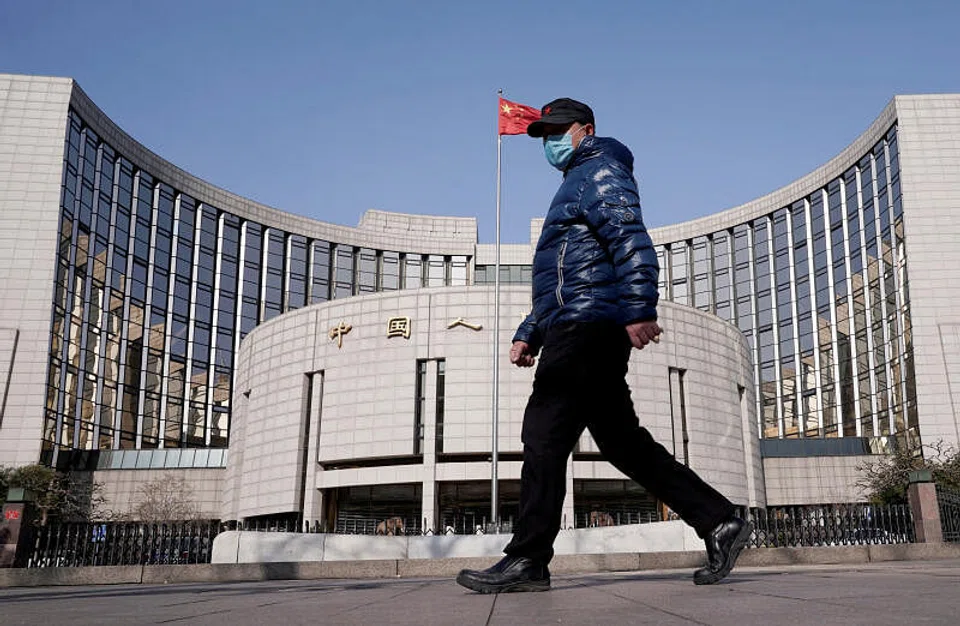
[SHANGHAI] China's short-term money rates eased to two-week lows on Tuesday as signs of liquidity tension in the interbank money markets started to fade, traders said.
The Shanghai Interbank Offered Rate (SHIBOR) for the one-week tenor, the Chinese yuan equivalent of Libor, fell to 2.241 per cent, the lowest level since Jan 18, compared with a near six-year high of 3.194 per cent in previous session.
The volume-weighted average rate of benchmark seven-day repo traded in the interbank market dropped to a two-week low of 2.2285 per cent at midday, compared with the previous close of 3.1656 per cent.
Short-term funding cost in China started to pick up earlier last week as the central bank refrained from making its usual substantial liquidity injections to meet high demand for cash ahead of the week-long Lunar New Year holidays, which starts on Feb 11 this year.
Due to coronavirus fears, authorities are seeking to discourage people from travelling or visiting too many friends and relatives during the break, which should lessen demand for cash this year.
Some analysts say this is one of the reasons why there has been no reduction in the banks' reserve requirement ratio (RRR) ahead of the holiday this year. The other reasons include a desire to avoid creating excess liquidity that could fuel potential bubbles in the property and share markets.
Navigate Asia in
a new global order
Get the insights delivered to your inbox.
On Tuesday, the People's Bank of China (PBOC) injected a net 78 billion yuan (S$16.08 billion) into money markets through open market operations, bringing total net injection to 176 billion yuan so far this week. But it drained a total of 216.5 billion yuan in January.
Yuan borrowing also declined in Hong Kong. The CNH Hong Kong Interbank Offered Rate benchmark (CNH HIBOR) for overnight tenor fell to 2.34183 per cent, down from 3.64591 per cent on Monday.
Hong Kong Monetary Authority's (HKMA) 10 billion yuan quota for intra-day yuan funding has been utilised less than 30 per cent on Tuesday morning, according to Refintiv data.
REUTERS
Decoding Asia newsletter: your guide to navigating Asia in a new global order. Sign up here to get Decoding Asia newsletter. Delivered to your inbox. Free.
Share with us your feedback on BT's products and services
TRENDING NOW
Middle East-linked energy supply shocks put Asean Power Grid back in focus

Richard Eu on how core values, customers keep Singapore’s TCM chain Eu Yan Sang relevant

From intern to C-suite: JPMorgan’s Teresa Heitsenrether on building a fully AI-powered ‘megabank’
1,224 private homes sold at 2 new launches; Tengah Garden Residences 99% taken up at average S$2,120 psf

