

China’s slower loan growth is new normal, says central bank governor
His comments come after data shows new loans rebound in August from July’s record contraction, but still miss forecasts

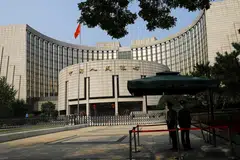
[BEIJING] China’s slower loan growth is becoming the new normal as shrinking property and local government sectors sap credit demand faster than emerging industries can fill the gap, People’s Bank of China (PBOC) governor Pan Gongsheng said.
The comments, published on Wednesday (Sep 16), come after data showed new loans rebounded in August from July’s record contraction, but still missed analysts’ forecasts, as weak demand from households and businesses weighs on credit growth.
“Slower but higher-quality loan growth is likely to become one of the new normal features of macroeconomic operations,” the central bank chief said in the Communist Party’s flagship theoretical journal, Qiushi.
The slowdown reflects China’s economic shifts, with lending to the property sector and local government financing vehicles shrinking, and new industries still unable to fully offset the decline, he added. “Maintaining previous rates of overall credit growth will be difficult and unnecessary.”
Despite the weaker credit demand, financing conditions remain relatively accommodative and effective borrowing needs continue to be met, however, he added.
Much of China’s outstanding loans of more than 280 trillion yuan (US$41.7 trillion) is tied to property and local government financing vehicles, sectors that are now shrinking, Pan noted.
But fast-growing industries such as high-tech manufacturing and green technology, responsible for more than 40 per cent of economic growth in the first half of 2026, rely more on technology, data and intellectual property than land and factories. That makes them less dependent on bank lending.
The central bank has increasingly downplayed bank loans as the primary gauge of credit conditions, highlighting the growing role of bond issuance and other funding channels in China’s more diversified financial system.
In 2025, loans accounted for 45 per cent of the increase in total social financing, while bond and equity financing combined made up 47 per cent, surpassing loans for the first time, the bank said.
Pan pointed out that slower growth in aggregate financing would help stabilise leverage after years of rapid debt accumulation.
He warned that excessive financial expansion could inflate leverage, trap funds in speculative circulation, and delay the exit of inefficient firms and excess capacity, undermining economic efficiency. REUTERS
Decoding Asia newsletter: your guide to navigating Asia in a new global order. Sign up here to get Decoding Asia newsletter. Delivered to your inbox. Free.
Share with us your feedback on BT's products and services
TRENDING NOW

Why US$100 oil, 5% US yields affect Singdollar, ringgit differently vs other Asean currencies

He built the Vingroup empire. Now South-east Asia’s richest man is handing some key roles to his sons

Asia needs new energy security architecture

CDL to launch 570-unit Jurong project Lucerne Grand with prices from S$1.5 million

