China’s smaller banks cut deposit rates to ease margin pressure
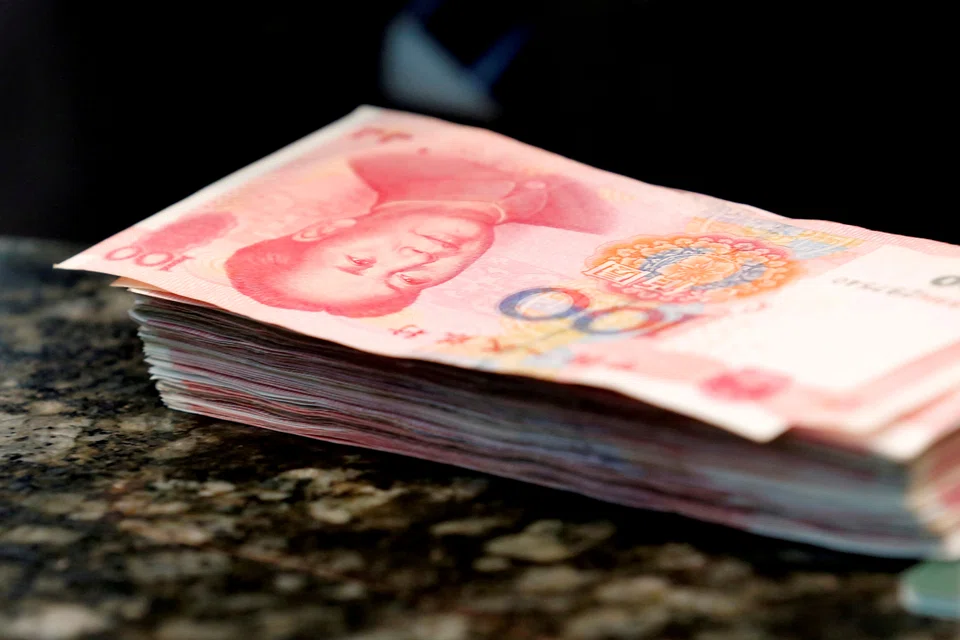
A STRING of small and mid-sized Chinese banks are following their larger peers and cutting deposit interest rates in the first broad-based move since 2015 to ease pressure on margins after successive lending rate cuts.
The cutting of rates on deposits, a key source of funding for Chinese banks, underscores the limitations of lower benchmark borrowing rates in reviving loan demand and growth in the world’s second-largest economy, which is struggling for traction, analysts and bankers said.
Several Chinese city commercial banks and rural commercial lenders have cut their rates on a range of deposits this week, according to statements released on the banks’ websites.
Bank of Nanjing on Thursday (Sep 29) lowered the interest rate for 3-month deposits by 5 basis points (bps) to 1.35 per cent, by 15 bps for 1-year to 1.75 per cent and by 20 bps for 5-year deposits to 2.90 per cent, according to a statement on its website.
The smaller lenders followed in the footsteps of some of China’s biggest state-owned banks, which implemented rate cuts earlier this month.
That came after the central bank in August cut the 1-year loan prime rate (LPR), its benchmark lending rate, by 5 bps, and lowered the 5-year LPR, which influences mortgages, by a bigger margin.
However, efforts to boost credit demand to shore up the slowing economy have not delivered the desired result yet.
“Now banks are facing the same problem, which is that credit demand is not strong,” said a person at a regional bank, declining to be identified as he was not authorised to speak to the media.
There’s a shortage of clients to lend to, which makes controlling costs a vital issue for banks, the person added.
The country’s banks extended 1.25 trillion yuan (S$251.6 billion) in new yuan loans in August, below analysts’ expectations, while broad credit growth slowed, according to data from the People’s Bank of China.
China’s economy narrowly avoided contracting in the second quarter as widespread Covid-19 lockdowns and the slumping property sector weighed on demand. Analysts said business and consumer confidence remain fragile.
Wang Yifeng, analyst from Everbright Securities, expects that there’s room for further deposit rate cuts.
The cost of bank deposits is a bit high, as banks are more willing to absorb low-cost funding when they are struggling to lend out money, said Wang.
Wang Yudong, analyst at Minority Asset Management, likens the problems facing China’s banks to those of manufacturers.
“If prices of finished products drop, you need to lower the prices you pay for raw materials too to protect your profitability.”
Peiqian Liu, China economist at Natwest Markets, noted the commercial banks’ deposit rate cuts are part of the monetary policy transmission mechanism after the central bank cut key policy rates in August.
“This rate cut by commercial banks will help improve the profit margin slightly and is technically opening up more space for further (benchmark lending) rate cuts.”
Four of the 5 of China’s largest banks, except for Bank of China, reported falling net interest margins (NIMs) in the second quarter.
At the end of June, the NIM of Industrial and Commercial Bank of China was 2.03 per cent, with Agricultural Bank of China (AgBank) at 2.02 per cent and China Construction Bank at 2.09 per cent.
Smaller lenders reported thinner NIMs. Bank of Beijing, for instance, reported a margin of 1.77 per cent at the end of June. The NIM of Bank of Qingdao was 1.76 per cent, and Bank of Shanghai reported 1.66 per cent NIM. REUTERS
Decoding Asia newsletter: your guide to navigating Asia in a new global order. Sign up here to get Decoding Asia newsletter. Delivered to your inbox. Free.
Share with us your feedback on BT's products and services