

China’s US$51 trillion savings help bonds to outperform during war
With credit demand still weak, banks have limited scope to expand lending
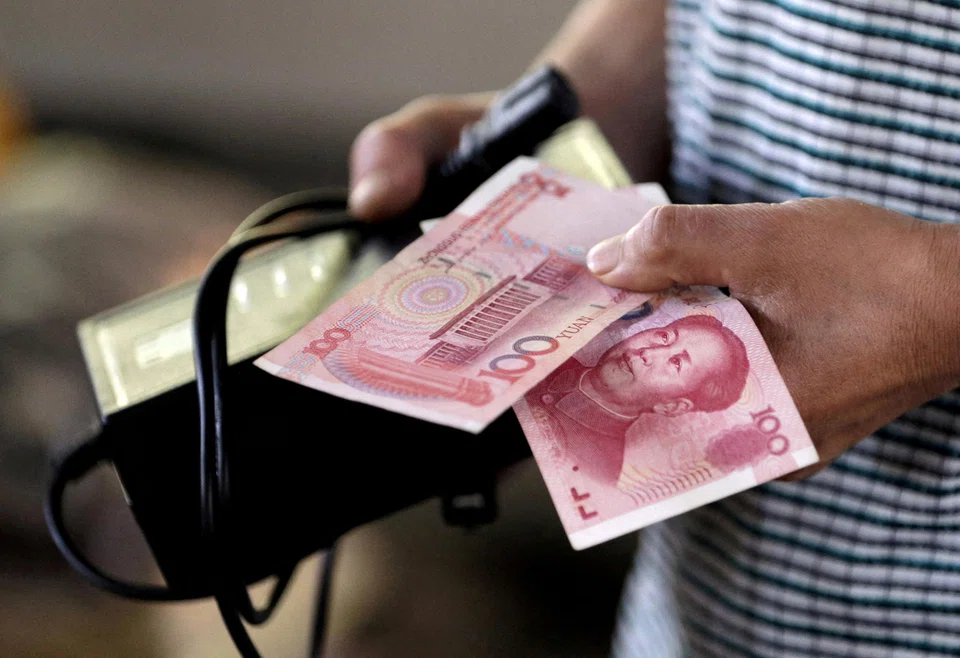
[BEIJING] China’s US$51 trillion savings glut has fuelled demand for its debt, entrenching its role as a haven as the Iran war drives global volatility.
A basket of yuan-denominated high-grade debt, spanning government and corporate bonds, has been the best performer among all major Bloomberg fixed-income aggregate indexes this year, returning about 1.1 per cent.
US dollar bonds of high-quality Chinese issuers have also done better than US investment-grade credit and Treasuries over the same period.
That strength is supported by US$51 trillion of deposits, more than what lenders in the US, European Union and Japan hold combined, sloshing through China’s banking system in search of higher returns.
With credit demand still weak, banks have limited scope to expand lending. Instead, they are putting that extra cash into bonds, creating a persistent bid for high-quality debt.
China’s outperformance is symptomatic of its liquidity glut, said Trinh Nguyen, a senior economist covering emerging Asia at Natixis in Hong Kong. “That excess liquidity is being recycled into high-quality Chinese credit.”
While Chinese regulators have advised banks to rein in their holdings of US Treasuries, Nguyen said that institutions are rotating into US dollar-denominated credit of domestic borrowers, where yields remain more attractive than in local markets.
China’s resilience is also gaining recognition among investors amid the Iran war, after its stocks and currency held up better than peers.
Unlike other major oil importers exposed to surging energy prices, the country is cushioned by large strategic reserves, while its rapid expansion in renewable energy reduces vulnerability to supply disruptions.
SEE ALSO





“What we are really seeing is a shift towards a basket of defensive assets, and China investment grade has earned a place in that basket,” said Lei Zhu, head of Asian fixed income at Fidelity International.
“Large, long-term global investors increasingly view it as a structural diversifier rather than a short-term, event-driven trade.”
Other factors, including low inflation and a large cohort of state-backed issuers in offshore markets, support the case for Chinese debt, she added. Record trade surpluses also leave banks with ample US dollar liquidity to deploy.
Rising demand for high-quality Chinese debt marks a break from years of negative sentiment linked to the high-yield property sector, where falling real estate values have left millions of mortgages underwater.
That shift is now showing up in how these bonds stack up against US assets. The average spread on Chinese investment-grade US dollar bonds is about 53 basis points, about 26 basis points tighter than US high-grade corporates, Bloomberg indexes show.
That’s a reversal from the past decade, when Chinese bonds traded at a premium of a similar size over their US counterparts.
How the bonds fare from here will depend partly on how long the Middle East conflict lasts. China’s low inflation – in contrast to much of the world – keeps yields subdued and supports bond prices.
An extended war poses a threat to growth and may prompt further rate cuts, according to Bloomberg Economics. This could put additional downward pressure on yields and lift bond prices.
A key risk to the haven trade is that higher energy costs may trigger supply-driven reflation. Producer prices have already exited deflation in March after more than three years.
Lynn Song, chief economist for Greater China at ING Bank, said that it’s hard to justify 10-year government yields below 2 per cent for an economy expected to grow around 4 per cent over the next decade.
Still, for investors seeking a hedge against volatility, China’s market offers diversification due to its relatively low correlation with global peers and prices tend to be driven more by policy.
“China sort of has its own dynamic, which is good when a lot of the assets are moving always in the same direction,” said Julio Callegari, chief investment officer of Asia fixed income at JPMorgan Asset Management. “China rates is a good source of diversification.” BLOOMBERG
Decoding Asia newsletter: your guide to navigating Asia in a new global order. Sign up here to get Decoding Asia newsletter. Delivered to your inbox. Free.
Share with us your feedback on BT's products and services
TRENDING NOW

Once staunchly pro-China, Malaysian Chinese businesses are now distancing themselves from Beijing

New launch or resale unit? Here’s a guide for homebuyers
The lesser-known prospects in the Asian chipmaking supply chain

Cliff Tan has 7 million followers and a 4-month waitlist. Why won’t he expand his business?

