

Chinese banks keep lending rates unchanged after PBOC pauses
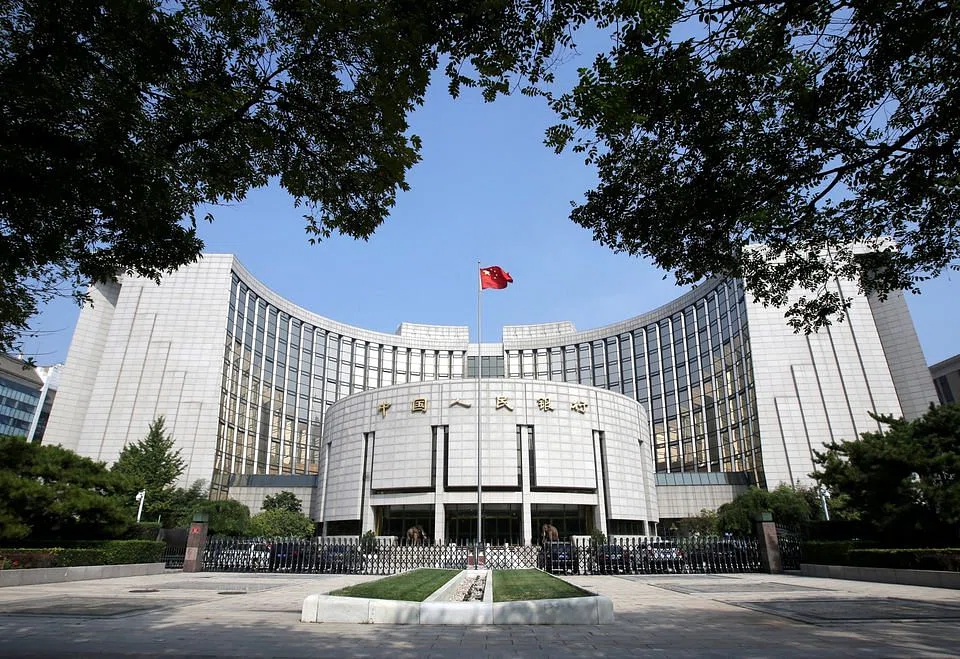
CHINESE banks kept their main lending rates unchanged after the central bank paused its monetary easing and defended a weakening yuan, though a cut is still expected by economists in the coming months to counter headwinds to growth.
The 1-year loan prime rate (LPR) was left at 3.65 per cent, according to a statement by the People's Bank of China (PBOC) on Tuesday (Sep 20). The rate was last cut by 5 basis points in August. Sixteen of the 17 economists surveyed by Bloomberg had expected the rate to be kept unchanged.
The 5-year rate, a reference for mortgages, was also maintained at 4.3 per cent, following a 15-basis point cut last month. Eleven of the 12 economists that gave an estimate had forecast no change.
Authorities may be holding off on further action as they are assessing the effect of previous easing measures, said Zhaopeng Xing, a senior strategist at Australia & New Zealand Banking Group. "Looking forward, we see the chance for further LPR rate cuts, especially for the 5-year tenor, because China's growth remains below the potential," he said.
The LPRs are based on the interest rates that 18 banks offer their best customers and is published by the People's Bank of China monthly. They are quoted as a spread over the central bank's rate on its one-year policy loans, known as the medium-term lending facility, which was kept unchanged last week.
Many economists expected banks to lower the LPRs later this year after major banks cut their deposit rates across the board for the first time since 2015. Lower deposit rates will improve banks' profitability, giving them further scope to transmit the PBOC's rate cuts to the economy.
The economy showed some signs of recovery in August, helped by government stimulus, although the growth outlook remains uncertain given an ongoing property market slump and Covid outbreaks.
The central bank is maintaining its easing stance and adopting more structural tools to help the economy. At the same time, it needs to strike a delicate balance with the timing of its stimulus given aggressive US interest rate hikes and the yuan's depreciation past the 7 per dollar level to its weakest since July 2020. The central bank has taken steps to defend the currency in recent weeks including by setting stronger-than-expected daily fixings.
The PBOC is forecast by some analysts to cut banks' reserve requirement ratio, or the amount of cash banks must hold in reserve, possibly as soon as this month to replace maturing policy loans. Such a move would unleash liquidity to the interbank system and reduce banks' funding costs, which could drive the LPRs lower.
"Given that the Fed is still on a hawkish hiking path, there is limited room for the PBOC to consecutively cut interest rates due to the risk of rapid currency depreciation," said Peiqian Liu, chief China economist at Natwest Markets. The authorities will likely focus on "quantity-based easing such as liquidity injection and credit growth" to support growth, she added. BLOOMBERG
Decoding Asia newsletter: your guide to navigating Asia in a new global order. Sign up here to get Decoding Asia newsletter. Delivered to your inbox. Free.
Share with us your feedback on BT's products and services
TRENDING NOW

He built the Vingroup empire. Now South-east Asia’s richest man is handing some key roles to his sons

China’s Pinglu Canal likely to benefit Singapore, other South-east Asia ports in the long term

Suntec Reit to increase Singapore focus, sell three Australia properties

Despite the de-dollarisation debate, demand for dollar liquidity in Asia is growing

