

CIMB Singapore delays mortgage floor rate hike, but customers unmoved
Singapore
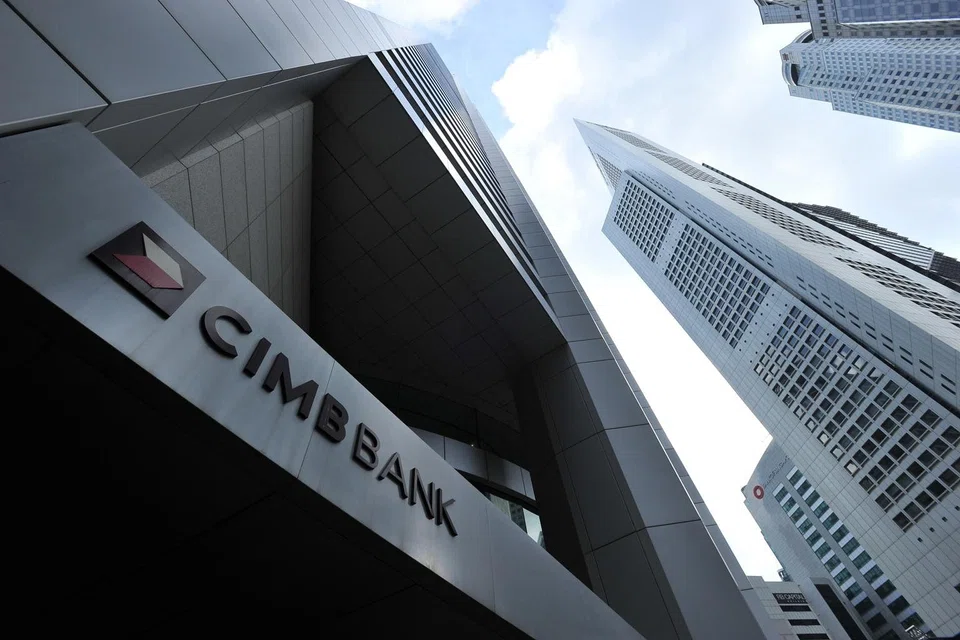
FOLLOWING a pushback from irate customers, CIMB Bank Singapore will delay the start date - to Jan 1, 2021 - of its higher minimum rate for certain mortgages pegged to the Singapore inter-bank offered rate (Sibor) and Swap offer rate (Sor).
The hike in the bank's floor rate was to have taken effect from May 18, 2020, as reported by The Business Times last Saturday.
The bank's move to raise the floor rate raises the broader question of whether floating interest rate contracts provide enough certainty for customers as banks usually have clauses in their terms and conditions that allow them to change rates at their discretion.
CIMB Singapore drew flak from customers last week for raising the floor of its Sibor and Sor rates in its floating rate packages to 0.9 per cent, from 0.1 per cent previously. Most of the mortgage loans sold by CIMB here are linked to the one-month Sibor. But the one-month Sibor rate on April 29 was 0.685 per cent, below CIMB's new floor rate of 0.9 per cent.
CIMB is believed to be the first bank to increase its floor rate for such floating-rate mortgages amid the Covid-19 pandemic, with most banks keeping the floor rate at about zero. Floor rates are understood to protect lenders from losses in the case of a collapse in rates. For example, in 2011, the Sor turned negative.
With a floating-rate mortgage, customers are charged based on the benchmark rate, as well as the accompanying spread. If the floor rate for Sibor is set at 0.10 per cent, then even if Sibor drops below 0.10 per cent, the interest charged on the borrower would still be 0.10 per cent plus the spread.
In its notification letter to mortgage customers last week, CIMB said the change in its minimum rate is governed by Clause 5 in its terms and conditions which states that the bank has the discretion to change interest rates any time.
Ho Soo Lih, director of real estate at Drew & Napier, said that in floating rate packages where the reference rate is the bank's internal board rate, it is "normal" that the bank can vary such a rate and that there is legal certainty if the parties have agreed that the bank can do so.
But spreads for floating rate loan contracts should be fixed, according to what is stated in the offer letter, he said.
While this does not address the issue of minimum or floor rates specifically, Mr Ho said there will usually be provisions in the bank's documents to say that the letter of offer will prevail over the bank's standard terms and conditions in the event of any inconsistency.
"Borrowers are advised to scrutinise the letter of offer carefully to ensure it is water tight, for example the bank cannot vary such spread rates at any time or to put a cap on any such adjustment to protect themselves," he said.
For CIMB, its offer letter as seen by BT states: "In the event the 1-month Sibor falls below 0.10 per cent, the 1-month Sibor shall be fixed at 0.10 per cent."
Edward Ti, assistant professor of law, Singapore Management University, finds the clause in CIMB's terms and conditions problematic.
"The lack of certainty is definitely a problem since if the clause is interpreted literally, banks can change the very root and pith of the contract."
Citibank back in 2015 changed the spread of its Sibor-pegged home loans here. However, Citibank had said the revision only applied to clients outside the lock-in period.
In the case of CIMB, the increase in the floor rate will apply to all its customers with floating rate contracts pegged to Sibor and Sor - even for those within the lock-in period. Some customers who showed their mortgage contracts to BT had signed with the bank as recently as March this year, only to get the notification just a month later that CIMB will be raising its floor rate.
When contacted for a response on Wednesday, CIMB referred BT to its website, which stated that given "customers' feedback", it would delay the revision in the light of the Covid-19 circuit breaker.
The bank also said on the site that it believed its loans package for its impacted customers to be "amongst the most competitive in the market". For customers who wish to refinance, the bank will waive any applicable penalty and administrative fees.
Still, one customer, who spoke to BT on the condition of anonymity, took issue with the bank's sales and advisory process as the possibility that the floor rate could be raised was not mentioned.
"CIMB should honour the terms of contract agreed between us for the first three years," he said. Any rise in price floor can be in effect after the bank completes its contractual obligations for the first three years as customers would have enjoyed the promotional rates which the bank "used as bait to lure us" to sign on, said the project manager.
"The postponement in the price floor and flexibility for customers to refinance out do not justify their misleading actions," he said.
Another customer also told BT that the latest concession by CIMB is "not enough".
"The most important quality of a bank is trust. After this, how can any customer trust CIMB not to change the terms of its mortgage packages?" said the financial professional, who also declined to be named.
He added that it is "bad faith" for CIMB to raise the floor rate after other banks have already raised spreads for their new floating rate packages, leaving customers with little choice.
Several of them have since complained to the Monetary Authority of Singapore (MAS).
An MAS spokesperson said: "MAS has engaged CIMB on the basis for the increase in the floor rate of its Sibor/Sor-pegged mortgages."
The spokesperson added that CIMB's delay in effective date of the floor rate adjustment "will allow affected customers ample time to consider alternatives should they choose to do so".
TRENDING NOW

He built the Vingroup empire. Now South-east Asia’s richest man is handing some key roles to his sons

China’s Pinglu Canal likely to benefit Singapore, other South-east Asia ports in the long term
Suntec Reit to increase Singapore focus, sell three Australia properties

Despite the de-dollarisation debate, demand for dollar liquidity in Asia is growing

