Clients rebalancing portfolios to deal with Credit Suisse fallout, say wealth managers

Angela Tan
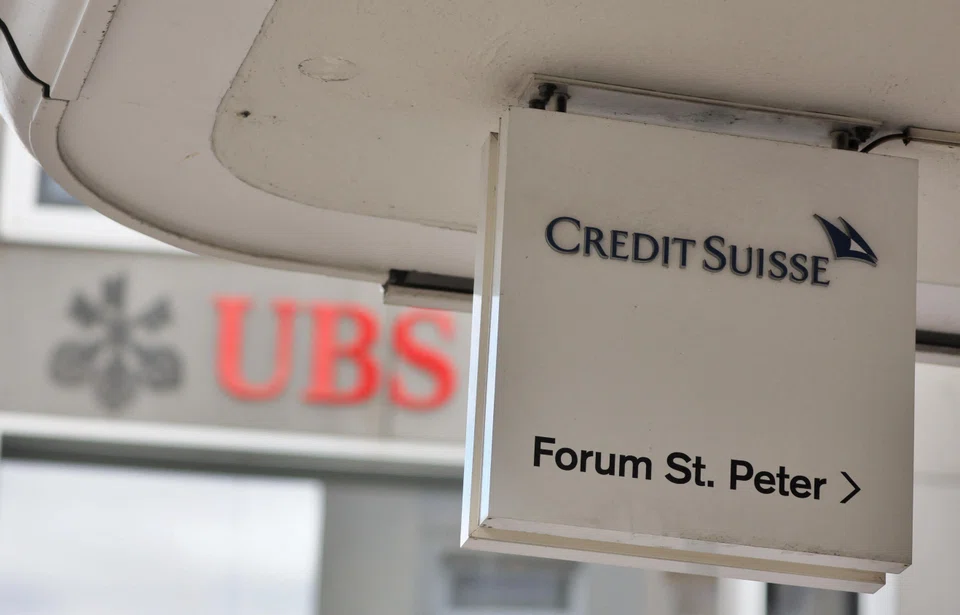
SINGAPORE’S wealth managers say their clients are making portfolio adjustments in reaction to recent banking instability, but inflows continue to be strong.
Aaron Chwee, head of wealth advisory at OCBC Bank, said he has noticed “more customers reaching out proactively to their relationship managers and client advisers to perform portfolio reviews and to rebalance their holdings to address concerns around the elevated volatility within the US and European financial sectors”.
Credit Suisse has been rescued by its Swiss rival UBS, days after a United States regional bank, Silicon Valley Bank, failed. The Credit Suisse takeover has been particularly unnerving for wealthier investors, as it also wiped out US$17 billion of the bank’s Additional Tier-1 (AT1) bonds.
Credit Suisse’s affected AT1 bonds were contingent convertible bonds (CoCos), which could be converted into equity or written off under specific scenarios.
Introduced after the global financial crisis, CoCos are a type of perpetual debt instrument that banks can use to augment their capital base.
Private banks in Asia have historically been keen buyers, snapping up issuances for their ultra-wealthy clients on the basis of their high yields and the strong balance-sheets of European banks. One Credit Suisse perpetual issued last year that was paying 9.75 per cent was particularly popular.
Tuck Meng Yee, partner at JRT Partners, a Singapore-based single-family office that invests across multiple asset classes, said: “The approach has sent shockwaves to markets, and investors have become more risk-averse.” JRT does not have any position in AT1 bonds.
A founder of a family office of a wealthy Chinese with exposure to AT1 bonds said: “Now we are holding these types of bonds for other banks and thinking, ‘What if these other banks fail? Am I going to get completely wiped out? Is my bank safe?’ Maybe all will end well, but until we get through this, many are going to start taking discounts on AT1 bonds because the possibility of them going to zero has just gone up.”
The caution doesn’t necessarily mean clients are pulling funds out.
Arjan de Boer, head of markets, investments and structuring for Asia at Indosuez Wealth Management, said: “While investors are indeed carefully relooking at their overall portfolios more closely, we need to highlight that this is not a situation of panic drawing down or selling. In fact, we have a number of clients who are keen to capitalise on the current opportunities with a long-term view towards their investments.”
Indeed, several banks said flows are still strong.
“We have seen increased interest from clients, with healthy pickup in net new money inflows since January this year,” said Chew Mun Yew, head of private wealth at UOB.
Joseph Poon, group head of DBS Private Bank, said client interest has intensified amid recent uncertainty: “Against this backdrop, the unique strength of the ‘Singapore Inc’ proposition – a cocktail of attributes including a strong force of law, political and economic stability, and established financial centre, among others – continues to appeal to families worldwide.”