

Danger in soaring foreign currency debt: BIS
US dollar strength has aggravated problems for borrowers who have to find more local currency to pay interest and repay loans in the US currency
London
TEN years after the 2008 financial meltdown, soaring foreign currency debt is endangering financial markets.
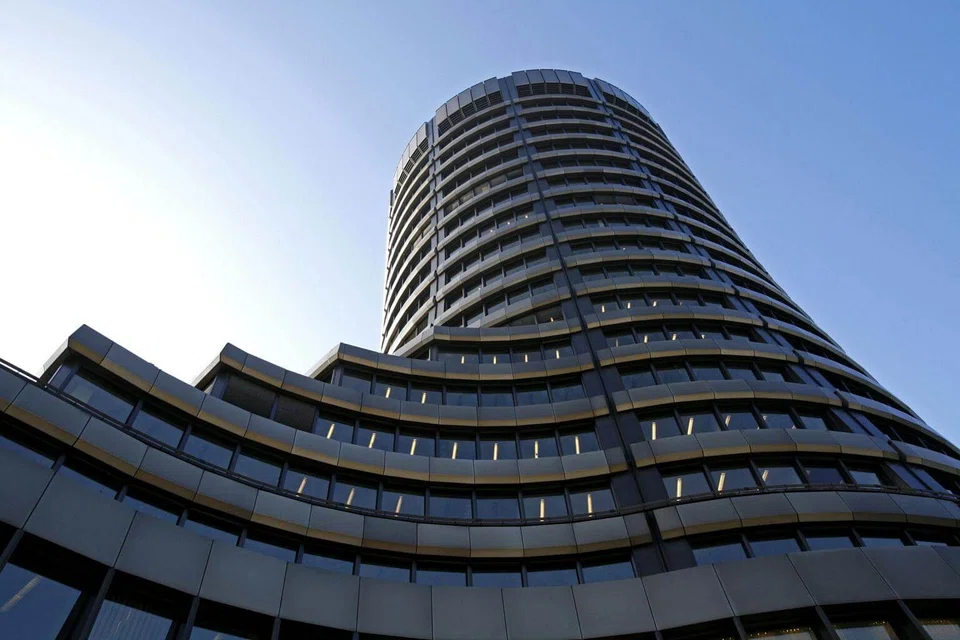
It has already caused problems in many emerging markets this year, the Switzerland-based Bank For International Settlements (BIS) said in its latest quarterly report.
Companies and governments around the world have raised their foreign debt from US$6 trillion in 2008 to US$11.4 trillion in 2018, the BIS estimated.
Euro and yen debt have also surged. The currencies converted into US dollars add a further US$3.1 trillion.
The BIS says that the US is diverging from Europe and Asia as its equity market has been booming. The question is how long will the divergence last.
"Further turbulence is likely at some point given that markets in advanced economies are overstretched, financial conditions are too easy and global debt is too high," said Claudio Borio, head of the BIS' monetary and economic department.
"With interest rates still unusually low and central banks' balance sheets still bloated as never before, there is little left in the medicine chest to nurse the patient back to health or care for him in case of a relapse."
The strength of the US dollar has aggravated problems for borrowers. In particular it has hurt emerging market companies and governments that have to find more local currency to pay interest and repay loans in the US currency, says the BIS.
"Since late-March, the cumulative valuation losses on many emerging nation asset classes and currency exposures have been substantial. In some respects, they have exceeded those during the taper tantrum in 2013 and have come close to those in the wake of the renminbi depreciation in August 2015," Mr Borio said.
"US dollar lending to non-bank emerging market economy residents has more than doubled since the Great Financial Crisis, to some US$3.7 trillion."
Even though those numbers are huge, they don't tell the full story. Foreign debt liabilities are an underestimate, the BIS said in a separate paper titled "FX swaps and forwards: missing global debt?"
"Every day, trillions of dollars are borrowed and lent in various currencies," the BIS study stated. "Many deals take place in the cash market, through loans and securities. But foreign exchange (FX) derivatives, mainly FX swaps, currency swaps and the closely related forwards, also create debt-like obligations."
"A key finding is that non-banks outside the United States owe large sums of dollars off-balance sheet through these instruments. The total is of a size similar to, and probably exceeding, the (US$11.4 trillion) on-balance sheet dollar debt. Even when this debt is used to hedge FX risk, it can still involve significant maturity mismatches."
Mr Borio explained that this surge has been part of a broader expansion of international credit to non-banks.
"It's a key indicator of global liquidity, which rose from 33 per cent to 38 per cent of global GDP between the first quarters of 2015 and 2018. Moreover, bank loans lost ground to securities," he said.
The BIS also has a paper on "The rise of zombie firms: causes and consequences".
Economists Ryan Banerjee and Boris Hofmann examine the prevalence, causes and consequences of unprofitable firms that still manage to survive.
The term "zombie" has become fashionable to denote such firms, but the authors refine the definition to focus the question more sharply. They examine firms whose interest payments exceed their profits. Another indicator is if a share price lags its sector median.
Of the 32,000 firms in their sample, from 14 advanced economies, roughly 6 per cent, or around 2,000, of the companies fall into the "zombie" category.
The authors find that the prevalence of zombie firms has ratcheted up since the late 1980s, tending to rise in recessions but not fully falling back to previous levels during recoveries.
Among the possible explanations, the authors find that the firms have lasted because low interest rates have reduced financial pressures. Also, a greater prevalence of zombie firms has lowered average corporate productivity in many economies.
TRENDING NOW

He built the Vingroup empire. Now South-east Asia’s richest man is handing some key roles to his sons

US dollar falters after Iran’s offer to reopen Hormuz sends oil lower

Temasek’s Wan Chee Foong to helm PIL, Lars Kastrup to be board adviser
Despite the de-dollarisation debate, demand for dollar liquidity in Asia is growing

