DBS, OCBC private bank AUM buck industry slide: survey
Singapore
SINGAPORE banks' private banking arms outperformed the broader industry in 2018 despite assets under management declining across the region amid weaker financial markets.
Total assets under management at the 20 largest private banks in Asia excluding China declined 3.6 per cent to US$1.63 trillion, Hong Kong-based publication Asian Private Banker showed in its private banking survey on Tuesday.
However, DBS' assets managed for clients with at least S$1.5 million rose 6 per cent to S$152 billion (US$112 billion) last year, the bank said in an e-mailed reply to questions. It generally does not break out private banking figures.
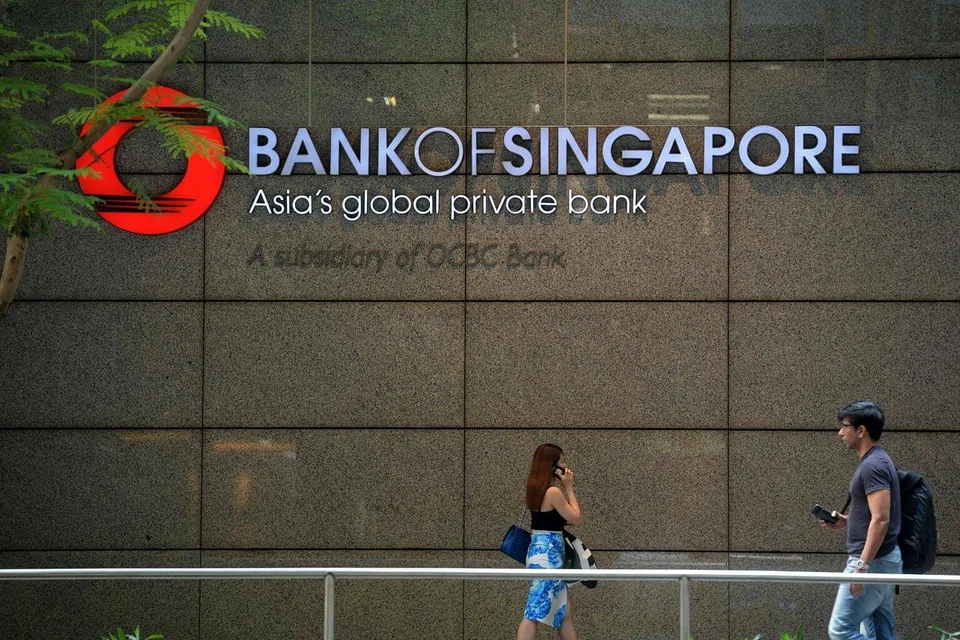
OCBC's Bank of Singapore, which caters to clients with at least US$5 million, saw assets under management edge up 3 per cent to US$102 billion.
UOB's private bank assets dipped 0.9 per cent to US$34 billion. It caters to clients with at least S$5 million.
This comes as assets under management declined across the industry in Asia, hampered by challenging market conditions.
"The return of volatility after a remarkably calm 2017, a further breakdown in the correlation between stocks and bonds, and the US-China trade dispute conspired to exert pressure on private banks' top lines," APB said.
Separately, Citi and DBS, ranked second and sixth in 2017, were dropped from the annual ranking because the lenders' publicly available numbers included assets of less wealthy clients, according to APB. The latest survey included only private banks with minimum assets of US$1 million per client.
In response, DBS said it offers a range of wealth propositions to high-net-worth clients, and believes "the wealth platform they choose to be banked on should not have a bearing on their status".
Citi said it respects APB's editorial decision but is "disappointed that the publication has changed its methodology so it no longer reflects our business model".
The US bank's wealth management business "spans the full spectrum of client needs from emerging affluent to ultra-high-net-worth," it said.