DBS sets sector-specific decarbonisation targets; O&G to cut emissions by 28%


Kelly Ng &
Yong Hui Ting
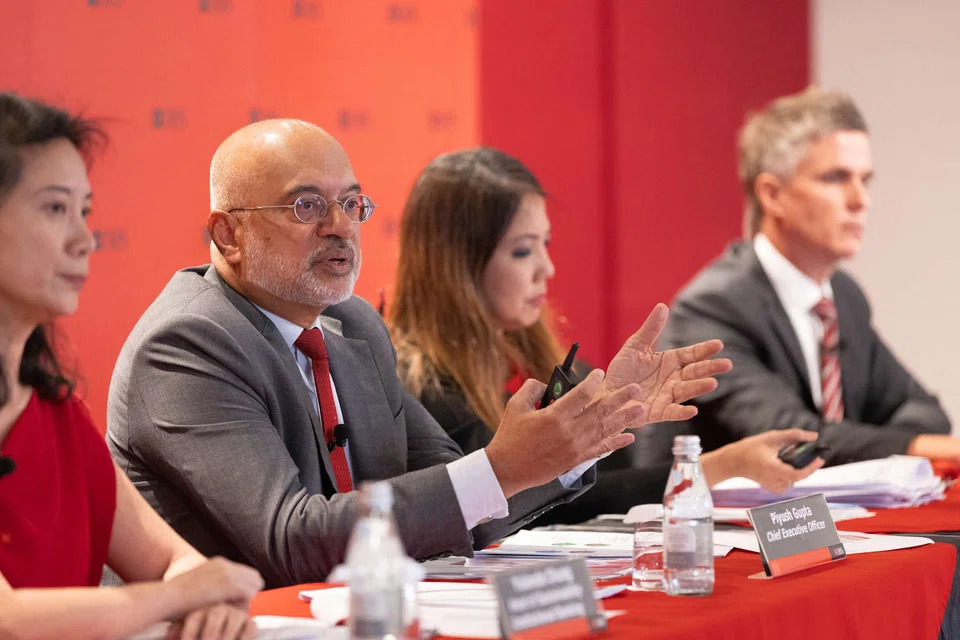
DBS on Tuesday (Sep 13) announced specific, science-based decarbonisation targets for 7 sectors, including oil & gas (O&G), power, automotive, aviation, shipping, steel and real estate.
O&G is the only one of the 7 sectors to be accorded an absolute target for emissions reduction. The bank has committed to reduce absolute emissions in the sector which are attributable to DBS by 28 per cent, by 2030.
The other 6 sectors are guided by intensity targets, with the objective to achieve lower emissions per unit of output or activity. For example, the metric adopted for the steel industry hinges on emissions per unit of production, while that for the automative sector is measured by distance covered per vehicle.
DBS has committed to an absolute target for O&G because it believes fossil fuels are a sunset industry, Yulanda Chung, the bank’s head of sustainability, said in a media conference on Tuesday.
“The industry, the customers that we are banking in that industry will have to diversify completely from their existing business models. And we know many of them are diversifying now into renewables, into alternative fields so we’ll turbocharge a transition in the sector,” she said.
It will take much longer for absolute targets to be implemented for sectors apart from O&G as DBS believes the other industries play a legitimate role in the economy, Chung said, in response to The Business Times’ question.
“Rather than doing away with the industry as a whole, we need them to be more efficient, whether energy efficiency or material efficiency,” she said.
DBS’ chief sustainability officer Helge Muenkel also noted that the bank wants to accommodate “inclusive growth” in these other sectors, even as climate is an important sustainability challenge.
Additionally, “data coverage targets” were set for both food and agribusiness, as well as the chemicals sector. This means the bank has committed to having a specified percentage of its large corporate clients reporting emissions and physical output by 2030.
Actual emissions targets have yet to be set for these sectors because industry players adopt diverse views and practices towards measuring emissions, and data is still not widely available.
The 9 sectors were chosen because they account for over 90 per cent of global emissions. In DBS itself, they make up 31 per cent of the loanbook, but constitute the vast majority of the Institutional Banking Group’s financed emissions.
The targets are grounded in science because they are designed based on published and recognised climate scenarios used by credible bodies, such as the International Energy Agency, the bank maintained.
These targets will be reviewed periodically as science and client data evolve. The bank will also update its progress on the targets annually through its sustainability report.
Asked how much reliance on offsets DBS is expecting, Muenkel said the bank does not have a percentage estimate, but it believes carbon credits to be an important tool to unlock capital, provided that clients are transparent on providing information on these credits and how they are used.
“We (are doing) this because we think (it) is the right thing to do. It’s not because we’re trying to do show-and-tell. We run a multifaceted business today. We have (a) lot of obligations, a lot of people. But we also believe in this idea of doing the right thing for society and country.” DBS’ chief executive Piyush Gupta said at the media conference.
The transition towards a low-carbon economy is also a “trillion-dollar opportunity without a doubt”, Gupta added.
“My general view is that as the transition happens, each of the business systems have to evolve. If you build the expertise and the financing capability, you get a disproportionate amount of the business. And that should allow you to replace anything that you run off,” he said.
On whether the bank would expect to cut clients who are not aligned with its decarbonisation goals, Gupta said it would do so as a “last resort”, but it has a “high degree of confidence” that the vast majority of clients are aligned with the bank in this regard.
There is also a group of clients that may have decarbonisation ambitions but lack the know-how. DBS can then come in to share their expertise, he said, thereby also tapping the advisory business opportunity.
DBS had said last year that it would phase out thermal coal exposure by 2039.